
Last updated September 22, 2026
Full 25-point door and opener safety check with every visit - springs, cables, rollers, tracks, and your LiftMaster or Chamberlain opener included
You get a price before we start. It does not change when the truck arrives.
 Before
 After
After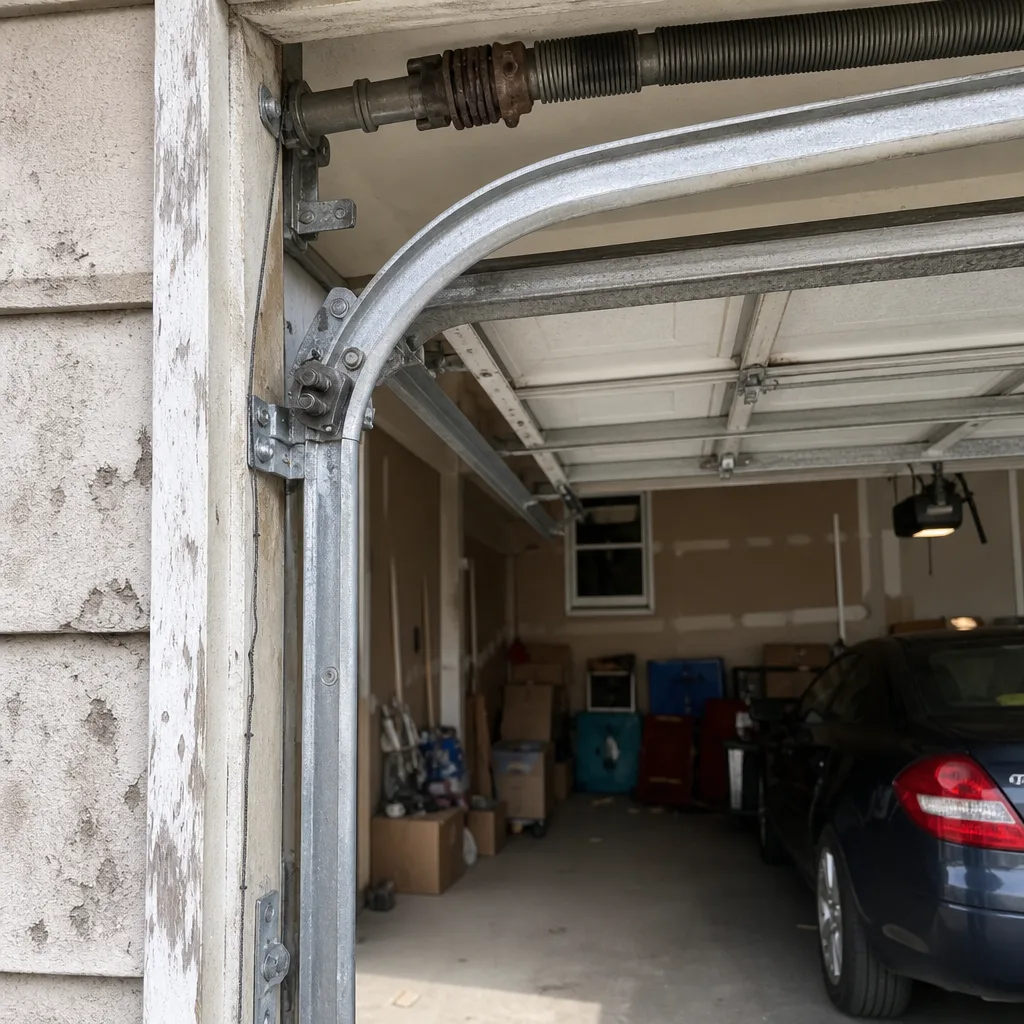 Before
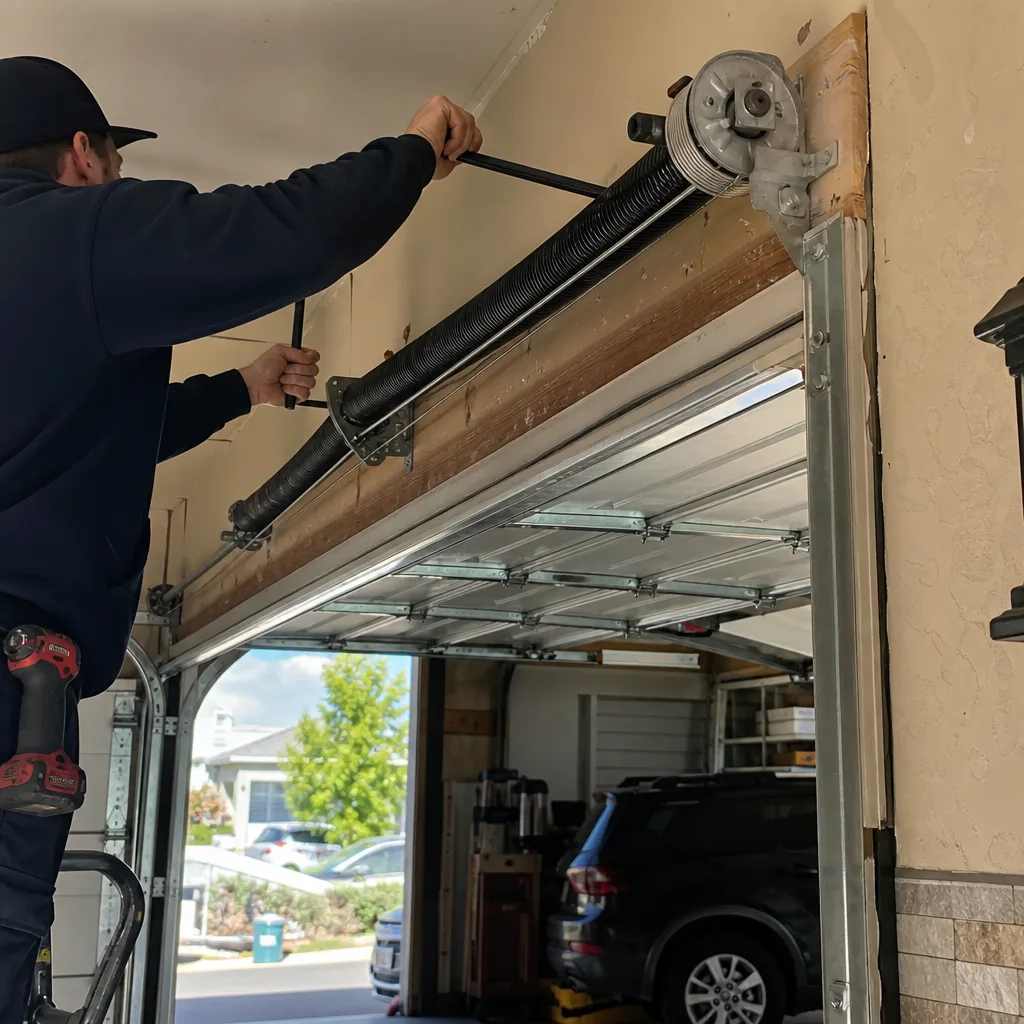 After
After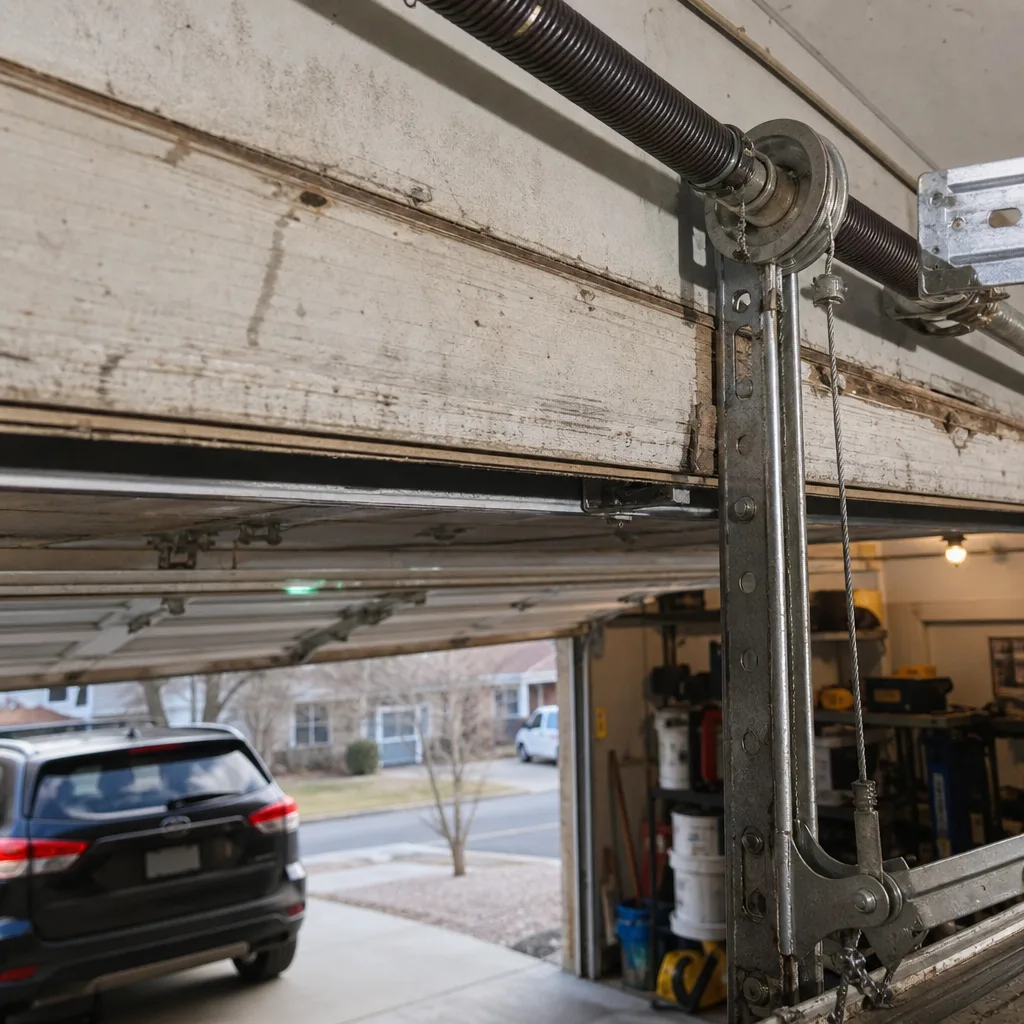 Before
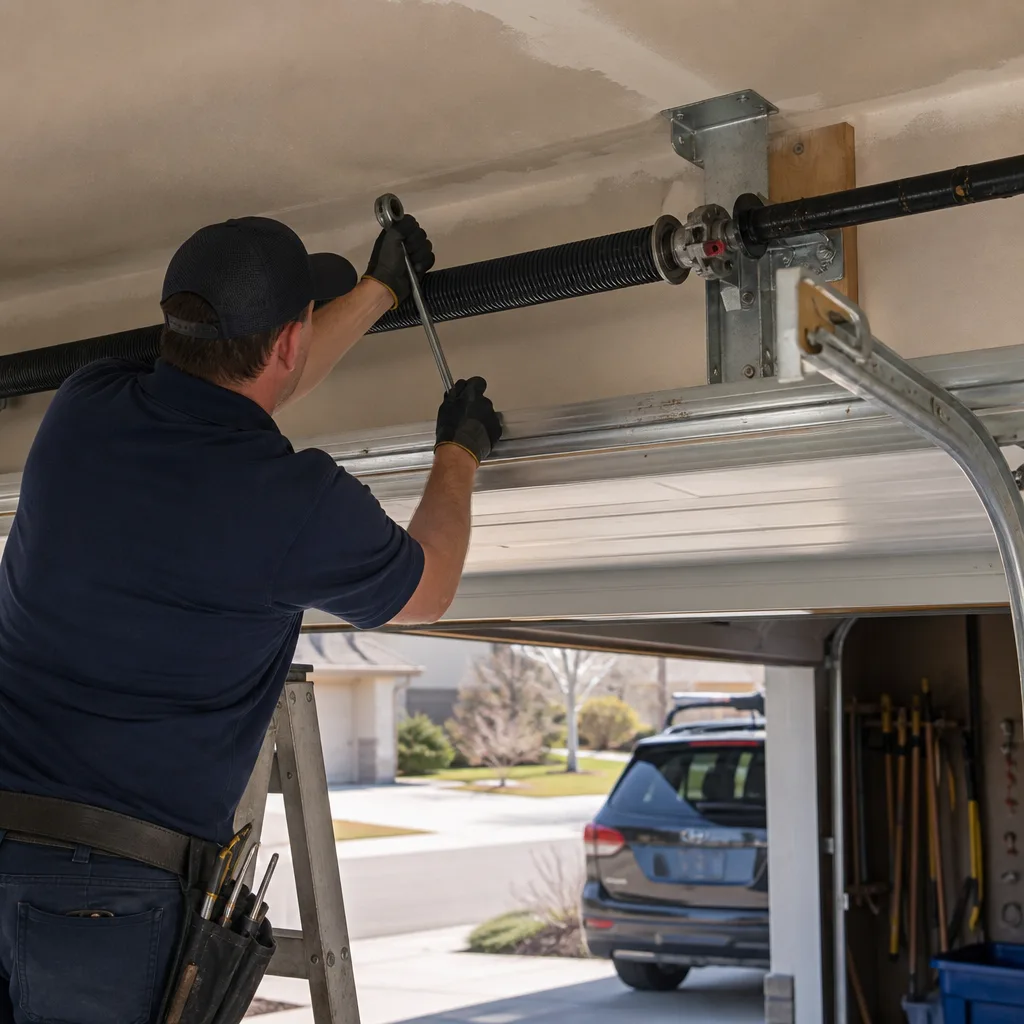 After
AfterGarage Door Cost Breakdown: The Denver Homeowner’s Reference for 2026
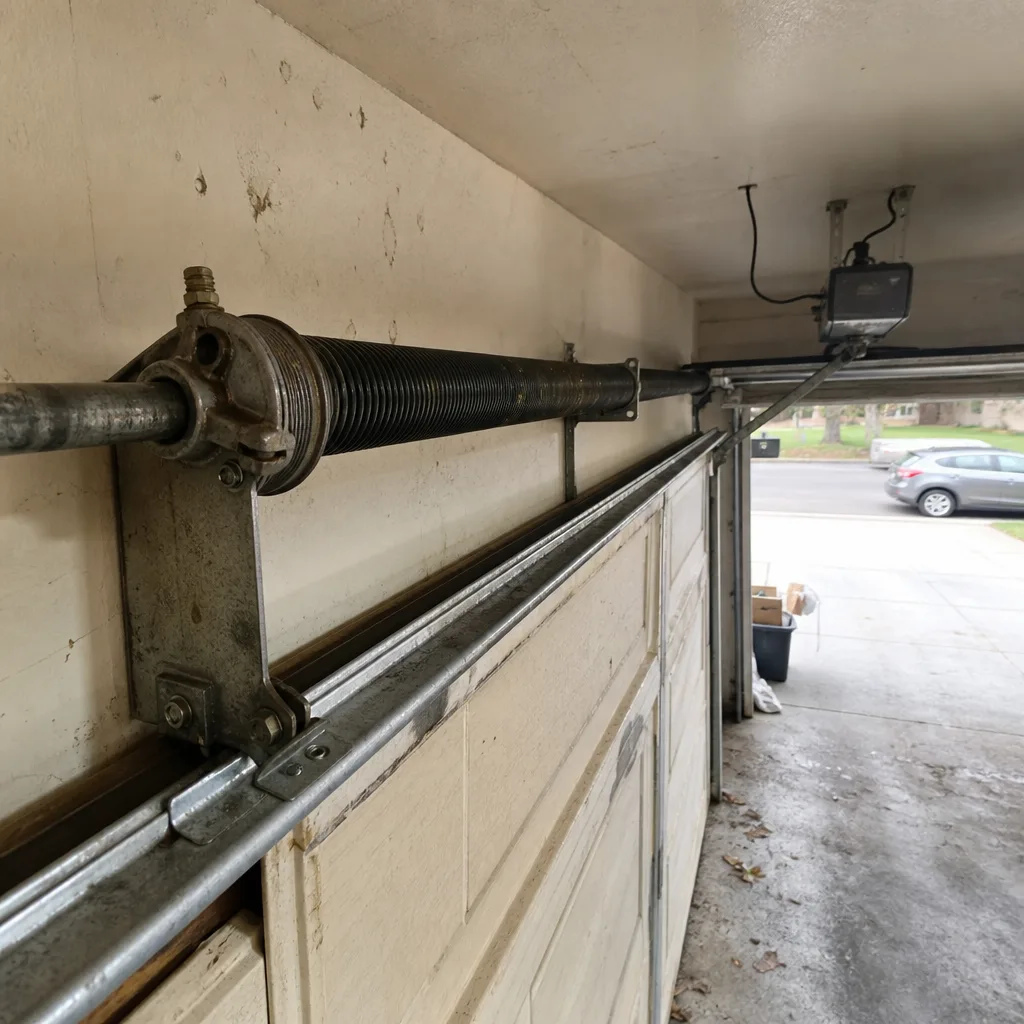
A torsion spring replacement in Denver runs $150-$350 for a single spring including labor. Quotes above that range for a standard residential spring are not explained by Denver’s market, or by altitude, or by “inflation” - they are explained by the absence of a written price before authorization. We’ve been operating under Servo Garage Doors Denver since 2015, and we’ve learned that the widest spread in garage door pricing comes not from the job itself but from how the quote is delivered. This guide publishes the actual part and labor cost structure by job type so Denver homeowners enter the conversation knowing what the line items should look like.
Quick Answer
Most Denver homeowners spend between $180 and $850 for common garage door repairs in 2026, while full door replacements range from $1,200 to $3,800 depending on size, material, and insulation. A standard torsion spring replacement with labor costs $150-$350; a new steel 16×7 door with basic opener installation runs $1,800-$2,800. The key variable is not the part - it’s whether your quote separates parts, labor, and markup into readable line items before you authorize anything.
Table of Contents
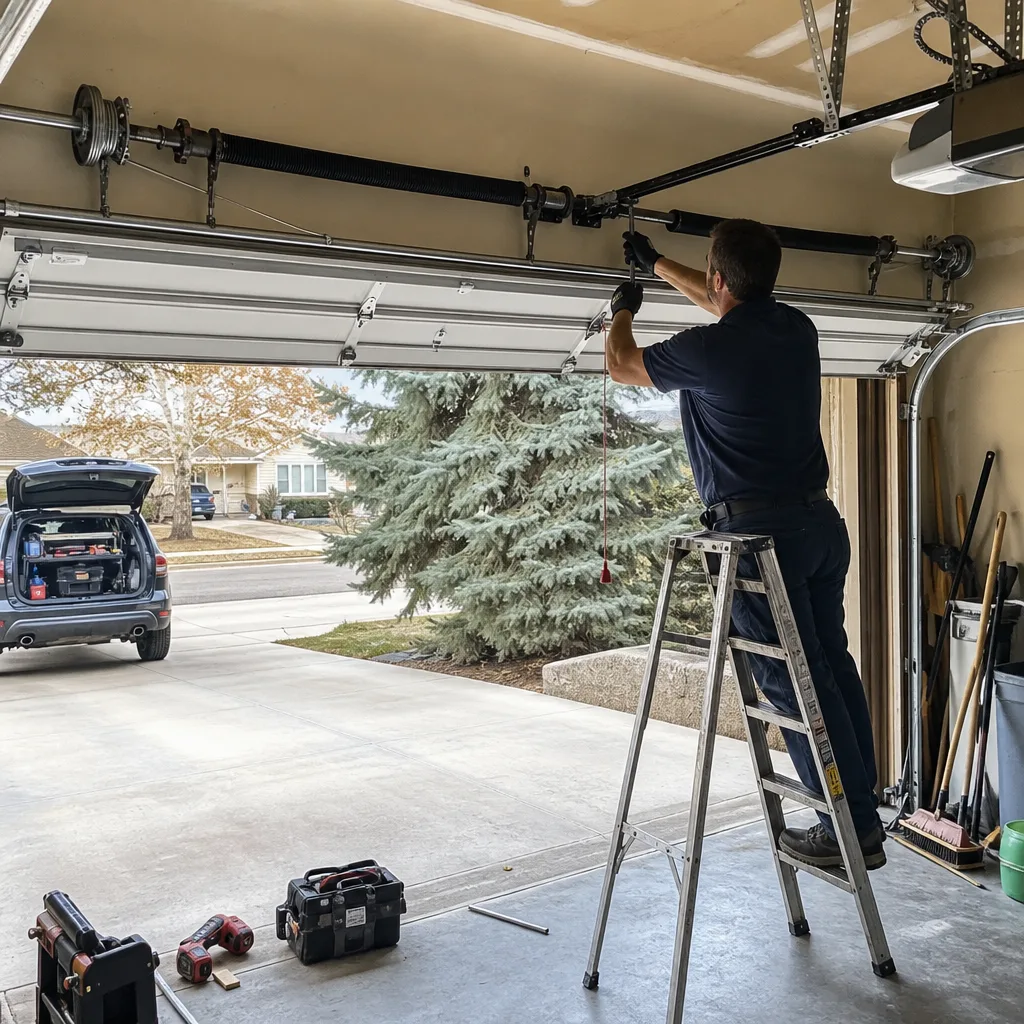
- Component-by-Component Costs: Springs, Cables, Rollers, Tracks, Panels, Openers
- How Door Size and Material Move the Replacement Price
- How to Read an Itemized Quote: What Every Line Item Means
- The Upsell Pressure Points: Legitimate vs. Margin-Padding
- Insurance Claims and Hail Damage in Denver
- Denver Labor Rates vs. Part Costs: Why They Should Be Separate
- Common Mistakes to Avoid
- When to Call a Professional
- Frequently Asked Questions
 Before
 After
AfterComponent-by-Component Costs: Springs, Cables, Rollers, Tracks, Panels, Openers
Every garage door repair breaks into two numbers: the part and the labor to install it. In Denver’s market, we’ve tracked these ranges across thousands of calls since 2015. Below is what a properly itemized quote should show.
| Component | Part Cost Range | Labor Range (Denver) | Total Installed |
|---|---|---|---|
| Single torsion spring (standard .250 wire) | $45-$85 | $105-$265 | $150-$350 |
| Dual torsion spring system | $90-$170 | $180-$380 | $270-$550 |
| Cable replacement (pair) | $25-$55 | $85-$165 | $110-$220 |
| Roller replacement (10-pack, standard steel) | $35-$75 | $120-$200 | $155-$275 |
| Nylon roller upgrade (10-pack) | $65-$120 | $120-$200 | $185-$320 |
| Track section replacement (single 8-ft vertical or horizontal) | $55-$110 | $140-$240 | $195-$350 |
| Bottom weatherseal (standard vinyl, 16-ft door) | $15-$35 | $75-$140 | $90-$175 |
| Panel replacement (steel, 16×7 middle panel) | $180-$350 | $200-$350 | $380-$700 |
| Panel replacement (wood, custom match) | $350-$700 | $250-$450 | $600-$1,150 |
| Garage door opener - chain drive, ½ HP | $180-$280 | $200-$320 | $380-$600 |
| Garage door opener - belt drive, ¾ HP | $320-$480 | $220-$350 | $540-$830 |
| Garage door opener - wall-mount (Jackshaft) | $380-$550 | $280-$420 | $660-$970 |
| Logic board replacement (opener) | $85-$180 | $120-$200 | $205-$380 |
| Safety sensor replacement (pair) | $35-$75 | $85-$150 | $120-$225 |
These ranges reflect Denver’s labor market as of early 2026. The part costs are wholesale-to-retail and should not vary dramatically between companies. Where quotes diverge, look at labor markup, trip charges, and whether the company bundles undisclosed fees into a single number.
We service all major brands including Amarr, Wayne Dalton, and Craftsman, and we carry springs, cables, and opener components for these lines on our trucks. That inventory matters in Denver, where a spring failure in January with a car trapped inside is not a “we’ll order it” situation.
Climate note for Denver: The freeze-thaw cycle and low humidity affect component life. Torsion springs in unheated garages experience more thermal cycling stress than in milder climates. We regularly see spring failures in Stapleton and Park Hill homes where the garage shares a wall with conditioned space but itself stays cold - the temperature differential accelerates metal fatigue.
How Door Size and Material Move the Replacement Price
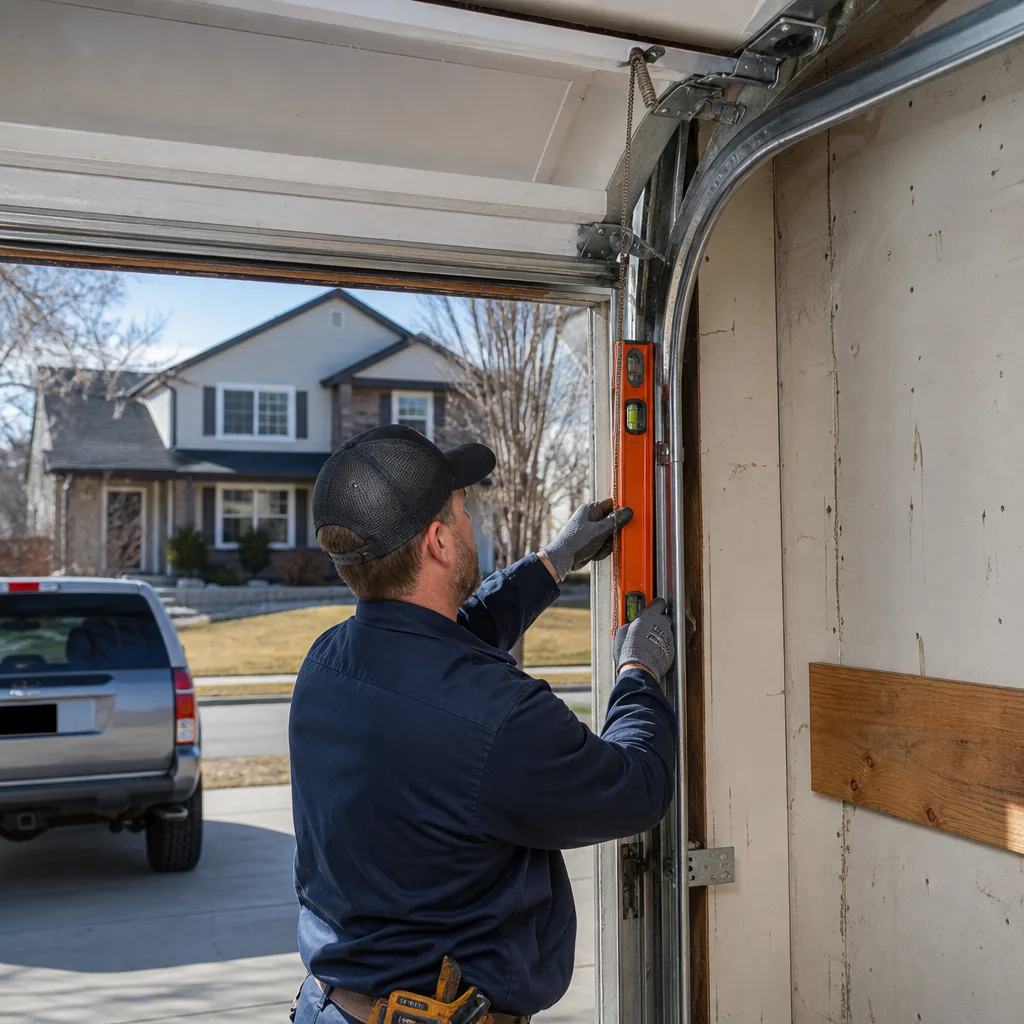
Door size is not a rounding error. A 16×7 door has roughly 60% more surface area than a 9×7, and the structural requirements scale with it. Material determines weight, insulation value, and long-term maintenance cost. Here’s how the combinations play out in Denver’s market.
Standard Residential Sizes
- 8×7: Single-car opening, common in pre-1980 Denver bungalows in Berkeley and Sunnyside. Replacement range: $850-$1,600 for steel uninsulated; $1,400-$2,400 for insulated steel or composite.
- 9×7: Slightly wider single-car, found in 1990s-2000s construction in Highlands Ranch and Littleton. Replacement range: $950-$1,800 steel uninsulated; $1,550-$2,600 insulated.
- 16×7: Standard two-car, the most common size in Denver metro new construction since 2005. Replacement range: $1,200-$2,200 steel uninsulated; $1,800-$3,200 insulated steel; $2,800-$4,500 wood or composite.
- 16×8: Taller two-car for RV or lifted truck clearance, increasingly common in Aurora and southeast Denver. Replacement range: $1,400-$2,600 steel uninsulated; $2,000-$3,800 insulated; $3,200-$5,500 wood or custom.
Material Specifications That Matter
Steel gauge: 24-gauge is the minimum for a residential door that will hold up. Some budget lines use 25-gauge or even 27-gauge - thinner steel that dents from basketball impacts and shows hail damage more readily. In Denver, where hail events are increasingly severe, 24-gauge or 25-gauge with reinforcement struts is the practical floor. We quote gauge explicitly; if a competitor does not, ask.
Insulation (R-value): Uninsulated steel runs R-0 to R-2. Polystyrene-backed steel reaches R-4 to R-6. Polyurethane-injected steel, the standard for attached garages in Denver’s climate, runs R-12 to R-18. The energy payback depends on whether the garage shares walls with conditioned space. In Park Hill and Congress Park, where many homes have bedrooms above the garage, R-12+ is worth the $300-$600 premium.
Wood and composite: Real wood doors require annual refinishing in Denver’s UV and low-humidity environment. Composite (fiberglass or PVC overlays on steel frames) offers the aesthetic at lower maintenance. A Wayne Dalton wood-grain composite in 16×7 runs $2,800-$3,800 installed, versus $3,500-$5,500 for true custom wood.
Wind load rating: Denver’s building code does not require high wind-load doors, but the eastern plains and foothill microclimates see gusts that can stress standard hardware. We note the wind-load rating on every quote for doors over 9 feet wide.
How to Read an Itemized Quote: What Every Line Item Means
An itemized quote is not a courtesy. It is the only way to verify that you are paying for parts and labor, not for a company’s undocumented markup. At Servo Garage Doors Denver, every quote follows the same format, derived from Clause 1 of The Haven Standard: a flat, written price and written scope before any work begins.
Here is what a proper quote contains, and what each element protects you from.
- Part number or description: “Torsion spring, 0.250 x 2.00 x 29, left wind, oil-tempered” - not “spring replacement.” The specification lets you verify the part exists and compare pricing. A vague description often hides a generic or undersized component.
- Unit cost and quantity: Each part listed separately with its individual price. Bundling parts into a single “materials” line removes your ability to check markup.
- Labor as a separate line: Labor should be stated in dollars or flat-rate hours, not folded into a “total project” number. In Denver, residential garage door labor typically runs $85-$140 per hour or flat-rated equivalent. If labor is not separated, you cannot assess whether the markup is reasonable.
- Trip charge or service fee: This should be explicit, not buried. Denver-area trip charges range from $0 (included in labor) to $85. A quote without a stated trip charge may add it after the fact.
- Warranty terms: Part warranty and labor warranty should be separate. A spring with a 3-year part warranty but 30-day labor warranty means you pay again if the install was faulty and shows up after a month.
- Total with tax: The number you authorize. Not an estimate. Not a “range.” The final price.
We photograph the failed component before quoting a replacement - Clause 4 of The Haven Standard - and the photo becomes part of the documented record you receive. When a customer brings us a competitor’s quote to compare against our written price, we can point to the exact specification difference: a 10,000-cycle spring versus a 25,000-cycle spring, a 24-gauge panel versus 25-gauge, a chain-drive opener with one remote versus a belt-drive with two.
Red flag: Any quote that says “spring replacement - $425” with no breakdown, no specification, and no labor line. That number is not a price; it is a test of what you will accept.
The Upsell Pressure Points: Legitimate vs. Margin-Padding
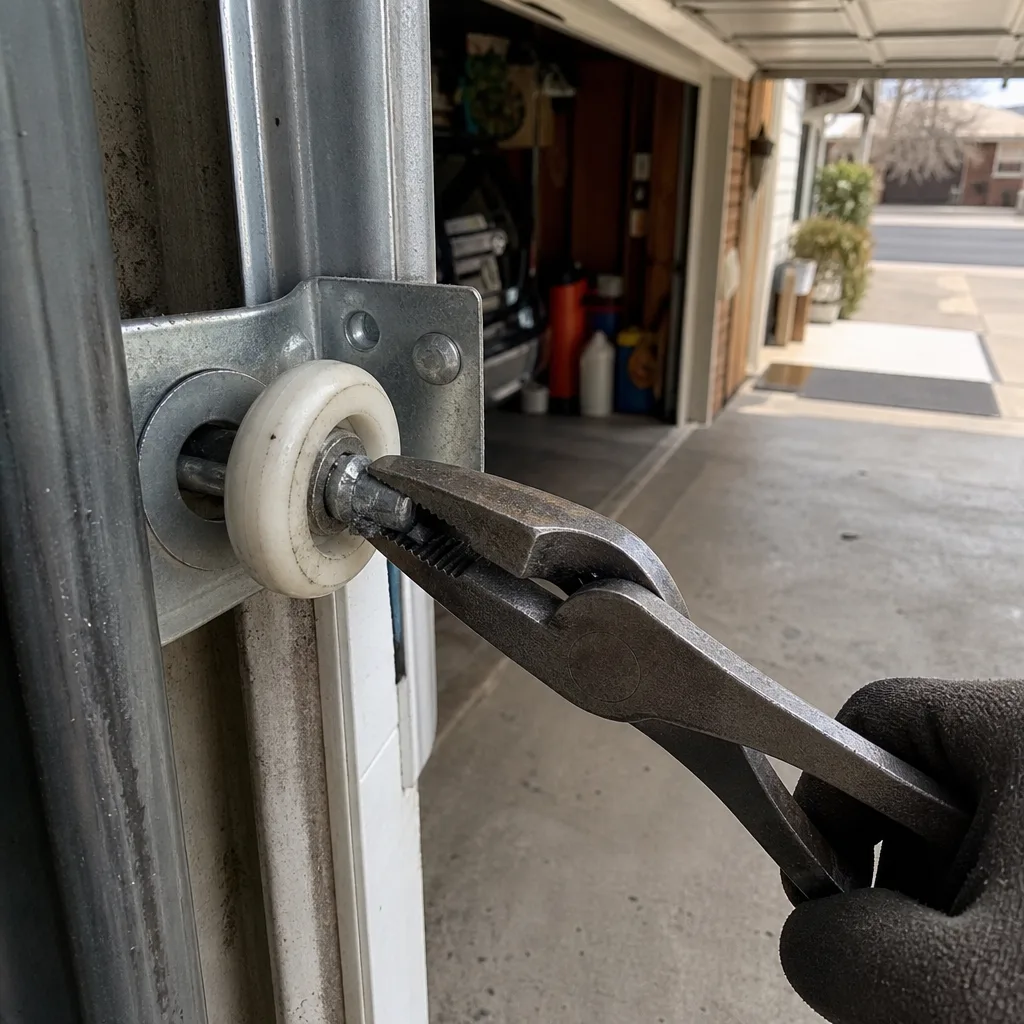
Some upsells solve real problems. Others solve a technician’s commission structure. Here’s how to tell the difference in a Denver service call.
Common Upsell Scenarios
“Both springs should be replaced even though only one broke.”
Legitimate on dual-spring systems, which most 16×7 and larger doors use. The springs are matched for cycle life; replacing one leaves an aged spring with unknown cycles remaining. On a single-spring door, this is unnecessary unless the remaining spring shows visible wear. We measure and photograph both springs; the photo record shows you what we found.
“Your rollers are worn, we should do all ten.”
Steel rollers do wear - the bearings seize, the stems develop flat spots. If the door is noisy or the rollers are original to a 15-year-old door, replacement is reasonable. If the door is 5 years old and rolls smoothly, this is padding. Nylon rollers are a legitimate upgrade for noise reduction; they add $60-$120 to the job and last longer in Denver’s dry climate.
“The cables look frayed, let’s replace both.”
Cables run over pulleys and drums; they fray from abrasion and corrosion. In Denver’s low humidity, corrosion is less common than in coastal markets, but the freeze-thaw cycle can stress cable terminations. We show you the cable wrap on the drum - it’s visible without disassembly - and photograph any fraying. One frayed cable with a clean mate: replace the one. Both showing rust or wear at the loop: replace both.
“Your opener is old, you should upgrade to a smart opener.”
The legitimate case: a chain-drive opener from 2005 with no safety sensors, or a unit with a failed logic board where the replacement part costs 60% of a new opener. The padding case: a 2018 belt-drive with a broken trolley carriage, where the $45 part fixes the problem. We quote both options when both exist, with the repair cost and replacement cost side by side.
“Full panel replacement when only one panel is dented.”
Some dents are repairable with panel-specific tools. Some panels are no longer manufactured, forcing a full-door replacement or a visible mismatch. We research panel availability before quoting; if a single panel is available from Amarr, Wayne Dalton, or the original manufacturer, we quote it. If not, we explain why the larger job is necessary and show you the color-match risk.
The Documentation Test
A technician who cannot show you the wear pattern, the fraying, or the failed part in a photo is selling certainty without evidence. Clause 4 exists because “trust me” is not a standard. The photo record you receive at the end of the visit should trace back to the recommendation.
Insurance Claims and Hail Damage in Denver
Denver’s hail season runs April through September, with peak severity in June and July. A severe hail event can dent steel panels, crack windows in door sections, and damage opener housings. The insurance math is specific and often misunderstood.
Typical Homeowner’s Policy Coverage
Most Denver policies cover garage door hail damage under dwelling coverage, subject to the same deductible as roof damage. In 2025-2026, typical wind/hail deductibles in the Denver metro run $1,500-$3,000, or 1-2% of dwelling coverage. A door with three dented panels and a damaged opener might generate a repair estimate of $1,800-$2,800 - below many deductibles.
When to Claim vs. Pay Out of Pocket
- Claim makes sense: Full door replacement needed ($2,500+), or multiple damaged components (door + opener + trim), pushing the total well above deductible. Hail damage to a 16×8 custom wood door with hardware and opener can exceed $5,000.
- Pay out of pocket: Isolated panel dents on an otherwise functional door, or damage below your deductible threshold. We provide a written estimate for either path; if you are near your deductible, the documented photo record helps your adjuster verify scope.
The Adjuster’s Process
Insurance adjusters in Denver see hail claims routinely. They look for:
- Date of loss (must match the storm date on NOAA records)
- Visible impact marks with directional consistency (indicates wind-driven hail, not incidental damage)
- Functional impairment (door does not seal, opener misaligned from impact)
We document all three in our photo record. If your door was functional before the storm and fails to close properly after, that functional change is evidence. We do not invent storm dates or damage; we photograph what exists and timestamp the visit.
Denver-specific note: Some HOA communities in Stapleton, Lowry, and the Highlands require architectural review for door replacements, even insurance-funded ones. Check our guide to Garage Door Permits, Codes & Inspections in CO: What You Need to Know for details. We note known HOA requirements when quoting and can provide specification sheets for board approval.
Denver Labor Rates vs. Part Costs: Why They Should Be Separate
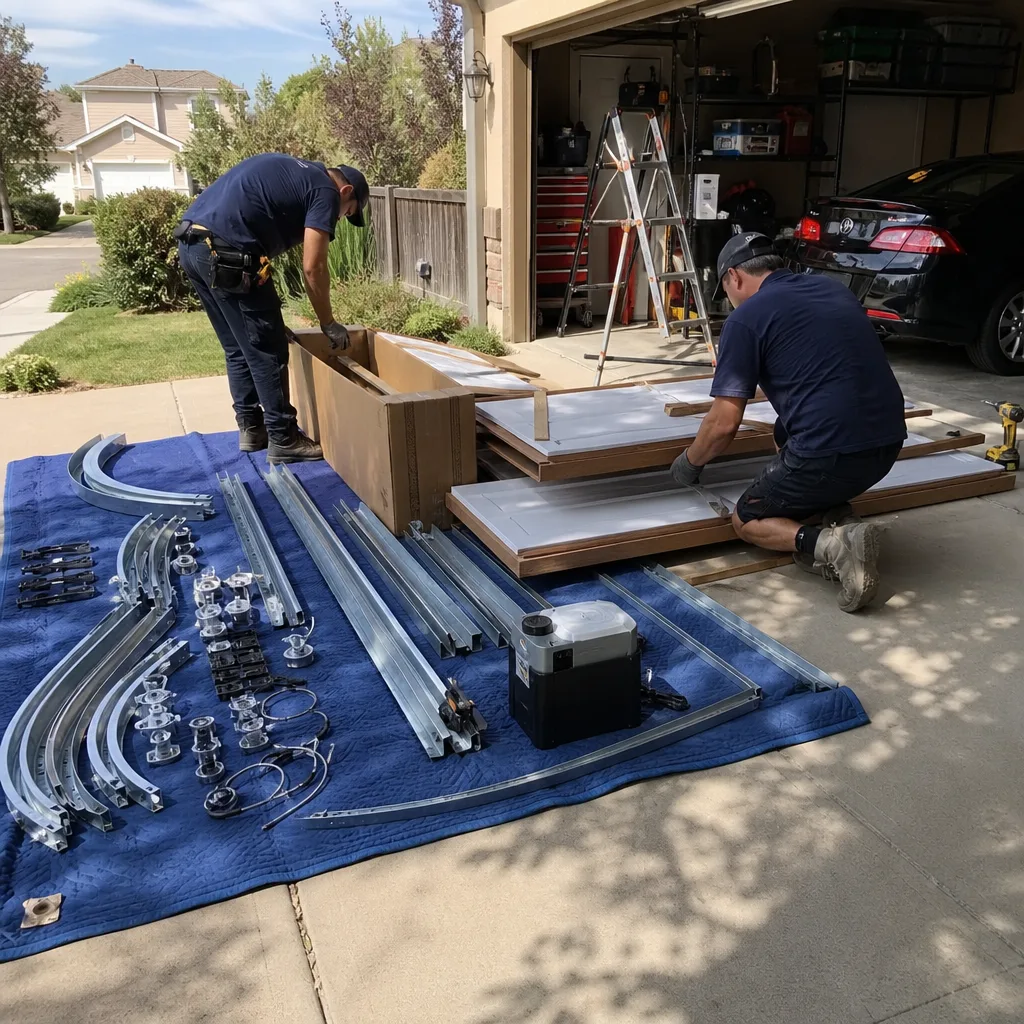
In our experience across 18,000+ jobs, the part cost for a standard torsion spring varies by maybe $20 between suppliers. The installed price varies by $200 or more. That spread is labor markup, not part quality.
Denver’s garage door labor market in 2026:
- Flat-rate spring replacement: $105-$265 (single spring), depending on company overhead and whether the technician is W-2 or 1099.
- Hourly residential rate: $85-$140/hour, with most spring jobs taking 45-75 minutes.
- Emergency or after-hours premium: 25-50% above standard, though some companies simply charge the flat rate regardless of time. We do not surcharge for after-hours calls; our 24/7 live answer is standard, not premium.
When labor is folded into a “parts and labor included” number, you lose the ability to verify fairness. A $350 spring replacement with a $65 part and $120 labor is transparent. A $350 spring replacement with no breakdown is a black box.
The Haven Standard requires separation. Clause 1: written price and written scope before work starts. That scope includes part specification, labor line, and total. No exceptions in 18,000 jobs.
Common Mistakes to Avoid
- Accepting a phone quote as final. A spring length or door weight cannot be determined accurately over the phone. The quote that sounds cheapest often balloons on arrival when the “standard spring” does not fit your door. We do not quote final prices by phone; we schedule a free measure and deliver a written price on site.
- Ignoring the cycle rating on springs. A 10,000-cycle spring costs less than a 25,000-cycle spring, but in a two-car household with daily use, the cheaper spring fails in 3-5 years instead of 8-12. We specify cycle rating on every quote.
- Replacing the opener when the logic board failed. A $180 logic board replacement fixes many “dead” openers, especially on LiftMaster and Chamberlain units under 10 years old. We test the motor, the travel module, and the board before recommending replacement.
- Not checking permit requirements for structural changes. Denver requires permits for new door openings or enlargements, not for like-for-like replacements. But some municipalities in the metro - Aurora, Thornton, Lakewood - have their own triggers. We note permit requirements when quoting non-standard work.
- Buying a door online and hiring installation separately. The “door-only” price from big-box retailers does not include delivery, haul-away, or the inevitable adjustment when the opening is not perfectly square. The all-in price from a garage door installation specialist is usually comparable and carries single-source accountability.
- Neglecting weatherseal in garage door replacement quotes. The bottom seal and side seals are separate line items. A quote that omits them may leave you with a door that leaks dust and cold air. Denver’s wind and temperature swings make proper sealing worth the $90-$175.
- Assuming all “insulated” doors are equal. Polystyrene-backed steel and polyurethane-injected steel are both called “insulated.” The R-value difference is 2x or more. We specify R-value and construction method, not just the word “insulated.”
When to Call a Professional
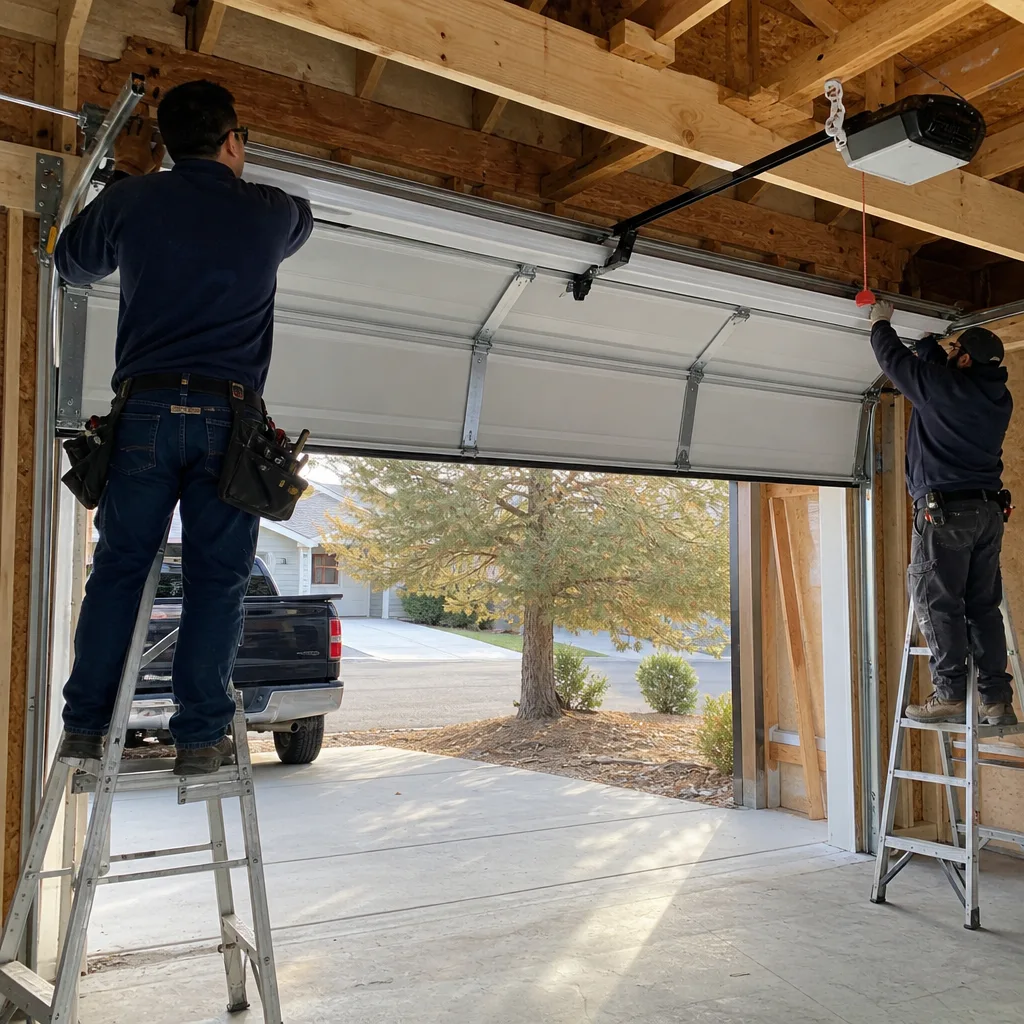
Some garage door symptoms are inconvenient; others are hazardous. Call a technician if the door is off its tracks, if a spring is visibly broken (you’ll see a gap in the coil), if the door falls rapidly when released, or if the opener strains but the door does not move. These indicate high-tension component failure or misalignment that can cause injury if handled without training.
For opener issues - the motor runs but the trolley does not move, or the remote works intermittently - garage door opener repair is often a logic board, limit switch, or travel module replacement rather than full replacement. We diagnose before quoting either path.
Servo Garage Doors Denver offers free estimates in Denver - call (720) 807-2580. A technician arrives with a written price before any work starts, and you receive a documented photo record of what was found and what was done.
Frequently Asked Questions
Most common repairs run $180-$850: torsion spring replacement $150-$350, cable replacement $110-$220, opener repair $200-$380, roller replacement $155-$320. Full door replacements start around $1,200 for basic steel and range to $3,800+ for insulated or custom materials. Call (720) 807-2580 for a free written estimate with line-item pricing.
The part cost is nearly identical; the spread is in labor markup and whether the company uses flat-rate or time-and-materials pricing. A quote without a written breakdown hides the markup. At Servo, we separate part, labor, and total per Clause 1 of The Haven Standard.
Torsion springs store lethal energy - a standard residential spring is wound to 100+ foot-pounds of torque. Unwinding or winding without proper bars and training causes serious injury or death annually. We do not provide DIY instructions for torsion spring work; the risk is not proportional to the savings.
A quality steel door with standard springs lasts 15-25 years in Denver’s dry climate with proper maintenance, though the freeze-thaw cycle and UV exposure at 5,280 feet accelerate weatherseal and paint finish degradation. Springs typically last 7-12 years depending on cycle rating and daily use frequency.
Most Denver policies cover hail damage under dwelling coverage, but your deductible - typically $1,500-$3,000 for wind/hail - often exceeds the repair cost for minor damage. We provide documented estimates for either insurance or out-of-pocket repair paths.
Ask for photographic evidence of the wear or damage, and ask how the recommended work relates to the symptom you called about. A legitimate upsell traces to a visible, documented condition; padding traces to a script. Clause 4 of The Haven Standard requires the photo before the quote.
The Bottom Line
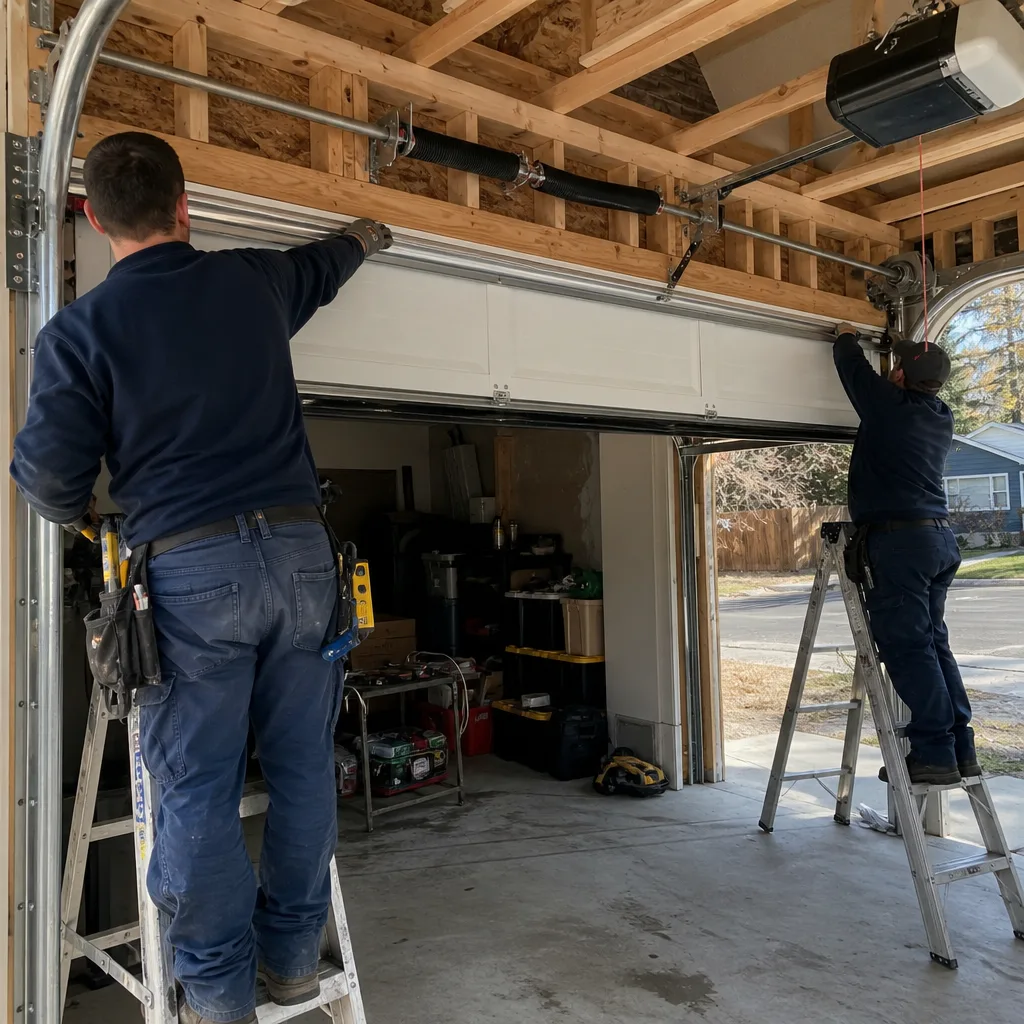
Garage door pricing in Denver is not mysterious. The parts have specifications, the labor has market rates, and the quote should show both. The widest spreads we see are not between door types or neighborhoods; they are between companies that publish line-item pricing and companies that do not. A written price before authorization, a documented photo record after completion, and a warranty backed by terms rather than a handshake - these are the components of a fair transaction. Everything else is negotiation theater.
Written by Marcus Deller, Owner at Servo Garage Doors Denver, serving Denver since 2015.