
Last updated September 22, 2026
Full 25-point door and opener safety check with every visit - springs, cables, rollers, tracks, and your LiftMaster or Chamberlain opener included
You get a price before we start. It does not change when the truck arrives.
 Before
 After
After Before
 After
After Before
 After
AfterHow to Hire a Garage Door Contractor in Denver: A Step-by-Step Guide
Colorado does not require a specialty license to replace a garage door spring or opener, meaning the barrier to operating as a “garage door company” in Denver is a van and a phone number. We’ve seen it: technicians who can’t name the difference between a torsion spring and an extension spring, quoting $800 for a $240 repair because the homeowner’s car is trapped inside and it’s snowing in Stapleton. This guide gives you a written vetting protocol - the exact documents to request, the line items that expose a padded quote, and the interview questions that separate a documented contractor from one pricing by your visible stress level. For more guides & resources, see our blog.
Quick Answer
Hiring a garage door contractor in Denver starts with verifying three documents before any work begins: a written itemized quote with part numbers, proof of general liability insurance tied to a Denver address, and a written warranty that separates parts coverage from labor coverage. Interview at least two contractors, ask how they document findings before quoting, and reject any quote that disappears a “trip fee” if you authorize same-day work.
Table of Contents
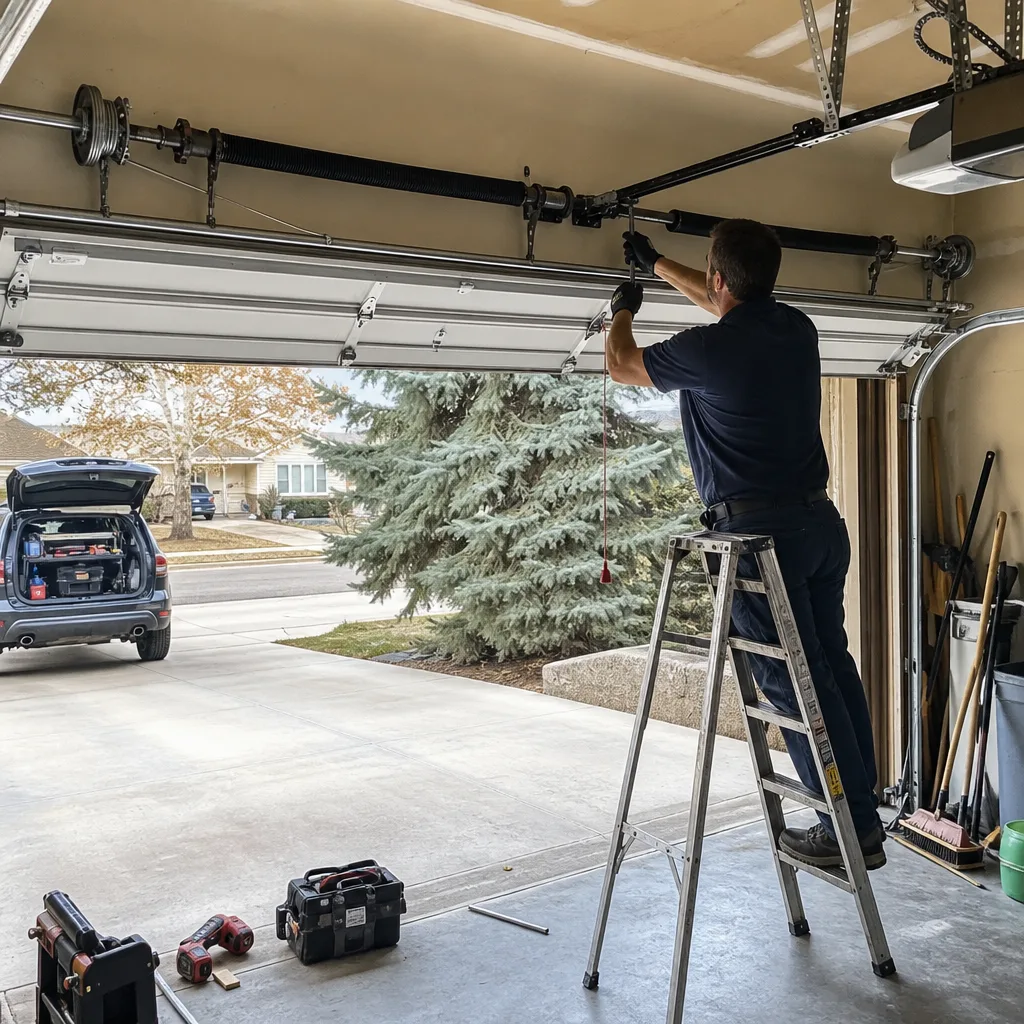
- Why Denver’s Lack of Licensing Changes Everything
- The Three Documents to Request Before Work Begins
- How to Read a Garage Door Quote for Red Flags
- Sample Interview Questions: Documentation vs. Pressure
- What Pre-Work Photography Tells You About Process
- Parts Warranty vs. Labor Warranty: Why Denver Homeowners Need Both
- Brand Knowledge and Parts Availability
- Common Mistakes to Avoid
- When to Call a Professional
- Frequently Asked Questions
- The Bottom Line
 Before
 After
AfterWhy Denver’s Lack of Licensing Changes Everything
Most homeowners assume the person showing up to replace a garage door spring has passed some kind of test. They haven’t. Colorado’s contractor licensing stops at the general level - there is no state-level specialty license for garage door repair or installation in Denver. A general contractor’s license covers garage door work, and that license does not require specific training on high-tension spring systems, opener electrical work, or door balance calculations.
This matters because garage door springs are dangerous. A standard torsion spring for a double-car door in Denver stores enough torque to cause serious injury or death if handled incorrectly. The same goes for cable replacement on a loaded door. Yet the technician quoting your repair in Cherry Creek or Park Hill may have learned the trade from a YouTube video and a weekend shadowing another unlicensed operator.
What this means for you: the hiring filter has to come from you, not from the state. The questions you ask, the documents you request, and the red flags you spot in the quote are your only protection. Denver’s market is saturated with operators who know that a homeowner with a stuck door on a 10-degree January morning is not in a position to comparison shop. Your preparation before the breakdown is what prevents that scenario from costing you double.
Denver’s climate adds another layer. The temperature swings from below-zero nights to 60-degree afternoons in winter cause metal fatigue in springs. The intense UV at 5,280 feet degrades nylon rollers and weatherstripping faster than at sea level. A technician who doesn’t account for Denver’s elevation and temperature cycling in their parts recommendation is guessing, not diagnosing.
The Three Documents to Request Before Work Begins
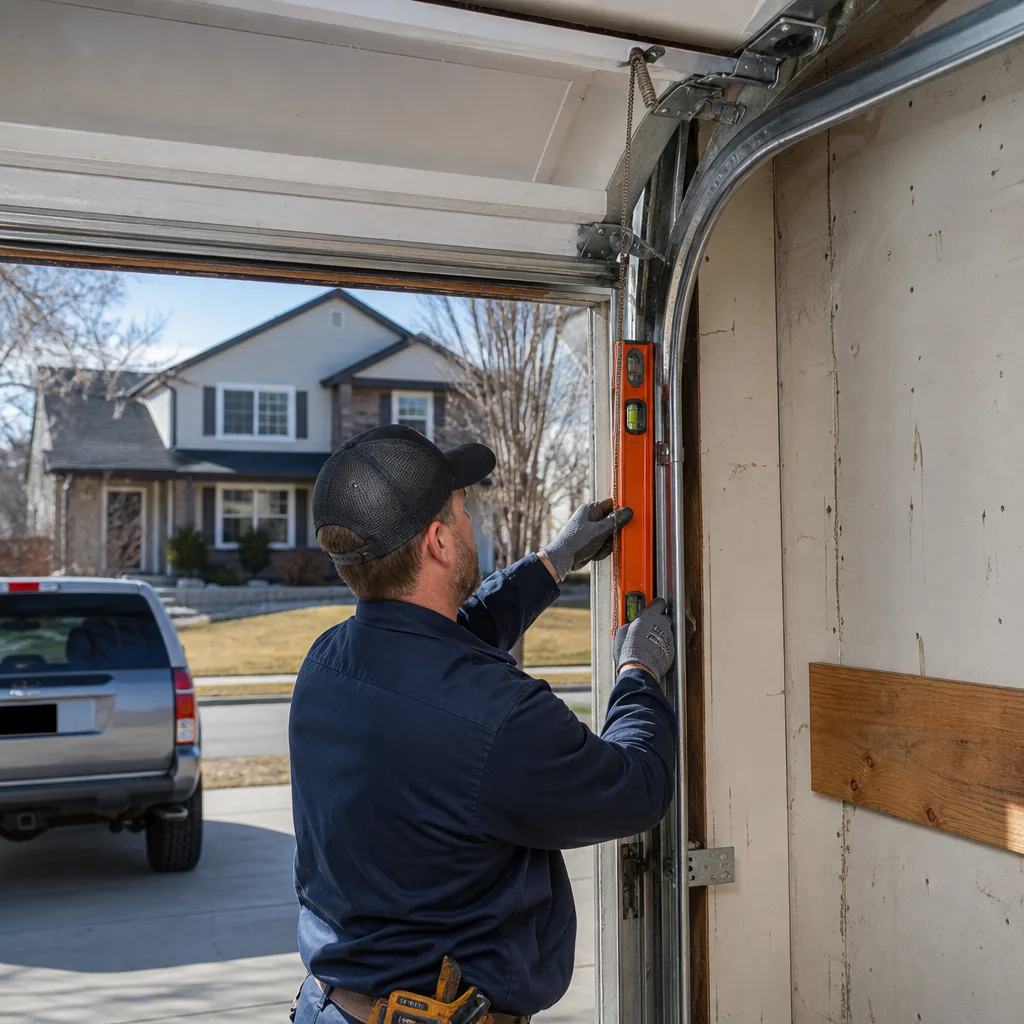
Every contractor who arrives at your Denver home should produce three documents without you having to ask twice. If they hesitate, deflect, or claim they “email those after,” the visit is over. Here’s what each document should contain and why it protects you.
Document 1: Written Itemized Quote with Part Numbers
The quote must list every part by name and, where applicable, by manufacturer part number. It must separate parts cost from labor cost. It must state the total as a flat, locked price - not an estimate that “might change once we open it up.”
At Servo Garage Doors Denver home, we operate under Clause 1 of The Haven Standard: a flat, written price and written scope delivered before any work starts. No exceptions. The customer sees the dollar amount, the part numbers, and the labor line item before the technician touches a tool. This is how you know whether you’re being charged $180 for a spring or $600 for “labor and materials.”
What to look for:
- Specific part names: “2-inch ID torsion spring, 0.250 wire, 32-inch length” - not “spring replacement”
- Labor listed as its own line item, not buried in a single “total” figure
- A signature line or electronic acknowledgment showing you agreed to the price before work began
Document 2: Proof of General Liability Insurance with a Denver Address
Ask for a certificate of insurance (COI) naming the contractor’s business. The COI should show general liability coverage and list a Denver-area address - not a PO box in another state. Garage door work involves heavy doors, high-tension springs, and power tools; if a technician is injured on your property or damages your vehicle, you do not want to discover the coverage is expired or issued to a different company entirely.
Verify the policy is current. Some operators carry insurance for show but let it lapse. The COI should have a date within the last 30 days, and you can call the insurance company listed to confirm.
Document 3: Written Warranty Separating Parts from Labor
We’ll cover this in depth in the warranty section below, but the short version is: you need two warranties, not one. A single “1-year warranty” that doesn’t specify what it covers is worthless when the spring fails in month eight and the contractor claims “that was just on labor.” Get it in writing, with separate durations and separate terms for parts and labor.
How to Read a Garage Door Quote for Red Flags
Denver homeowners who’ve been burned by garage door contractors often say the same thing: “The quote seemed fine until I compared it later.” Here’s how to spot the problems before you sign.
Red Flag 1: “Labor and Materials” as a Single Line Item
This is the classic obfuscation. A single line item for $450 with no breakdown prevents you from verifying whether the spring costs $40 wholesale and you’re paying $410 for 45 minutes of work. Every legitimate contractor can break out parts and labor. At Servo, the written scope shows each separately - Clause 1 requires it.
Red Flag 2: The Disappearing Trip Fee
Some Denver operators charge a “trip fee” or “diagnostic fee” of $75-$150, then waive it if you authorize same-day repair. This is a pressure tactic dressed up as pricing. The fee doesn’t actually cover their travel - it’s a psychological anchor that makes the inflated repair price feel like a deal. A contractor with transparent pricing charges for the diagnosis or doesn’t, but doesn’t use it as a lever to prevent you from getting a second opinion.
Red Flag 3: Vague Part Descriptions
“Premium spring” means nothing. “Heavy-duty roller” means nothing. The quote should name the manufacturer or provide specifications: wire diameter, inside diameter, length, cycle rating (10,000 cycles is standard; 25,000 or 50,000 for high-cycle springs). For openers, the quote should list the model number - a LiftMaster 87504-267 is not the same as a generic “LiftMaster belt drive.”
Red Flag 4: Same-Day-Only Pricing
A quote that is “valid today only” or “if we do it right now” is not a quote - it’s a sales tactic. Parts prices don’t fluctuate by the hour. The only reason to pressure for immediate authorization is to prevent you from comparing. At Servo, our written price is valid for 30 days. You can call back next week with the same quote number.
Red Flag 5: No Mention of Door Balance or Safety Check
Replacing a spring without checking door balance, cable condition, and roller operation is incomplete work that invites a callback. The quote should include these items, or the contractor should explain why they’re unnecessary (they almost never are). In Denver’s dry climate, cables fray and rollers crack; a spring-only fix on a door with degraded hardware is a temporary bandage.
Sample Interview Questions: Documentation vs. Pressure
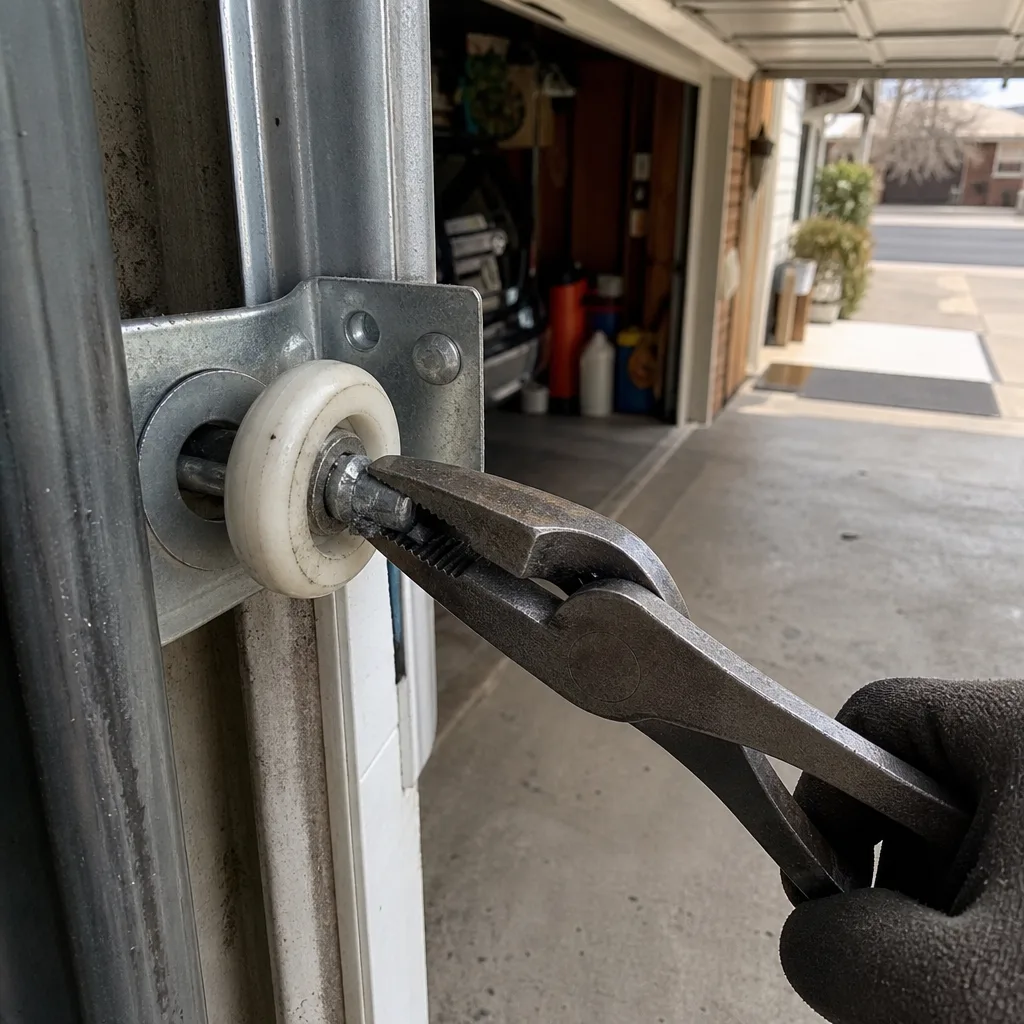
When you call a garage door contractor in Denver, you are interviewing them. The answers you get in the first two minutes reveal whether you’re talking to a technician who documents or a salesperson who gauges your desperation. Here are five questions, the good answers, and the answers that should end the call.
Question 1: “Will you give me a written price before starting work?”
Good answer: “Yes - we provide a flat, itemized quote on paper or electronically, and we get your approval before any work begins.” (This is Clause 1 of The Haven Standard.)
Bad answer: “We have to see it first, then we’ll tell you.” Or: “The technician will go over pricing on site.” Translation: they want you committed before you know the number.
Question 2: “Do you photograph the failed component before quoting replacement?”
Good answer: “Yes - we document what we find and share it with you before quoting. You see what we see.” (This traces to Clause 4 of The Haven Standard, our founding rule.)
Bad answer: “Uh, we can if you want.” Or confusion about why this matters. A contractor who doesn’t photograph doesn’t have a documentation habit, which means they also don’t document their warranty work, their parts used, or their labor performed.
Question 3: “What does your warranty cover, and for how long?”
Good answer: “Parts are covered for [X] years, labor for [Y] years, and here’s the written terms.” Separate durations, separate terms, no hand-waving.
Bad answer: “We warranty everything for a year.” Everything? Including if you hit the door with your car? The vagueness is intentional - it sounds generous until you need it.
Question 4: “What brands do you service, and do you stock common parts?”
Good answer: Specific brands named - LiftMaster, Chamberlain, Genie, Clopay, Amarr, Wayne Dalton, Craftsman, Raynor - plus confirmation that they carry common springs, rollers, cables, and openers on their service vehicle.
Bad answer: “We work on everything.” Everything includes proprietary systems they haven’t seen, which means they’re learning on your door. Or: “We have to order that,” which means two trips and two days of your time.
Question 5: “If I bring you a written estimate from another company, will you review it?”
Good answer: “Yes - bring the paperwork. We’ll review it and give you a second opinion at no charge.” (Servo offers this as standard practice; no coupon required.)
Bad answer: “We don’t look at competitors’ quotes.” Or aggression toward the other company. A confident contractor has nothing to fear from comparison.
What Pre-Work Photography Tells You About Process
The technician arrives at your home in Denver’s Berkeley neighborhood or out in Green Valley Ranch. The spring is broken, the door won’t open, and your Monday morning is already off the rails. Before touching anything, the technician pulls out a phone or tablet and photographs the failed component. They show you the image. They explain what they’re seeing. Then they quote.
This is not customer service theater. It is a process control that separates documented contractors from improvised ones. Here’s what pre-work photography indicates:
- They diagnose before they sell. The photo forces the technician to identify the specific failure - a clean break at the coil, a cable that has unwound from the drum, a logic board with visible capacitor damage - rather than defaulting to the most expensive replacement package.
- Their quote is traceable. If the quoted part doesn’t match the photographed failure, you have evidence. If the same failure recurs under warranty, you have a baseline for comparison.
- They’ve invested in documentation infrastructure. Photo records require cloud storage, standardized naming, customer delivery systems. A contractor with this infrastructure has also invested in training, inventory management, and warranty tracking - the systems that make a company reliable over time.
At Servo, the documented photo record is included on every visit, not optional. It traces back to our founding rule in 2015: the customer sees the failed part before anyone quotes a replacement. Clause 4 of The Haven Standard codifies this. When a contractor tells you “we don’t usually take pictures,” what they’re revealing is a business built on verbal quotes and unverifiable claims.
The absence of photography is a vetting failure. It means the technician is prepared to quote based on a quick look, a standard markup, and your willingness to get the interaction over with. In a market with no licensing requirement, process documentation is your best proxy for competence.
Parts Warranty vs. Labor Warranty: Why Denver Homeowners Need Both
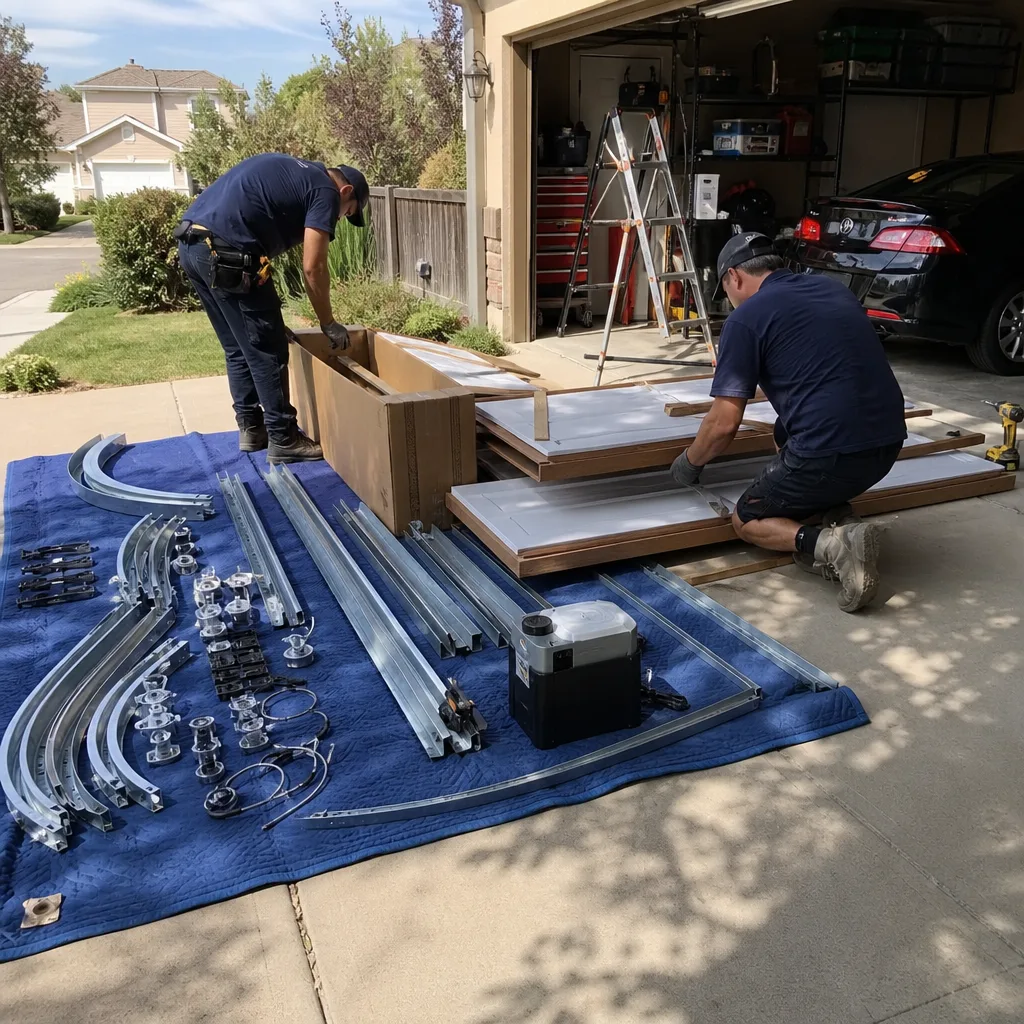
A “lifetime warranty” on a garage door spring sounds generous until you read the fine print and discover it covers only the part - not the labor to remove the failed spring and install the replacement. With garage door spring replacement in Denver running $180-$340 for standard torsion springs, a parts-only warranty could leave you paying nearly full price again when the replacement fails.
Here’s how the two warranties work and why you need both in writing:
| Warranty Type | What It Covers | What to Verify |
|---|---|---|
| Parts Warranty | Defective or prematurely failed components: springs, cables, rollers, openers, logic boards | Duration, whether prorated, whether it requires original receipt, whether it covers shipping of replacement part |
| Labor Warranty | The technician’s work: installation errors, improper spring sizing, incorrect door balance, faulty wiring | Duration, whether callback is free or discounted, whether it covers re-diagnosis if symptoms change |
Denver’s climate makes labor warranty especially important. A spring installed without proper winding or a door balanced incorrectly for the weight will fail faster here than in milder climates. The temperature cycling stresses components already; installation error accelerates failure. If your labor warranty is only 30 days, the contractor has no incentive to get the winding count right - they’ll be gone before the premature failure appears.
At Servo, the 365-Day Done Right Promise means if a repair is not right, we make it right. This is backed by The Haven Standard and a terms page, not a handshake. Ask any contractor you interview to show you their warranty terms in writing before work begins. If they can’t produce them, they don’t have them.
Brand Knowledge and Parts Availability
Denver’s housing stock includes garage doors and openers installed across four decades, from original Craftsman chain-drive units in 1980s ranch homes to WiFi-enabled LiftMaster wall-mount openers in new builds in Lowry. A contractor who claims to service “all brands” but stocks only generic parts will either damage your hardware with ill-fitting components or disappear for two days to source the correct part.
Ask specifically: “Do you carry [your brand] parts on your truck?” If you have a Raynor door with proprietary pinch-resistant hinges, a generic roller won’t fit. If your Chamberlain opener uses a specific trolley carriage, a universal replacement will bind. Brand-specific training matters too - Genie screw-drive openers require different lubrication and limit-switch calibration than belt-drive LiftMaster units.
At Garage Door Repair in Denver, we service all eight major brands - LiftMaster, Chamberlain, Genie, Clopay, Amarr, Wayne Dalton, Craftsman, and Raynor - and stock common springs, cables, rollers, hinges, and opener components on every service vehicle. For less common proprietary parts, we can typically source next-day from Denver-area distributors rather than waiting on national shipping.
For new installations, brand knowledge extends to wind-load ratings and insulation values relevant to Denver. A door rated for Miami’s hurricane code is overbuilt and overpriced here; a door with no wind-load rating may not meet local amendment requirements in some Denver-metro jurisdictions. The contractor should ask about your home’s exposure, not just your color preference.
Common Mistakes to Avoid
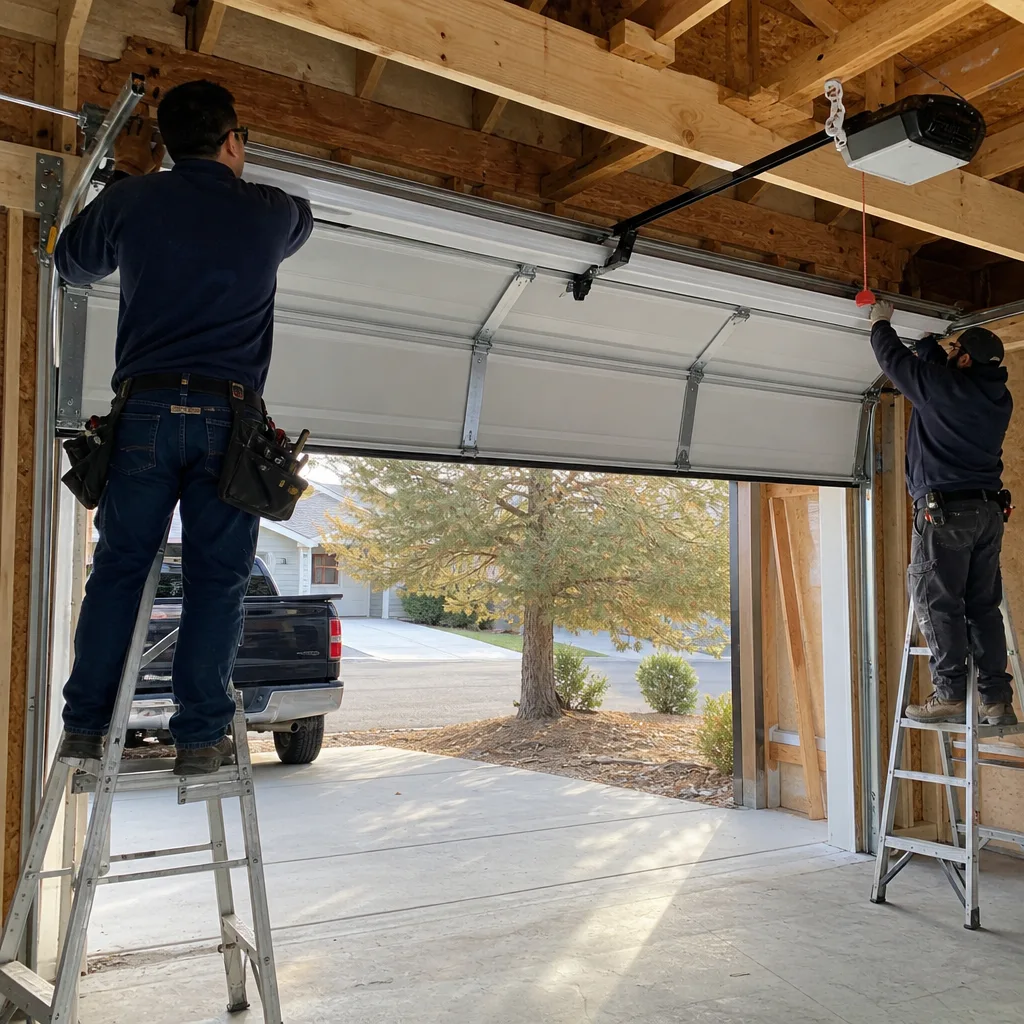
- Hiring based on who answers first at 6 a.m. The contractor with live 24/7 phone coverage is not necessarily the most competent - just the most available. Use the interview questions above even for emergency calls.
- Accepting a verbal quote because “it’s just a spring.” A broken torsion spring is a high-tension component that can cause serious injury if handled incorrectly. The quote should reflect that risk through proper documentation, not through a casual “yeah, about three hundred” over the phone.
- Ignoring the door’s age when comparing quotes. A 25-year-old door with original hardware may need more than a spring. A quote that only addresses the spring is setting up a callback for cables, rollers, and bottom brackets. Ask the contractor to assess the full system.
- Not checking that the quote includes door balance testing. A new spring on an unbalanced door will fail prematurely. The quote should include winding, balance adjustment, and safety reverse testing - not just “install spring.”
- Assuming all “licensed” contractors are equal. Colorado’s general contractor license does not verify garage door-specific training. Ask about experience with your specific door type and opener brand.
- Waiting until the door breaks to research contractors. Denver’s winter mornings and summer hailstorms create predictable demand spikes. Identify your contractor before the emergency, when you have time to verify documents and compare quotes.
- Not asking about cleanup and disposal. The old spring, cables, and packaging should be removed by the contractor, not left in your alley for Denver’s oversized pickup. Confirm this is included in the quoted price.
When to Call a Professional
Some garage door maintenance is safe for homeowners: lubricating rollers and hinges with silicone-based lubricant, testing the safety reverse with a 2×4, and visual inspection of cables for fraying. But certain failures require a trained technician with the proper tools and safety protocols. See our DIY vs Professional Garage Door: The Denver Homeowner’s Decision Guide for details.
Call a professional immediately if:
- A torsion spring is broken or shows a visible gap in the coils - these springs are under extreme tension and can cause severe injury
- Cables have detached from the drum or show significant fraying - a loaded door can drop without warning
- The opener motor runs but the door doesn’t move - this may indicate a stripped gear, broken trolley, or door lock engagement, and continued operation can damage the opener
- The door is off-track or visibly crooked in the opening - operating an off-track door bends the track and can pull the door out of the header
- You smell burning from the opener motor - this indicates electrical failure that risks fire
Servo Garage Doors Denver offers free estimates in Denver - call (720) 807-2580. Our technicians are background-checked and uniformed, and every visit includes a documented photo record of findings and completed work. For Garage Door Installation in Denver or Garage Door Opener Repair & Installation in Denver, we provide a free measure and written price before any work is scheduled.
Frequently Asked Questions
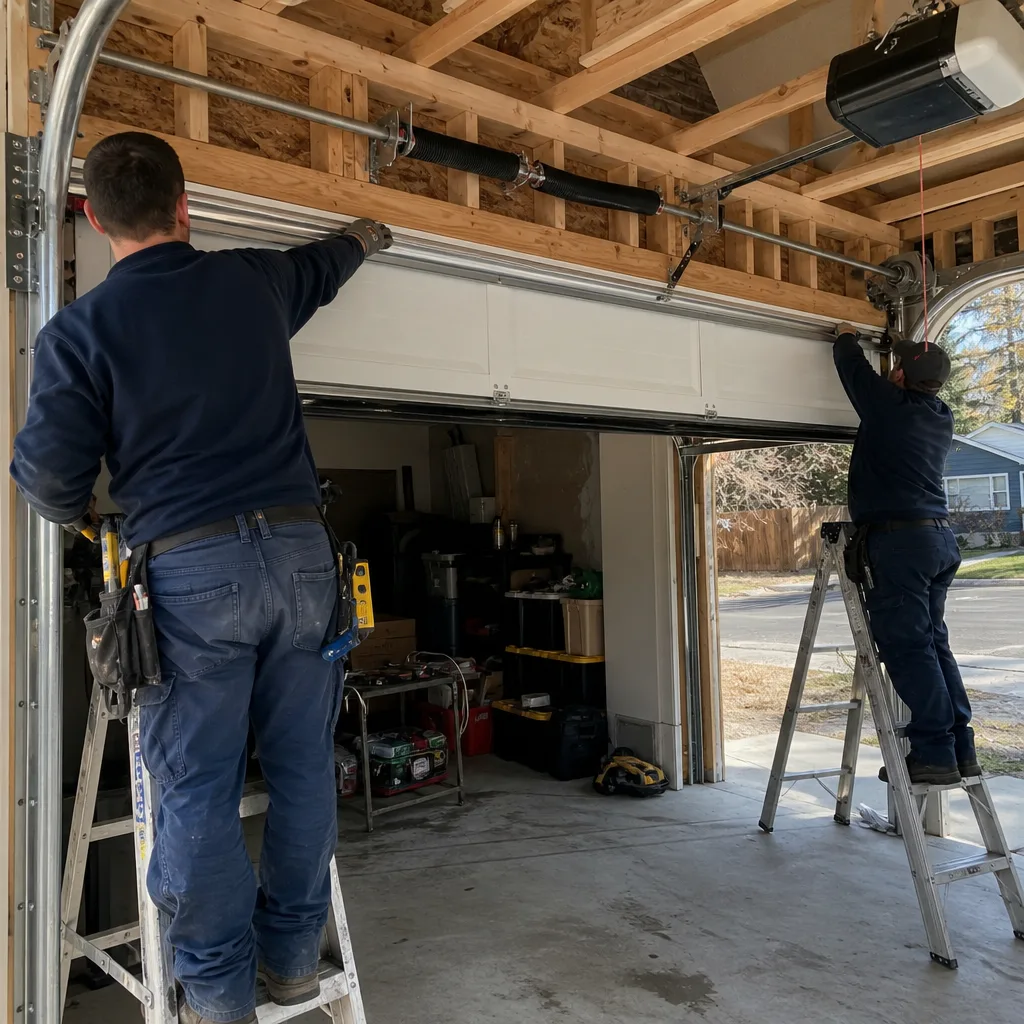
Standard torsion spring replacement in Denver typically costs $180-$340 for a single spring and $280-$480 for a double-spring system, depending on spring size, cycle rating, and whether cables or other hardware need replacement. High-cycle springs (25,000-50,000 cycles) cost more upfront but last longer in Denver’s temperature-cycling climate. Call (720) 807-2580 for an exact quote - estimates are free, and the price is locked before work begins.
No - Colorado does not require a specialty license for garage door repair or installation. A general contractor’s license covers this work, but that license does not verify specific training on high-tension spring systems, opener electrical work, or door balance. This makes homeowner vetting essential: request proof of general liability insurance, a written itemized quote, and a written warranty before any work begins.
A fair quote lists every part by name or part number, separates parts from labor, states a flat total that won’t change, and includes no disappearing fees or same-day pressure tactics. Compare quotes from at least two contractors for the same scope. At Servo, we also offer a free second opinion on any written estimate from another company - bring the paperwork, no coupon needed.
Ask five things: Will you give me a written price before starting work? Do you photograph the failed component before quoting? What does your warranty cover and for how long? What brands do you service and do you stock common parts? Will you review a competitor’s written estimate? The answers reveal whether you’re hiring a documentation-based contractor or a pressure-based operator.
Denver’s elevation, temperature swings, and dry climate accelerate metal fatigue in springs. Daily temperature changes from below freezing to above 50 degrees in winter cause expansion and contraction. Low humidity increases static friction in moving parts. UV exposure at 5,280 feet degrades nylon components. These factors don’t excuse premature failure from poor installation, but they do mean Denver homeowners should prioritize high-cycle springs and proper door balance.
A parts warranty covers defective or prematurely failed components; a labor warranty covers installation errors and workmanship flaws. You need both, with separate durations and separate written terms. A “lifetime” parts warranty with no labor coverage means you’ll pay full installation cost when the replacement part fails. Always get both in writing before authorizing work.
The Bottom Line
Hiring a garage door contractor in Denver is not about finding the lowest price or the fastest response - it’s about finding a contractor whose process produces verifiable results. The three documents (written itemized quote, proof of insurance, written warranty), the five interview questions, and the red flags in quoting are your protection in a market with no state-level specialty license. Documentation beats promises every time. A contractor who photographs before quoting, who names the part and the price before touching a tool, and who puts warranty terms on paper rather than in a handshake is the contractor who will still answer the phone when you need them again.
We’ve made 18,000+ garage doors right since 2015 - every one with a written price before work started and a documented record when the technician left. If you’re evaluating contractors now, or if you have a written estimate you’d like reviewed, call (720) 807-2580. Estimates are free. The price we quote is the price you pay. No exceptions.
Written by Marcus Deller, Owner at Servo Garage Doors Denver, serving Denver since 2015.