
Last updated September 22, 2026
Full 25-point door and opener safety check with every visit - springs, cables, rollers, tracks, and your LiftMaster or Chamberlain opener included
You get a price before we start. It does not change when the truck arrives.
 Before
 After
After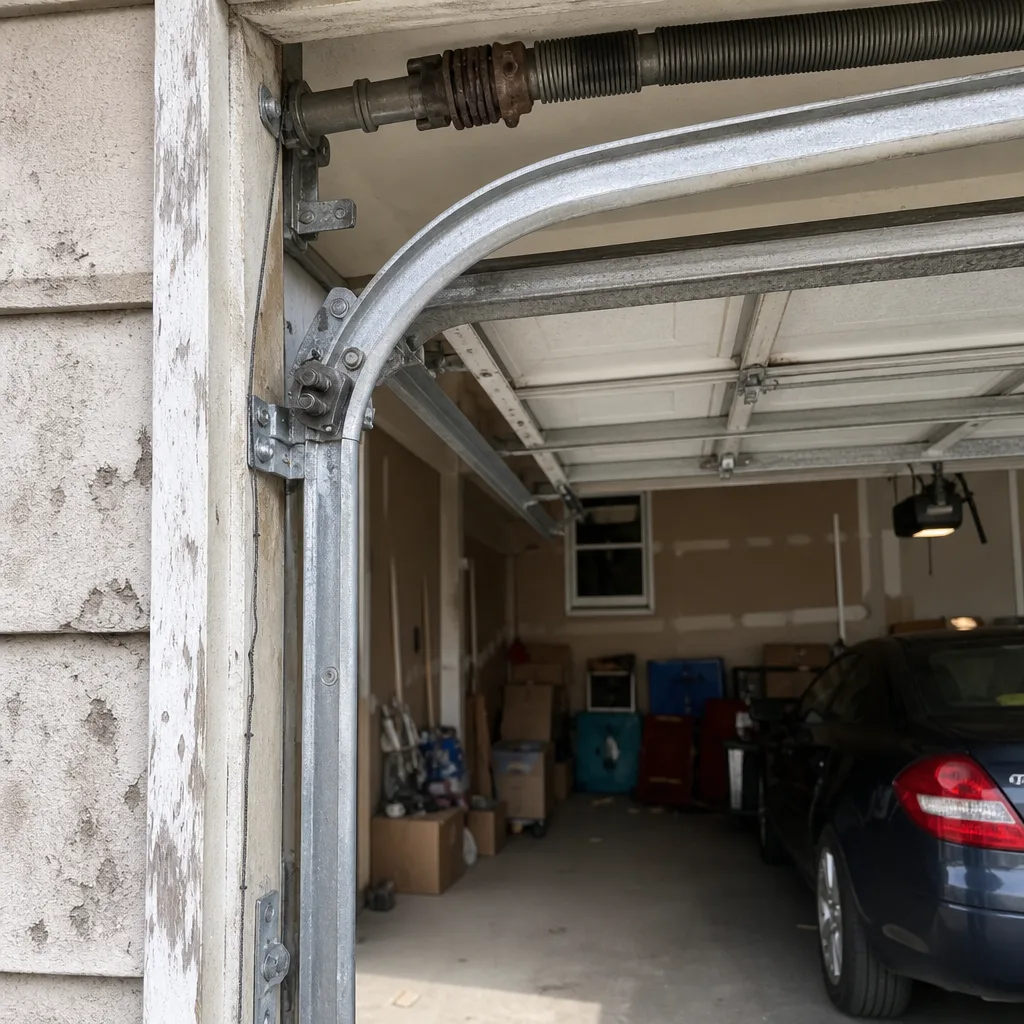 Before
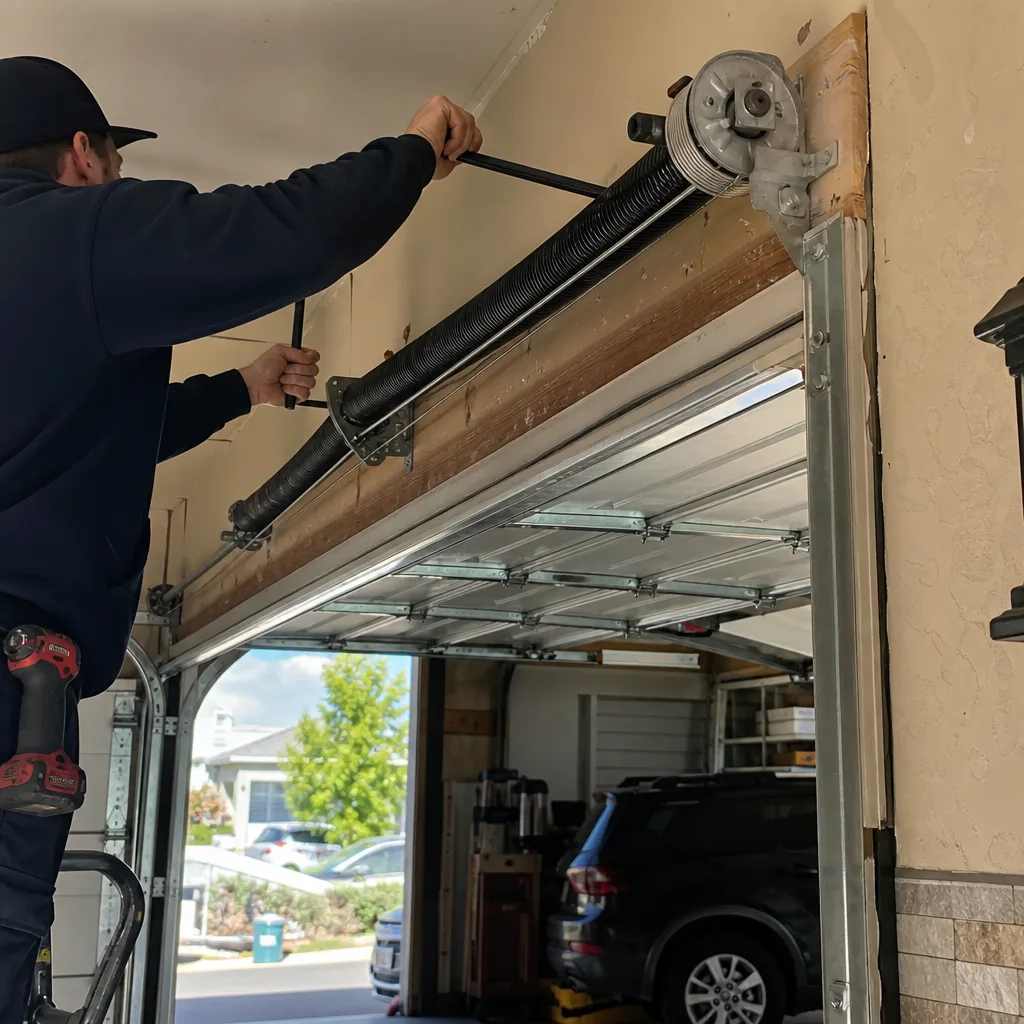 After
After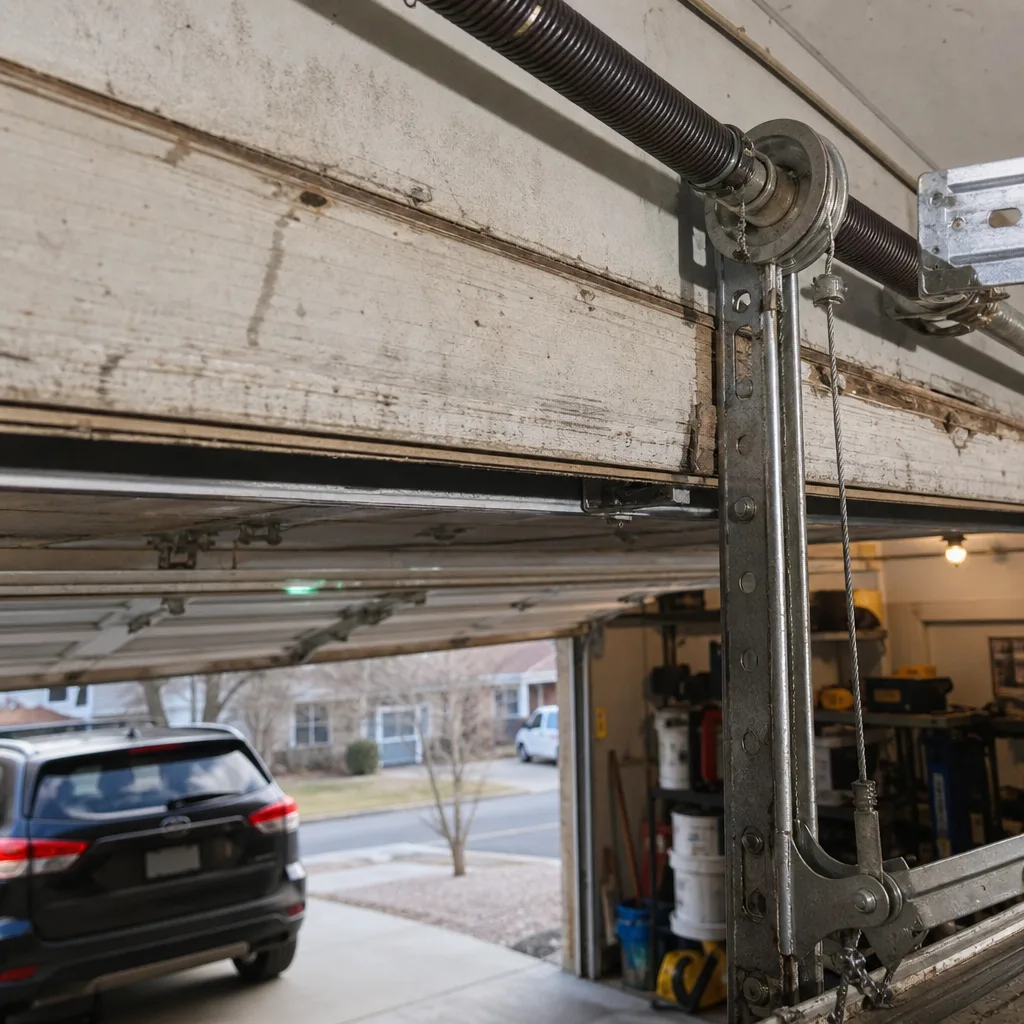 Before
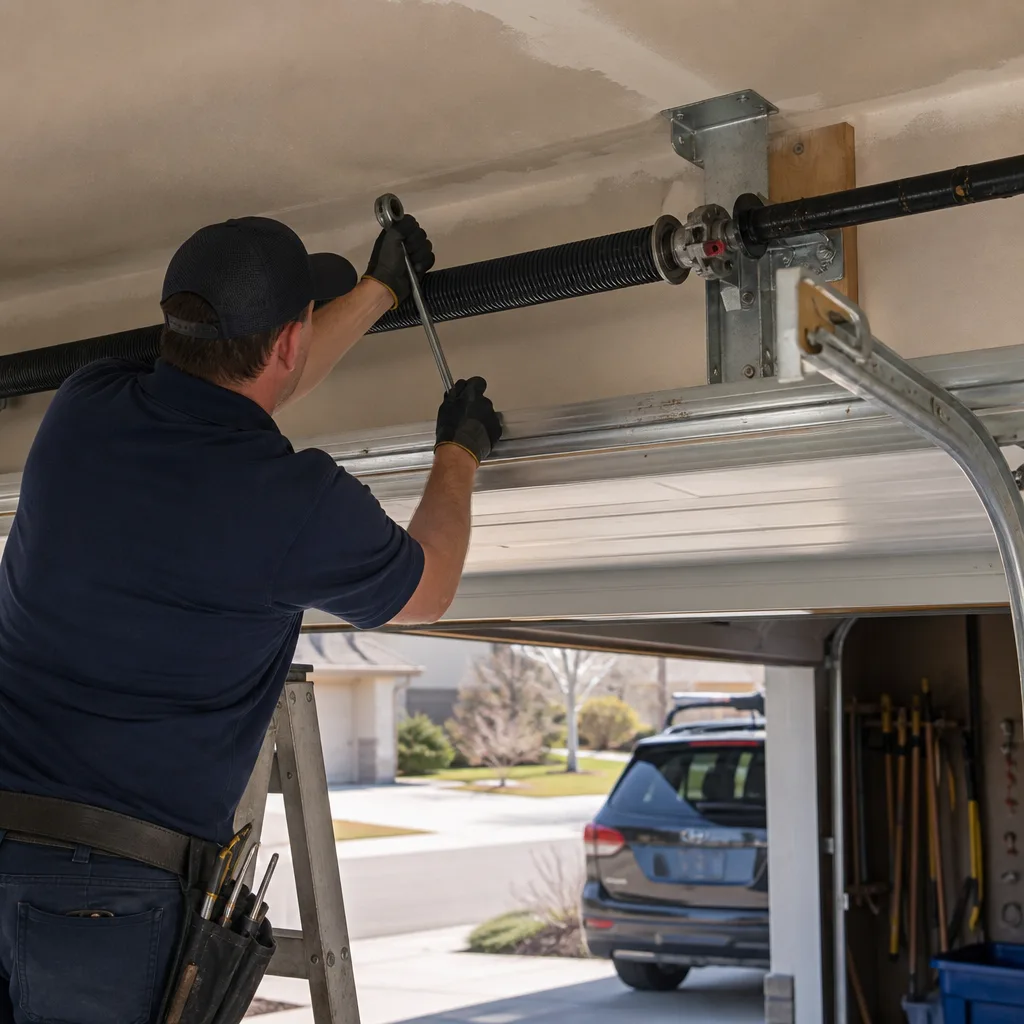 After
AfterSeasonal Garage Door Care for Denver: Year-Round Homeowner’s Guide
Denver’s most common spring failure month is March, not January. The cold itself rarely snaps a torsion spring; it’s the return of daily load cycling after winter’s frozen-contracted metal that causes the break. In our experience across Denver since 2015, garage door components fail at weather inflection points, not during stable stretches. This guide maps care to Denver’s actual climate transitions: the first hard freeze, January’s cold bottom, the March thaw cycle, June hail season, and August’s UV peak. For more guides & resources on Denver garage door care, see our blog. You’ll learn what to inspect, when to inspect it, and which maintenance tasks prevent the failures we document on emergency calls throughout the metro area.
Quick Answer
Seasonal garage door care in Denver means preparing for five weather inflection points per year, not four calendar quarters. Homeowners should perform a balance test and visual inspection before the first hard freeze, lubricate moving parts with silicone-based lubricant in October before temperature volatility begins, and document panel condition before June hail season. Most critical: test the manual release when temperatures first drop below 20°F, as cold contraction affects cable tension and opener strain differently than in summer.
Table of Contents
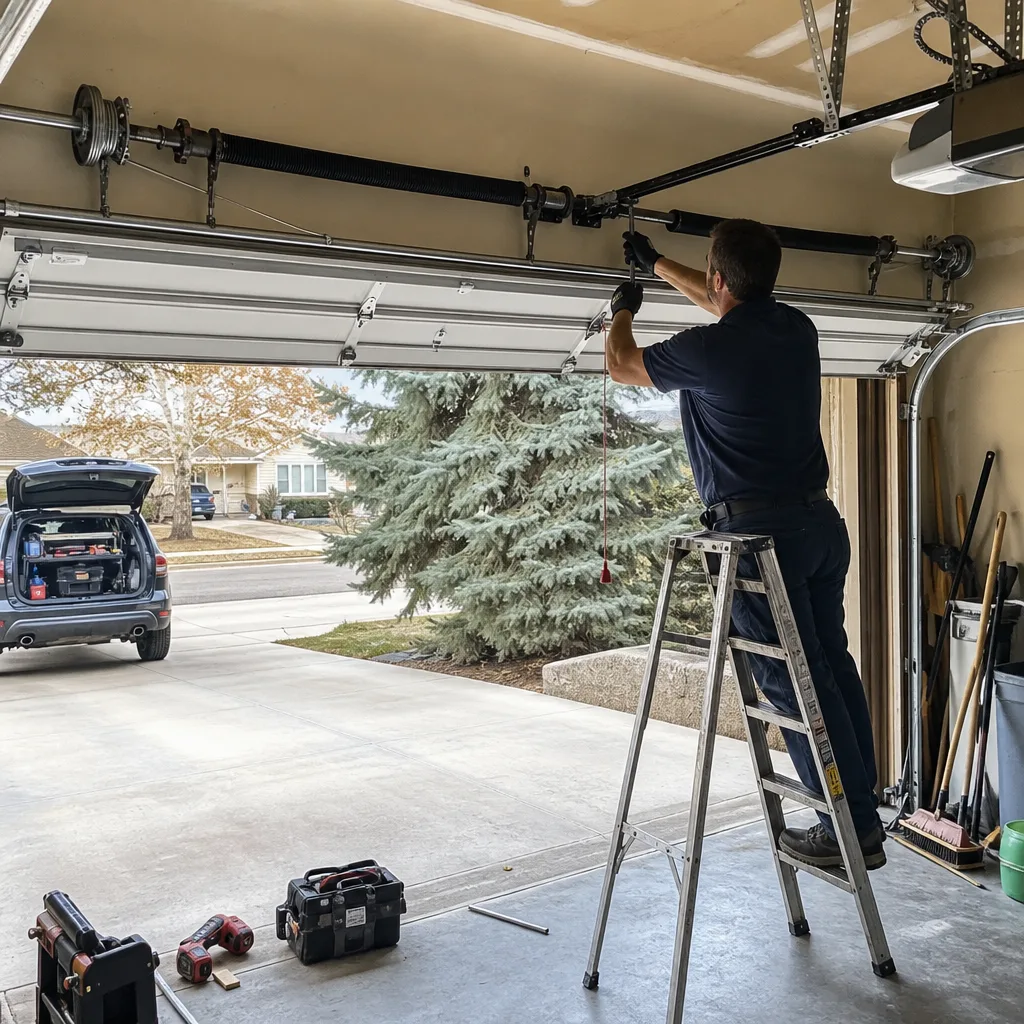
- The Five Denver Weather Inflection Points That Stress Garage Doors
- First Hard Freeze: What Cold Contraction Does to Your Door
- January Cold Bottom: The Static Stress Period
- March Thaw Cycling: Why Springs Fail Now
- June Hail Season: Panel Documentation and Protection
- August UV Peak: Weatherseal and Hardware Degradation
- Autumn Close-Out: The October Maintenance Procedure
- Common Mistakes to Avoid
- When to Call a Professional
- Frequently Asked Questions
- The Bottom Line
 Before
 After
AfterThe Five Denver Weather Inflection Points That Stress Garage Doors
Denver’s continental climate produces sharp transitions rather than gradual seasonal shifts. The city sits at 5,280 feet with low humidity and intense solar radiation, creating conditions that age garage door components faster than in coastal or humid climates. We’ve identified five specific inflection points where our emergency call volume spikes across Denver neighborhoods from Stapleton to Highlands Ranch.
The five inflection points:
- First hard freeze (typically mid-October to early November): Temperature drops below 28°F for the first sustained period. Metal components contract, lubricants thicken, and the opener motor encounters increased resistance.
- January cold bottom (mid-January, often below 0°F): The period of sustained minimum temperatures. Springs and cables sit under static tension in contracted state; the risk isn’t immediate failure but cumulative fatigue.
- March thaw cycling (February through April): Daily temperature swings of 40°F or more. Metal expands and contracts repeatedly. This is when torsion springs snap, because the return to active cycling meets metal that has work-hardened through winter.
- June hail season (May through July): Denver receives some of the nation’s most damaging hail. Panel dents compromise door balance and weatherseal integrity.
- August UV peak (July through September): At Denver’s elevation, UV intensity is approximately 25% higher than at sea level. Rubber weatherseals degrade, plastic opener components become brittle, and paint finishes oxidize.
Each inflection point demands specific preparation. The sections below detail what to check, what we’ve found fails, and how to document condition for your own records or for insurance purposes.
First Hard Freeze: What Cold Contraction Does to Your Door
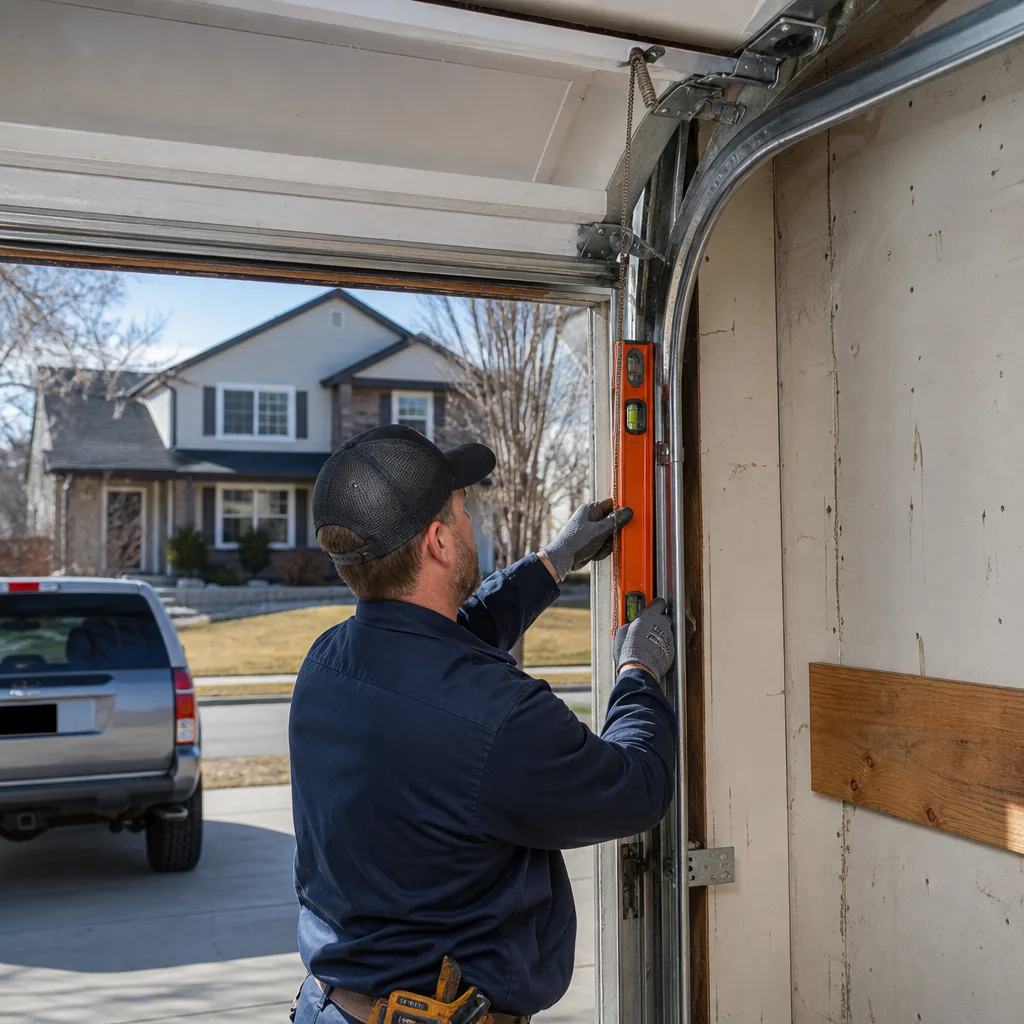
The first sustained freeze in Denver typically arrives between October 15 and November 10. When temperatures drop below 28°F and stay there, steel components contract measurably. A standard 2-inch torsion spring contracts approximately 0.012 inches per 10 feet of length for every 10°F drop. That seems negligible, but it changes cable tension, door balance, and the load on your opener.
What to inspect before the first freeze:
- Balance test: Disconnect the opener using the manual release handle (the red cord hanging from the trolley carriage). Lift the door manually to waist height. A properly balanced door stays in place or drifts slowly. If it drops hard or shoots upward, the spring tension is off. In Denver, we see more doors fail this test in late October than in mid-winter, because homeowners haven’t adjusted for the seasonal shift.
- Cable tension check: Look for fraying, especially where cables wrap around the bottom fixtures. Cold contraction increases tension; existing wear points fail under the additional load.
- Manual release function: The release handle should move freely. We’ve found frozen or stiff releases in Park Hill and Montclair homes where humidity from attached garages condenses and freezes in the mechanism.
- Weatherseal pliability: Press the bottom seal with your thumb. If it cracks instead of compressing, replace it before freeze-thaw cycles begin. A failed seal lets water pool and freeze, creating an ice bond that strains the opener.
The balance test result changes seasonally. A door that balances perfectly in July may drift downward in January on the same spring setting. This isn’t necessarily a problem requiring adjustment; it’s physics. But if the drift exceeds 6 inches in either direction, the spring tension needs professional calibration. We document the seasonal balance reading on every maintenance visit so Denver homeowners can track change over time.
Lubricant selection matters here. Standard WD-40 or heavy grease thickens in cold. We use and recommend silicone-based spray lubricant for Denver’s temperature range, applied to hinges, rollers, and bearing plates after cleaning old residue. The Haven Standard requires we photograph the application points so the customer knows what was serviced.
January Cold Bottom: The Static Stress Period
Denver’s coldest temperatures typically occur in mid-January, with overnight lows reaching -5°F to -10°F in exposed areas like Aurora or Centennial. During this period, garage door usage often drops. Homeowners leave for work in darkness and return in darkness, using the door twice daily instead of weekend project cycles.
The danger isn’t active failure; it’s silent degradation. Torsion springs sit under constant torque, and cold-contracted metal experiences higher stress at the same load. Cables, already tensioned, have reduced flexibility. The opener’s DC motor draws higher amperage to overcome thickened grease and contracted components.
January maintenance tasks:
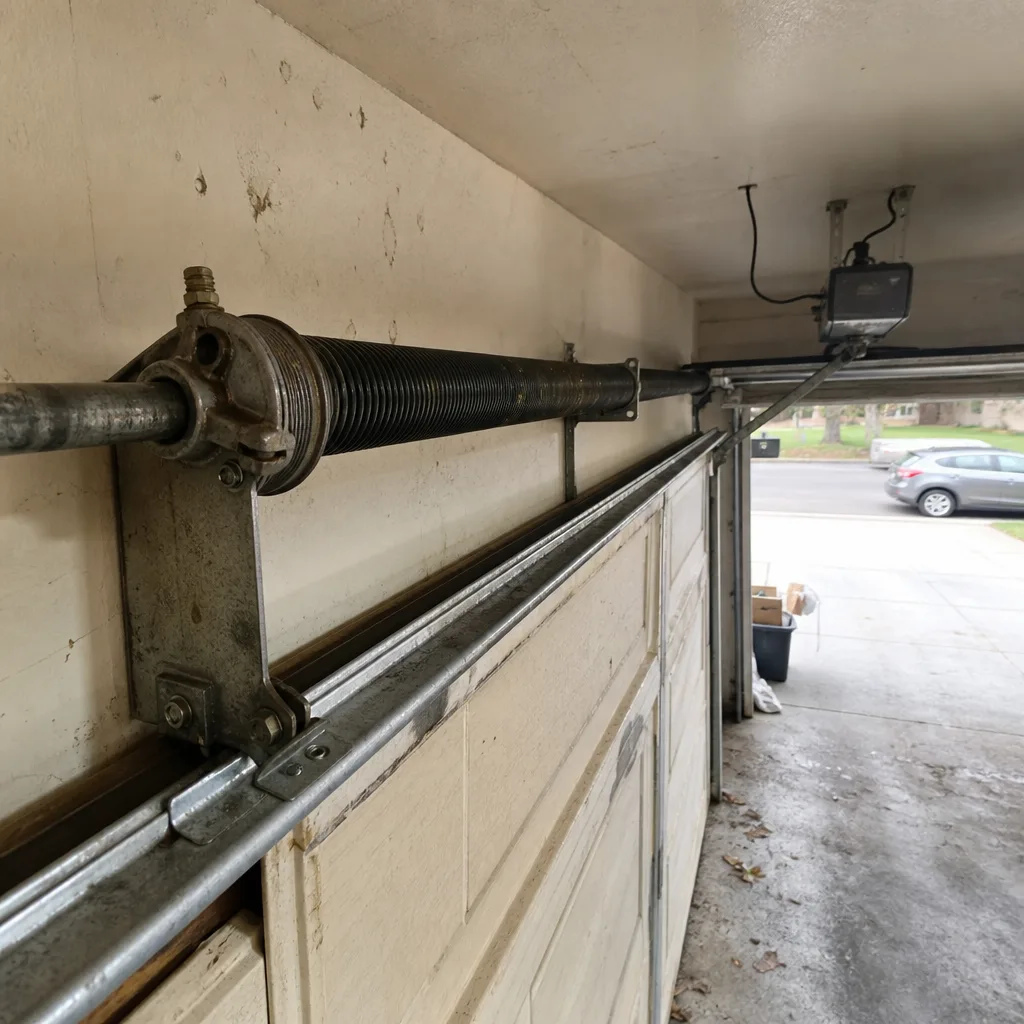
- Visual inspection of spring coils: Look for gaps between coils that weren’t present in fall. A torsion spring should show consistent coil spacing. Gapping indicates set loss, meaning the spring has lost some of its preload and the door is heavier on the opener.
- Opener force limit test: Place a 2×4 flat on the floor where the door closes. Activate the door. It should reverse on contact. If it doesn’t, the force setting is too high, possibly compensating for a door that’s out of balance. This is a safety issue, not just a maintenance item.
- Photo-eye alignment: Cold can shift mounting brackets slightly. Clean lenses with a soft cloth and verify the LED indicators on both sensors show solid alignment. In Denver’s dry climate, dust accumulation is constant.
- Track inspection: Look for ice formation at the bottom of vertical tracks. Melting snow from vehicles refreezes overnight and can block roller travel.
We receive fewer emergency calls in January than in March, but the failures that do occur tend to be catastrophic: full spring breaks, cable snaps, or opener gear stripping. These are components that have been degrading since the first freeze and finally exceed their fatigue limit. Documentation from your October inspection provides the baseline to show whether change accelerated.
March Thaw Cycling: Why Springs Fail Now
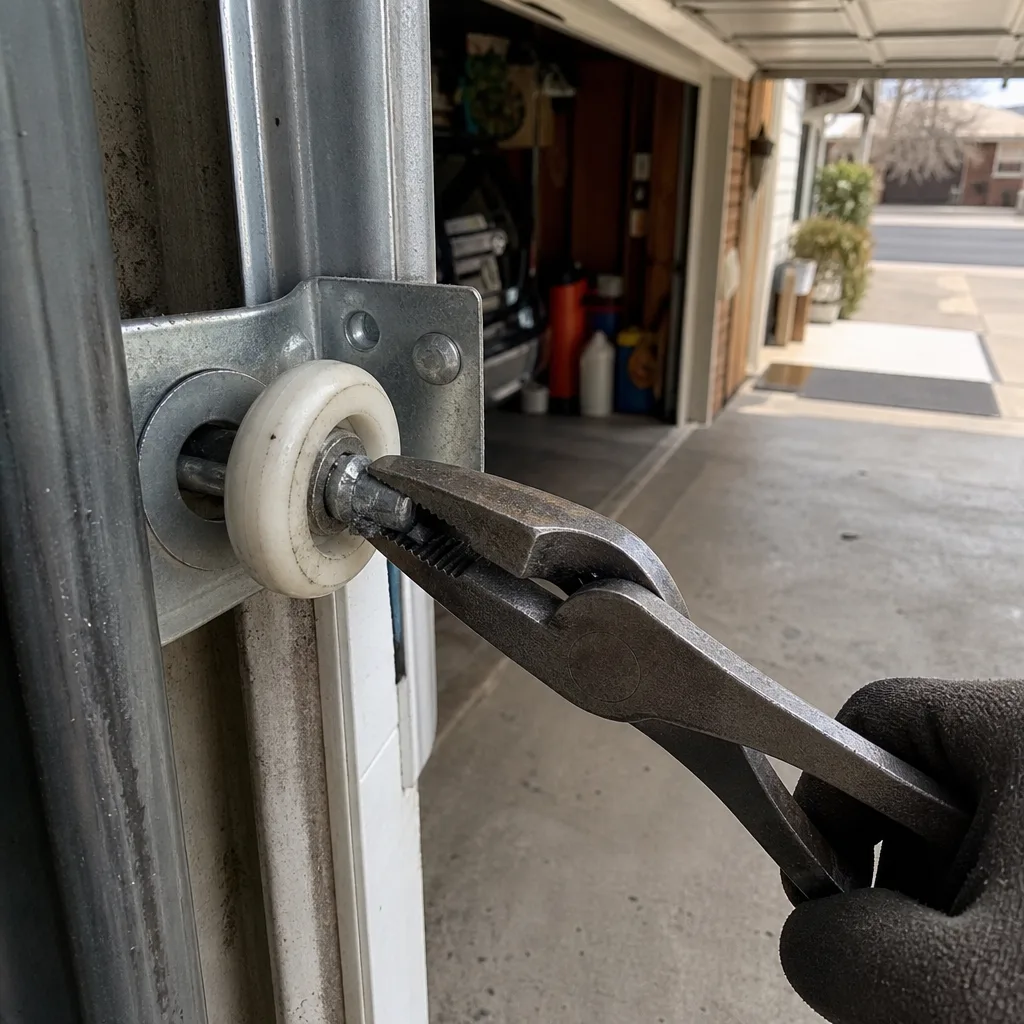
March in Denver produces the most volatile temperature swings of the year. A single week in 2024 saw 67°F on Monday and 12°F by Thursday. Metal that contracted through January now expands and contracts daily. The torsion spring, which has been statically loaded in cold-shrink state, must resume active cycling, and the fatigue crack that formed at the coil’s inner diameter finally propagates through.
This is why our emergency spring replacement volume peaks in March, not January. The cold didn’t break the spring; the return to motion did.
What happens to components during thaw cycling:
- Torsion springs: Each open-close cycle flexes the spring wire. After winter’s static loading, the stress concentration at existing micro-cracks reaches critical propagation. We measure wire diameter and count active coils on every replacement; a 0.25-inch wire spring with 7.5 active coils has different cycle life than a 0.243-inch wire with 8 coils, even on the same door weight.
- Bottom fixtures and cables: As the door warms, accumulated ice melts into track bottoms. Rollers encounter water, then refreeze in overnight drops. The opener strains against stuck rollers, and cable tension spikes unevenly.
- Logic boards: Opener electronics experience thermal shock from rapid ambient changes. We replace more LiftMaster and Chamberlain logic boards in March than any other month, as capacitor solder joints fatigue from expansion-contraction cycles.
Pre-March inspection checklist:
- Perform the balance test again. Compare to your October reading. Any change greater than 4 inches indicates spring degradation.
- Listen during operation. A rhythmic “pop” or “click” as the door travels often means a cracked spring coil is catching. This sound precedes full failure by days or weeks.
- Check cable windings on the drum. Uneven winding suggests a door that has opened unevenly, stressing one spring more than the other on dual-spring systems.
- Test the wall button and remotes after cold nights. Weak batteries fail in cold; replace them before they strand you.
If you hear the rhythmic click, call for inspection. We’ve documented these sounds on video during service calls, and the spring typically fails within 10-14 days. A planned replacement beats an emergency, and our written price before work starts means you know the cost before we unload tools.
June Hail Season: Panel Documentation and Protection
Denver’s Front Range sits in “Hail Alley,” receiving more hail damage than almost any U.S. metro area. The 2017 May 8 storm caused $2.3 billion in damage across the metro. June produces the largest hailstones, though May storms are more frequent. For garage doors, hail damage isn’t merely cosmetic; it compromises panel structural integrity, weatherseal contact surfaces, and door balance.
Pre-hail documentation: This is the maintenance task competitors rarely mention. Before hail season, photograph every panel from straight-on, at oblique angles to show surface contour, and close-ups of any existing dings. Store these with date stamps. When hail strikes, insurance adjusters compare post-storm photos to your documentation. We’ve had Denver customers denied claims because they couldn’t prove pre-existing condition versus new damage.
Our documented photo record on every visit includes panel condition shots starting in April. If you’re a Servo customer, you already have this baseline. If not, use your phone; the resolution is sufficient for insurance purposes.
Panel vulnerability by type:
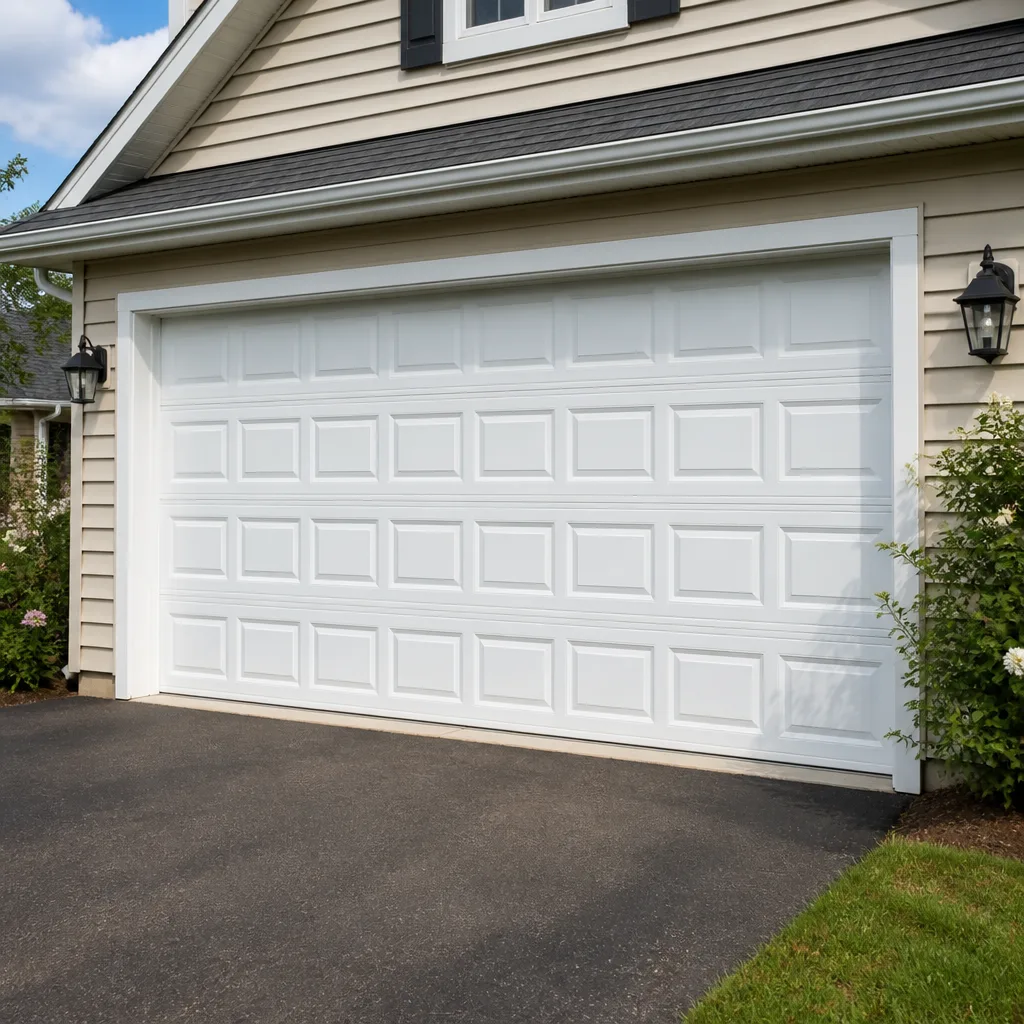
- Steel raised-panel doors: Most common in Denver. Dents at panel edges affect roller alignment and can bind the door in tracks. Even small dents at hinge points multiply stress across the section.
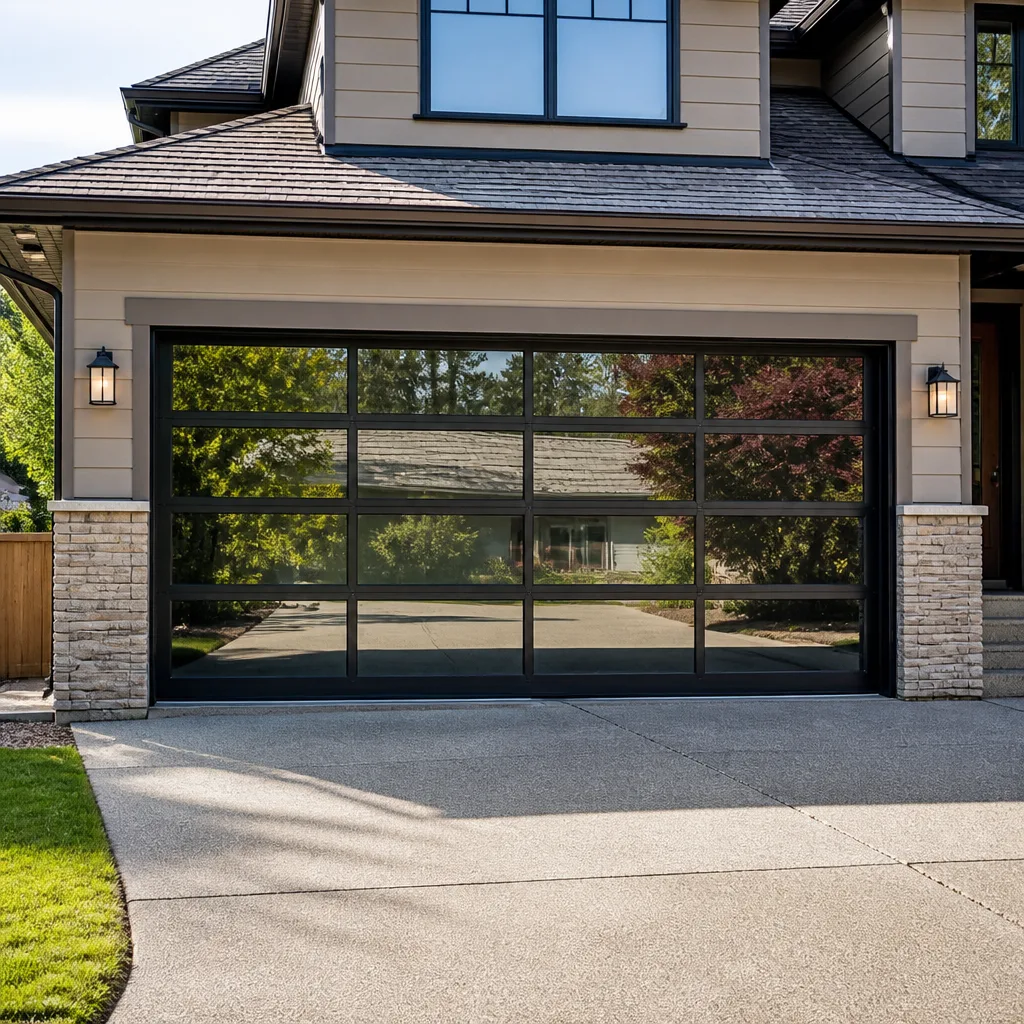
- Aluminum full-view doors: Popular in modern Cherry Creek and RiNo builds. Dent more easily than steel but resist cracking. Panel replacement is typically required rather than repair.
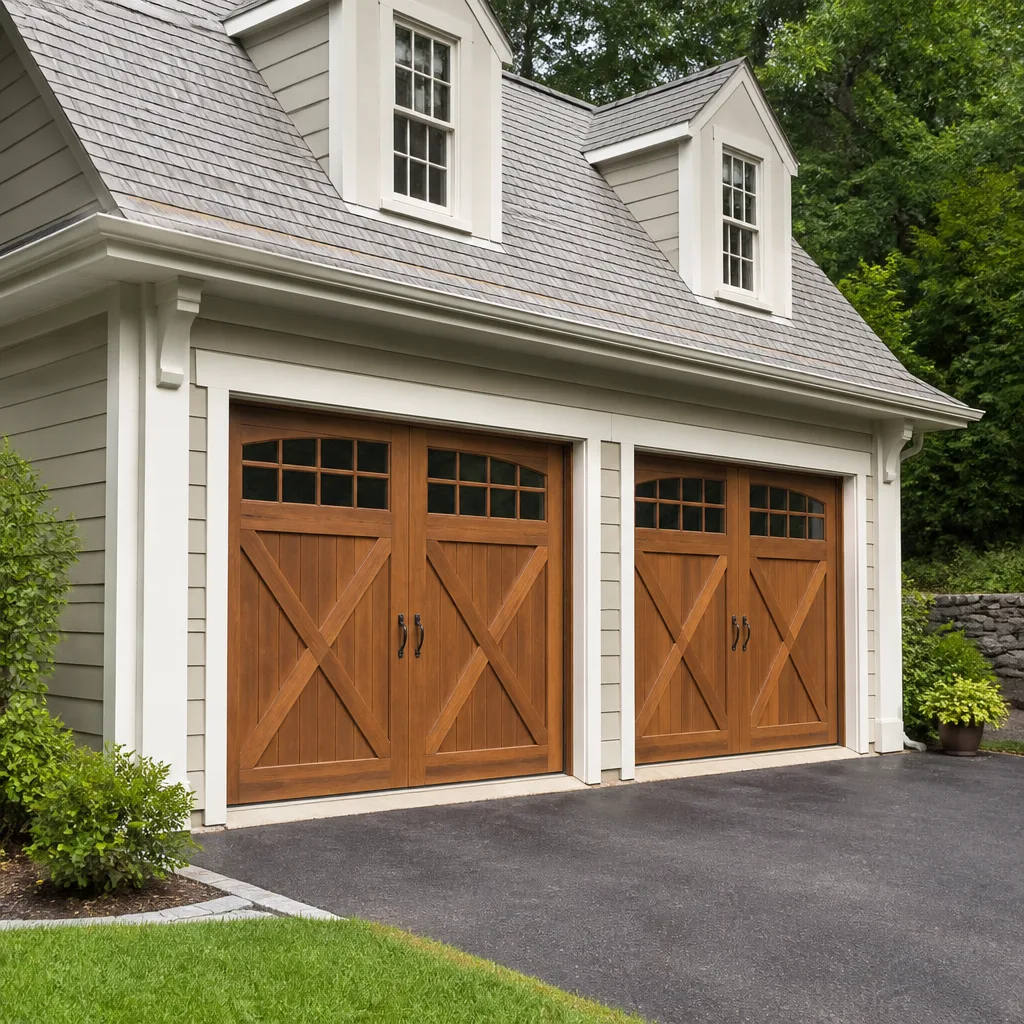
- Wood composite doors: Less common but present in older Park Hill and Hilltop homes. Hail cracks the surface coating, allowing moisture infiltration that swells the core through summer humidity.
Post-hail inspection: After any storm with reported hail, run the door through full travel. Listen for new binding or uneven movement. Check weatherseal contact; dented panels often no longer compress the seal uniformly, creating gaps for water and pest entry. Document new damage immediately; most insurers require claims within 180 days, and Denver’s summer storms can make attribution difficult if you wait.
For significant damage, panel replacement restores factory balance. Skin-only replacement (applying a new steel face to existing panel structure) is cheaper but rarely achieves original tolerances. We quote both options with written scope, per Clause 1 of The Haven Standard.
August UV Peak: Weatherseal and Hardware Degradation
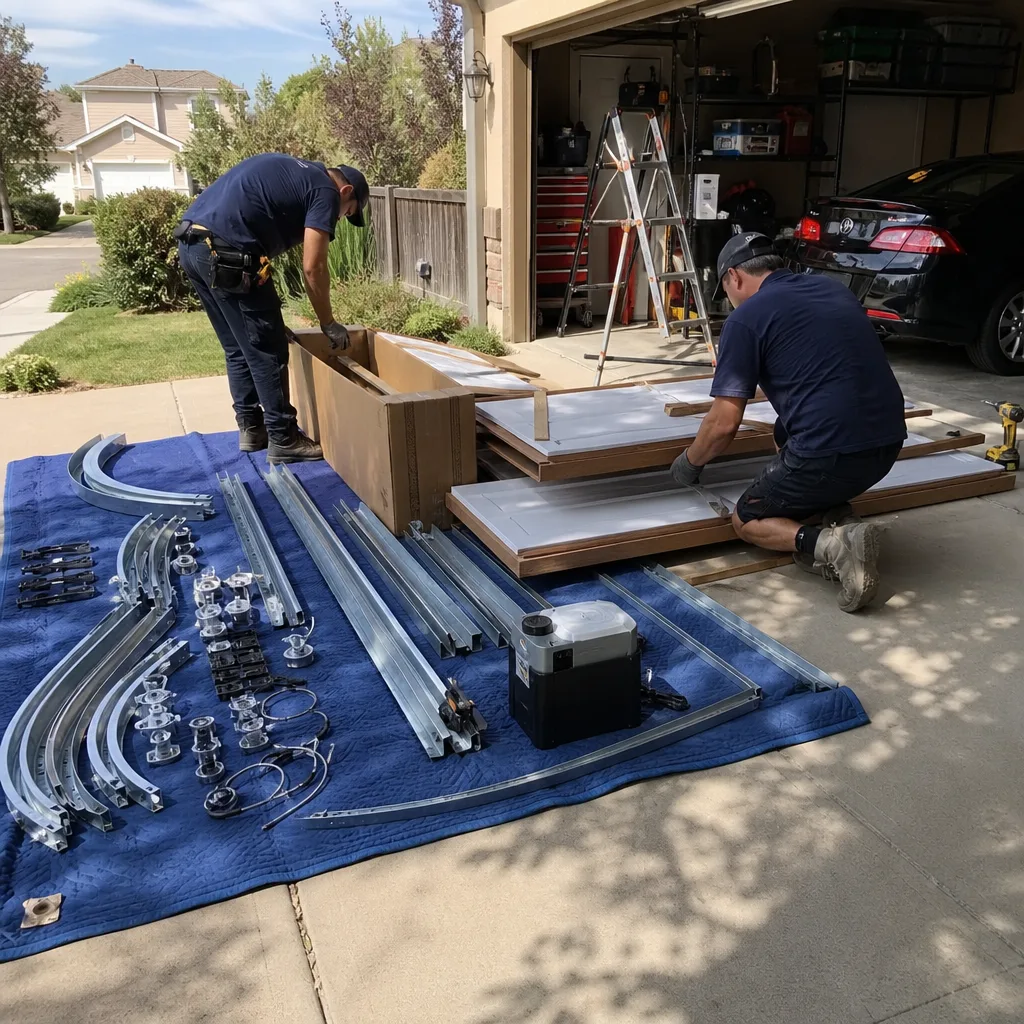
At Denver’s elevation, UV intensity peaks in August after cumulative summer exposure. The sun’s angle is lower than in June, meaning south and west-facing garage doors receive more direct radiation per hour. We’ve measured surface temperatures above 140°F on dark-colored steel doors in Stapleton and Lowry, where alley-facing garages get afternoon sun.
UV-specific failures we document:
- Bottom seal cracking: Unlike Midwest climates where seals fail from freeze-thaw, Denver seals crack from UV embrittlement. The rubber becomes glossy and hard, then develops surface crazing before full cracks appear. A failed seal in August means water intrusion during September’s brief monsoon period, then freeze-thaw damage by October.
- Opener plastic components: The trolley carriage, safety sensor housings, and wall button bezels on Genie and older Raynor openers become brittle. We’ve replaced trolley carriages that snapped during normal operation after UV degradation.
- Paint and finish oxidation: Factory finishes on steel doors chalk and fade. Once the topcoat degrades, galvanized substrate begins oxidizing. White doors show yellowing; dark colors show chalking. This is beyond maintenance into replacement territory, but early identification matters for warranty claims.
- Weatherstrip on stop molding: The vinyl or rubber flap that seals the door against the frame hardens and loses contact pressure. Light visible around the door perimeter indicates replacement need.
August inspection protocol:
- Run hand along bottom seal. It should feel compliant, not glazed or cracked.
- Inspect opener plastic components for color change or surface crazing.
- Check door finish at panel edges and corners, where UV concentrates.
- Verify weatherstrip contact by closing door on bright day and looking for light leaks from inside.
Replacement seal specification matters. We match by door brand: Clopay, Amarr, Wayne Dalton, and Raynor each use proprietary seal profiles. Using generic “universal” seal often creates gaps or compression that accelerates wear. We carry brand-specific seals on every truck and document the installed spec in your photo record.
Autumn Close-Out: The October Maintenance Procedure
October in Denver produces the most temperature volatility of any month, with swings of 50°F in 24 hours common. This is the critical preparation window before the first hard freeze. Our autumn close-out procedure is designed for these conditions, not for a gentle seasonal transition.
Step-by-step October maintenance:
- Clean all moving parts. Remove old lubricant, road grit, and accumulated dust from rollers, hinges, and bearing plates. Denver’s dry climate produces fine dust that acts as grinding compound when mixed with lubricant. We use degreaser on a rag, not a pressure washer; water in tracks freezes.
- Inspect and replace rollers as needed. Nylon rollers degrade from UV and load; steel rollers develop flat spots. A roller that doesn’t spin freely during manual door travel creates drag the opener compensates for. We replace in sets of 10 or 12 to maintain consistent rolling resistance.
- Lubricate with silicone-based spray. Apply to hinge pivot points, roller bearings, and torsion spring coils. Do not lubricate the track itself; the roller needs traction, not slip. In Denver’s temperature range, silicone maintains viscosity from -35°F to 200°F. We avoid lithium greases that thicken below 20°F.
- Tighten hardware to factory torque. Vibration loosens track bolts, hinge screws, and opener mounting lag bolts. We use a torque-limiting driver to prevent over-tightening into stripped holes.
- Test and document balance. Record the door’s resting position at waist height. This becomes your January and March comparison baseline.
- Test manual release under load. With door closed, pull the release handle. It should move with moderate effort. If it requires force, the mechanism may freeze when temperatures drop. We disassemble, clean, and lubricate the release cam as needed.
- Inspect weatherseal and replace if glazed or cracked. As noted in the August section, UV damage precedes freeze failure.
- Test safety systems: Force limit (2×4 test), photo-eye obstruction, and wall button lockout function.
- Photograph panel condition and hardware state. This is your pre-hail baseline and your documentation for any winter insurance claim.
The entire procedure takes 45-60 minutes for a trained technician. We perform this as a scheduled service every October for Denver customers who opt into annual maintenance, with written scope and flat price quoted before arrival. The photo record from this visit becomes your most valuable documentation for the year ahead.
Common Mistakes to Avoid
- Using WD-40 as a lubricant. WD-40 is a water displacer and light solvent, not a lubricant. It evaporates within days, leaving metal bare for Denver’s dry, abrasive dust. We’ve cleaned it off hundreds of doors where homeowners applied it monthly, accelerating wear.
- Adjusting spring tension without training. Torsion springs store lethal energy. The winding bars must fit the cone exactly, and the technique requires specific body positioning. We’ve responded to emergency calls in Berkeley and Sunnyside where DIY adjustment resulted in injury or door damage. This is not a maintenance task for homeowners.
- Ignoring the manual release until an emergency. Denver power outages from snowstorms are common. Testing the release when you need it often means discovering it’s frozen or stuck. Test monthly, document function.
- Replacing only one spring on a dual-spring system. Springs age in pairs. A new spring paired with an old spring creates unequal lift, stressing the opener and tracks. We replace torsion springs in matched sets, with wire diameter, coil count, and cycle rating documented in your record.
- Using generic weatherseal on brand-specific doors. The bulb shape, retainer profile, and compression height vary by manufacturer. A seal that doesn’t match creates gaps or over-compresses, failing within one season. We stock Clopay, Amarr, Wayne Dalton, and Raynor specific seals.
- Waiting for total failure before calling. The rhythmic click of a cracking spring, the slight sag of a door, the extra second of opener strain, these are measurable precursors. Addressing them during business hours costs less than emergency service, and our written price means no surprise.
- Not documenting pre-existing condition. Denver’s hail, UV, and temperature extremes make insurance claims common. Without dated photos, you cannot prove when damage occurred. Our photo record on every visit solves this automatically.
When to Call a Professional
Call for professional service when you observe any of the following: a door that fails the balance test by more than 6 inches, any visible gap in torsion spring coils, frayed or separated cables, an opener that strains or reverses unexpectedly, or any new noise during travel that persists more than two cycles. These conditions indicate component failure in progress, not merely maintenance need.
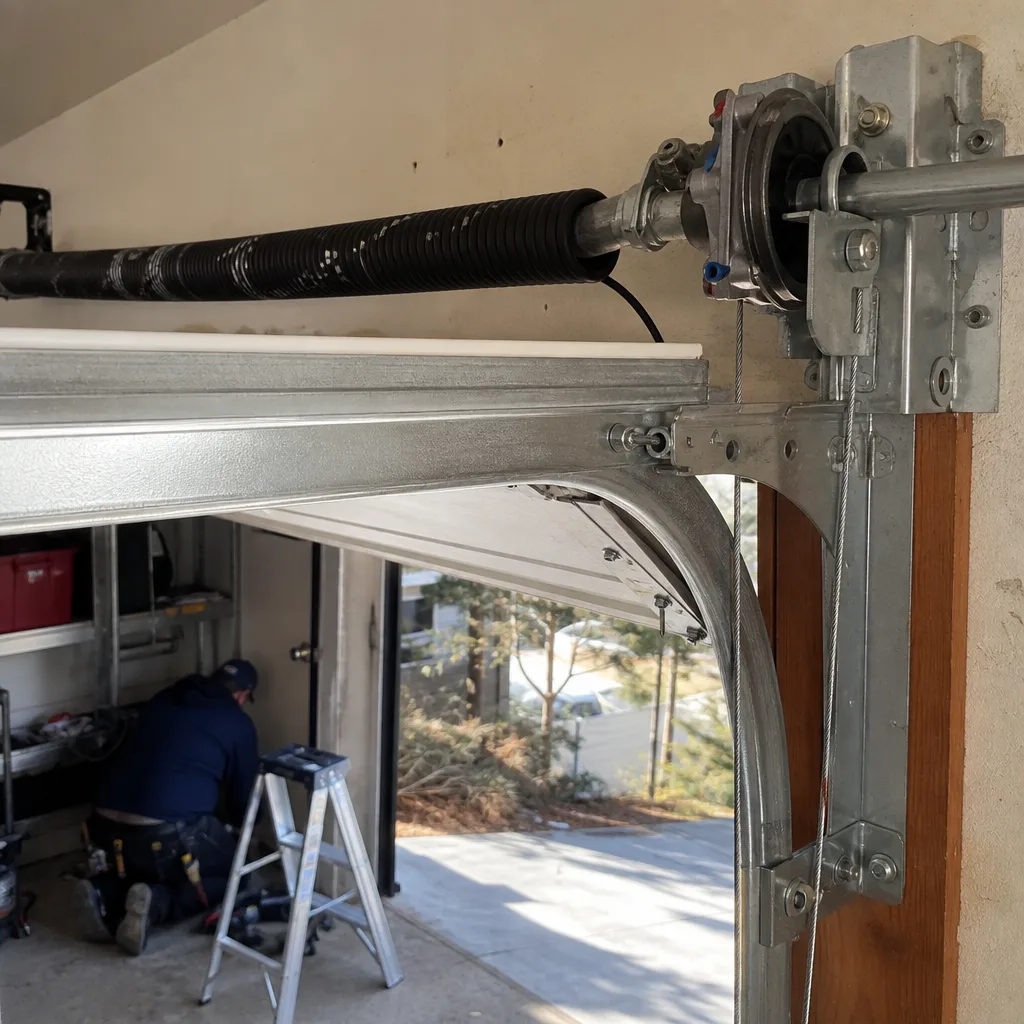
For spring and cable issues specifically, the stored energy in a torsion system presents genuine injury risk. We do not recommend homeowner adjustment or replacement. Our technicians carry calibrated torque wrenches, matched spring inventory for common door weights, and the documentation system that produces your photo record and written warranty.
Garage Door Repair in Denver from Servo Garage Doors Denver includes free estimates with written scope and flat price before any work begins. Call (720) 807-2580 to schedule. Emergency calls are answered by a live person, 24/7, with named technician assignment and on-the-way text notification.
Frequently Asked Questions
Perform a basic inspection and balance test before each of the five weather inflection points: first hard freeze, January cold bottom, March thaw, June hail season, and August UV peak. A full maintenance procedure with lubrication and hardware check should happen annually in October, before Denver’s temperature volatility begins. Call (720) 807-2580 to schedule professional annual service with documented photo record.
Cold contraction increases metal stiffness and lubricant viscosity, while battery output drops and opener motors draw higher amperage. The same door that balances at waist height in July may drift downward in January due to spring contraction. This is normal physics, but if the drift exceeds 6 inches or the opener audibly strains, the system needs professional calibration. The balance test result in July and January on the same door will differ; what matters is the magnitude of change.
Torsion spring replacement in Denver typically ranges from $180 to $340 for standard residential doors, depending on wire diameter, spring length, and whether one or both springs require replacement. See our Garage Door Cost Breakdown: The Denver Homeowner’s Reference for 2026 for detailed pricing on all common repairs. We quote a flat, written price before any work starts, per Clause 1 of The Haven Standard. The price includes matched spring set, winding bars, bearing plate inspection, and balance calibration. Call (720) 807-2580 for an exact quote on your door; estimates are free.
Homeowners can safely lubricate hinges, roller bearings, and the torsion spring body with silicone-based spray lubricant. Do not lubricate the track surface, and do not use WD-40 or heavy grease. Avoid the torsion spring mounting cones and cable drums, where lubricant attracts dust and affects friction-critical surfaces. For a complete service including hardware torque check and safety system test, professional maintenance ensures nothing is missed. Read DIY vs Professional Garage Door: The Denver Homeowner’s Decision Guide to decide what’s right for your situation. Our October service includes full documentation.
Document immediately with dated photographs showing all panel surfaces. Run the door through full travel and note any new binding, noise, or uneven movement. Check weatherseal contact for gaps created by panel deformation. Contact your insurance company within their claim window, typically 180 days. For repair or replacement, bring your documentation; we provide a free second opinion on any competing written estimate, per our standard policy. Panel replacement restores factory balance; skin-only repair rarely does.
Press the bottom seal with your thumb. It should compress and rebound. If it feels hard, glazed, or cracks under pressure, replace it. In Denver, UV degradation causes more seal failures than freeze damage; look for surface crazing or color change to gray or yellow. Light visible under the closed door indicates seal failure. We match replacement seals to door brand for proper fit; generic seals often fail within one season. The spec is documented in your photo record when we install it.
The Bottom Line
Denver’s garage doors fail at weather transitions, not during stable stretches. The homeowner who inspects before the first freeze, documents before hail season, and tests the manual release monthly avoids the emergency calls we answer in March and after every major storm. Maintenance is not a calendar exercise; it’s preparation for specific, predictable stress events that Denver’s climate produces every year. The documentation you keep, your own or ours, becomes the evidence that separates a covered insurance claim from a denied one, and a planned repair from a stranded vehicle.
For professional inspection, maintenance, or repair with written price before work starts and documented photo record after completion, Servo Garage Doors Denver home serves all Denver metro neighborhoods. We carry parts for all major brands including LiftMaster, Chamberlain, Genie, Clopay, Amarr, Wayne Dalton, Craftsman, and Raynor. Every job is backed by our 365-Day Done Right Promise and the documentation standards of The Haven Standard.
Call (720) 807-2580 for a free estimate. Emergency calls are answered live, 24/7, with named technician assignment and on-the-way text. Or schedule Garage Door Installation in Denver or Garage Door Opener Repair & Installation in Denver at your convenience.
Written by Marcus Deller, Owner at Servo Garage Doors Denver, serving Denver since 2015.