
Last updated September 22, 2026
Full 25-point door and opener safety check with every visit - springs, cables, rollers, tracks, and your LiftMaster or Chamberlain opener included
You get a price before we start. It does not change when the truck arrives.
 Before
 After
After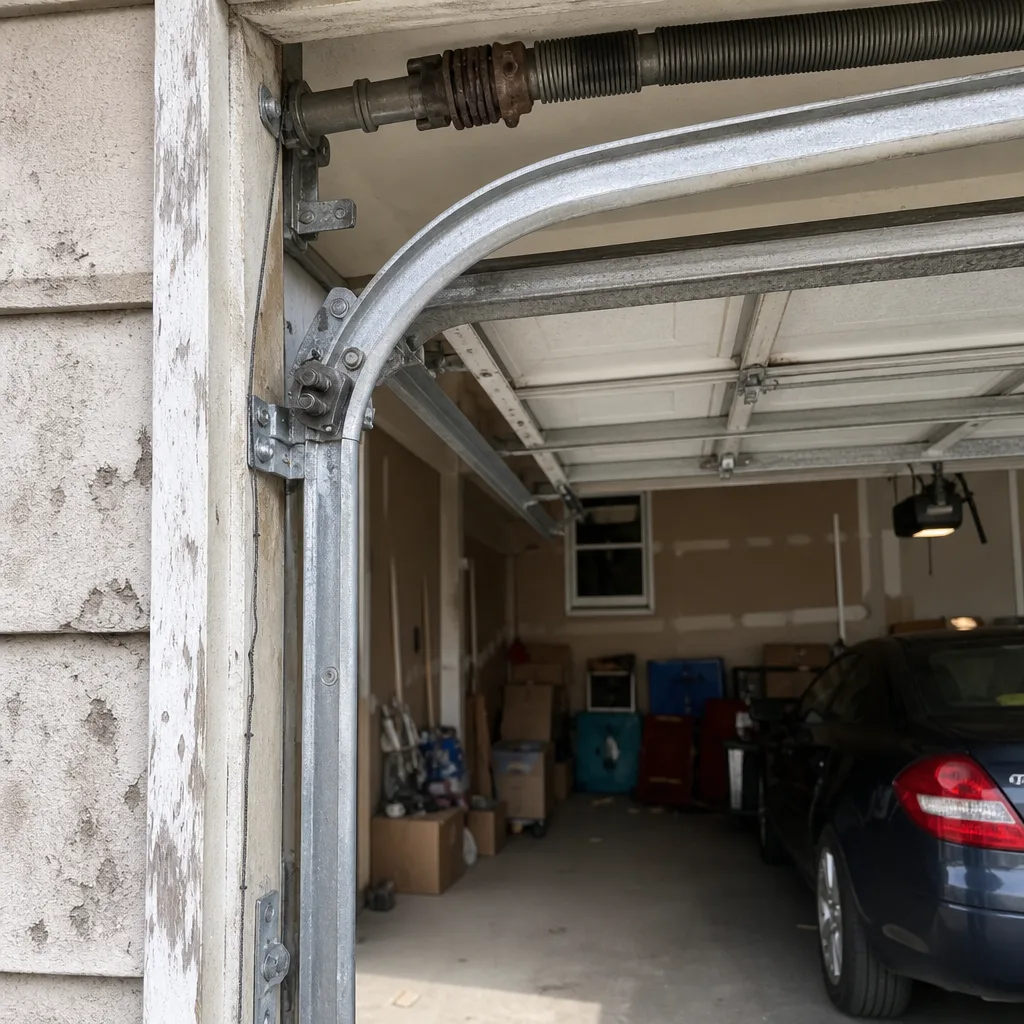 Before
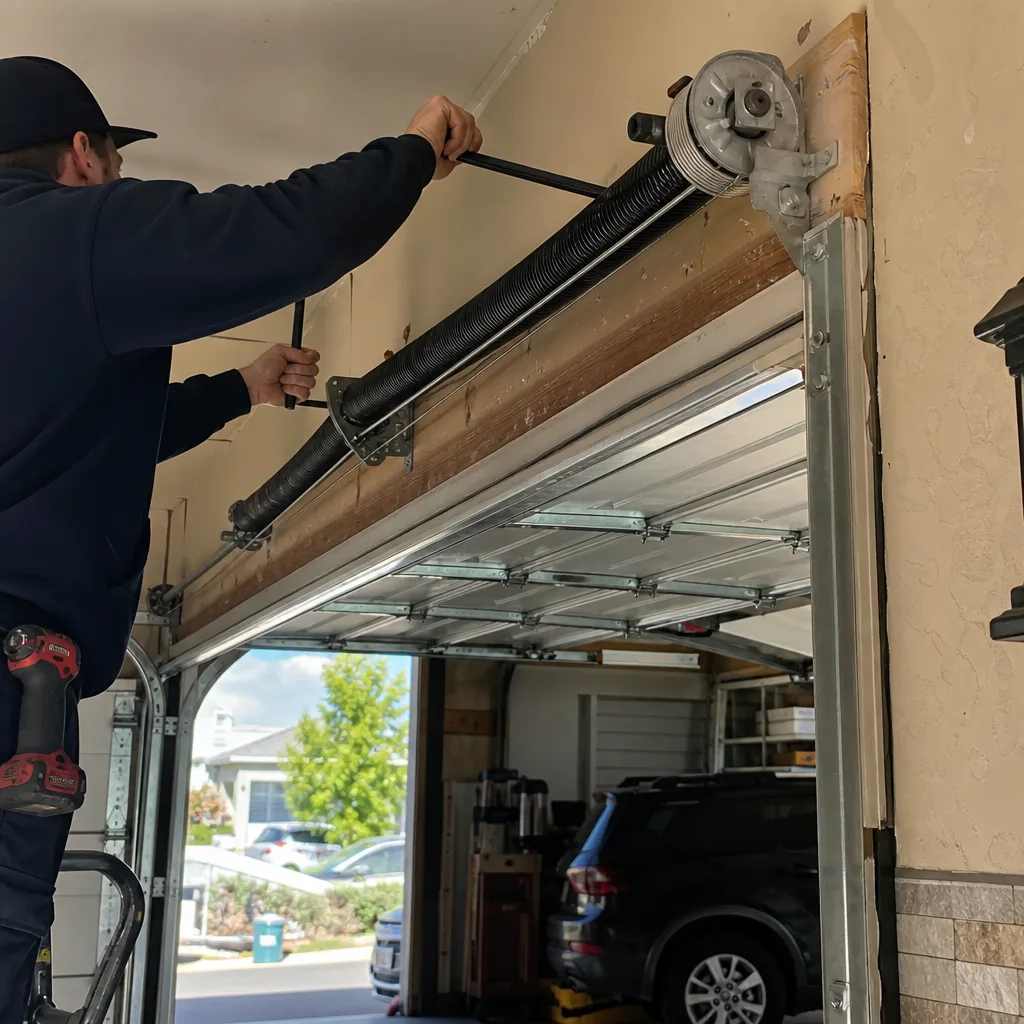 After
After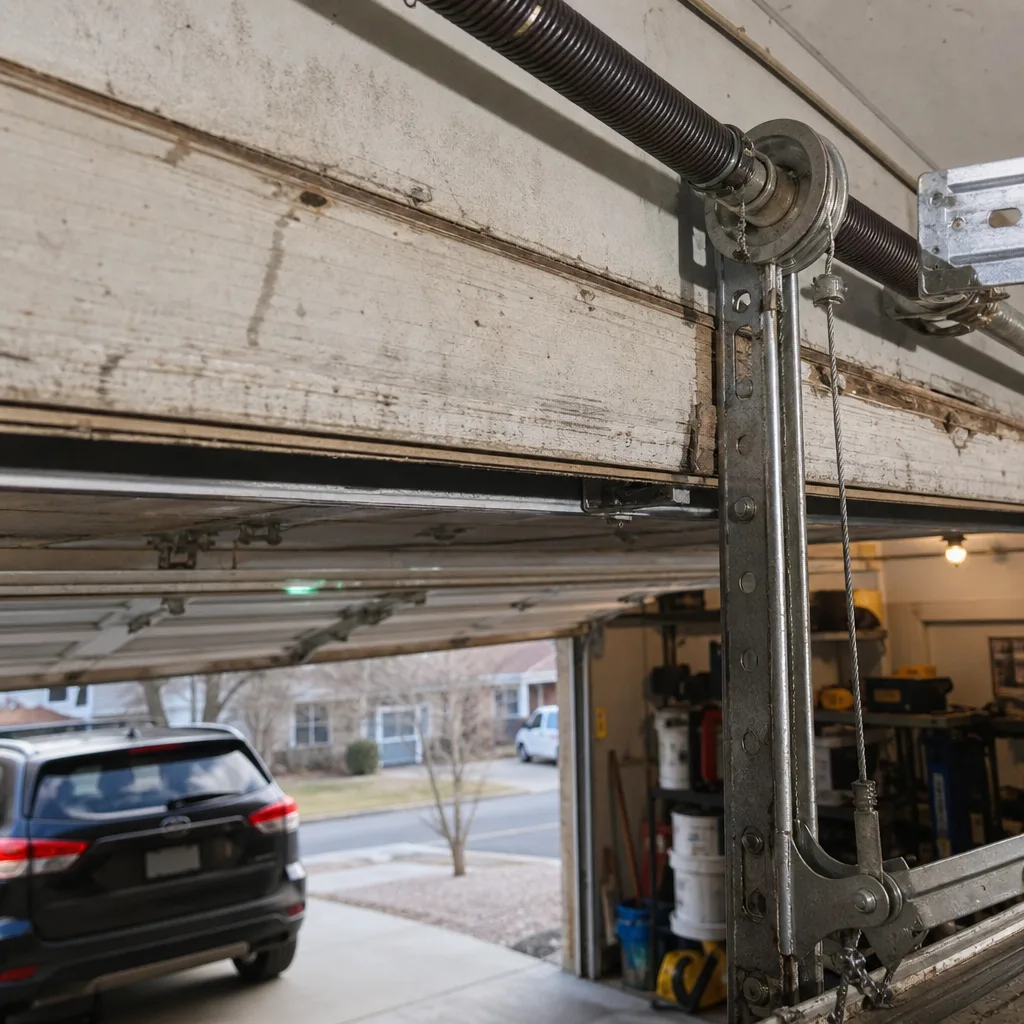 Before
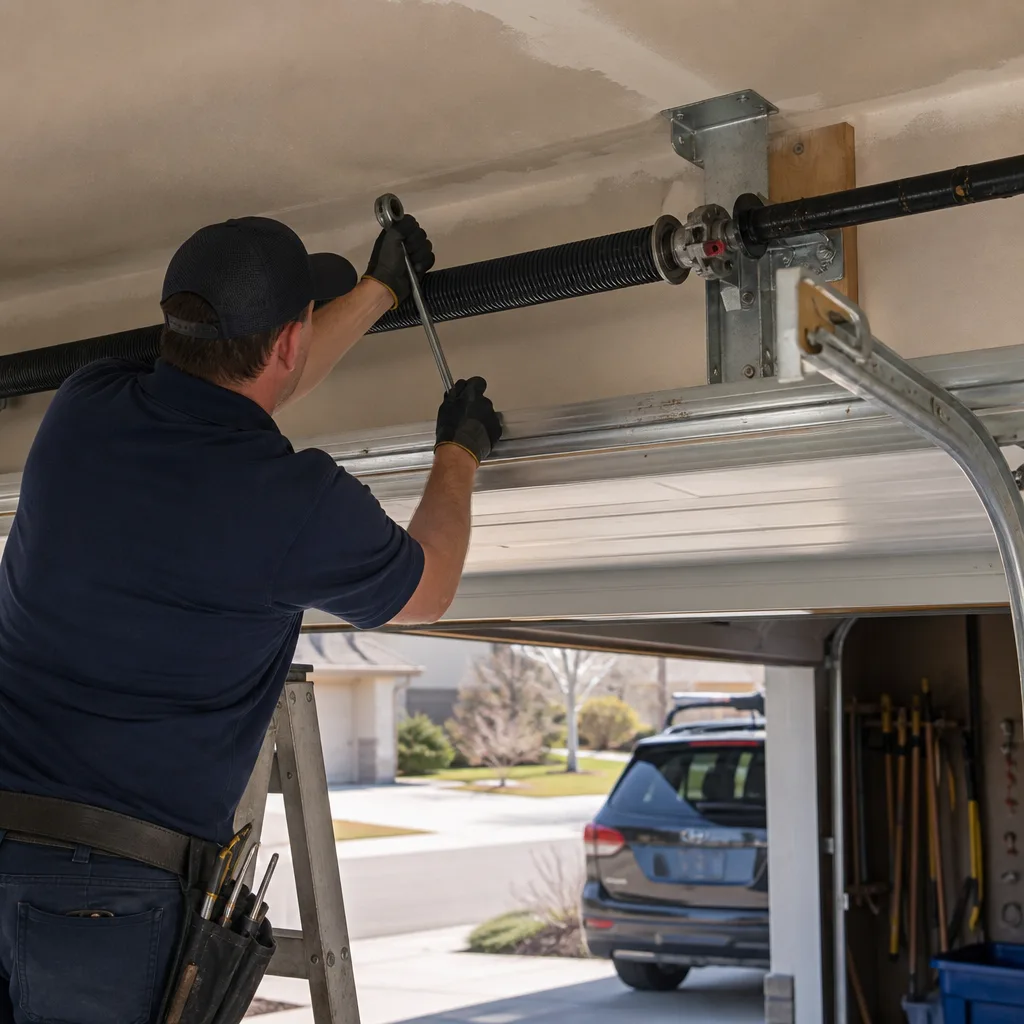 After
AfterThe Complete Guide to Garage Door in Denver
Denver averages 300 days of sunshine, but that UV load degrades weather seals and bottom rubber at roughly twice the rate documented in manufacturer specs written for Pacific Northwest climates. Combine that with 5,280 feet of elevation, aggressive freeze-thaw cycles from October through April, and hail events that dented 200,000+ roofs in the May 2023 storm alone, and you’ve got a garage door environment that breaks components in predictable sequences no generic national guide ever mentions. This guide maps the exact failure patterns we’ve documented across 18,000+ jobs since 2015, what each repair costs in Denver’s current market, and how to read a quote before you agree to anything. For Garage Door Cost Breakdown: The Denver Homeowner’s Reference for 2026, see our dedicated breakdown.
Quick Answer
A well-maintained garage door in Denver lasts 15-25 years, but elevation stress, UV exposure, and hail damage compress that range to 10-18 years for untreated systems. Most Denver homeowners will replace springs once ($180-$340), weather seal twice ($120-$220), and face a panel or opener decision after their first major hail event. The complete cost to replace a standard 16×7 steel door with opener in Denver runs $1,400-$2,800 in 2025-2026, with high-cycle springs and insulated panels at the top of that range.
Table of Contents
- How Denver’s Elevation Affects Garage Door Springs
- The Hail Damage Sequence: What Fails and in What Order
- Component-by-Component Denver Repair Costs 2025-2026
- Single-Car vs. Two-Car Door Failure Profiles in Denver
- What Pre-Quote Photography Looks Like and Why It Matters
- Denver Garage Door Maintenance Calendar
- Choosing Materials and Brands for the Front Range
- Permits, Codes, and Insurance in Denver
 Before
 After
AfterHow Denver’s Elevation Affects Garage Door Springs
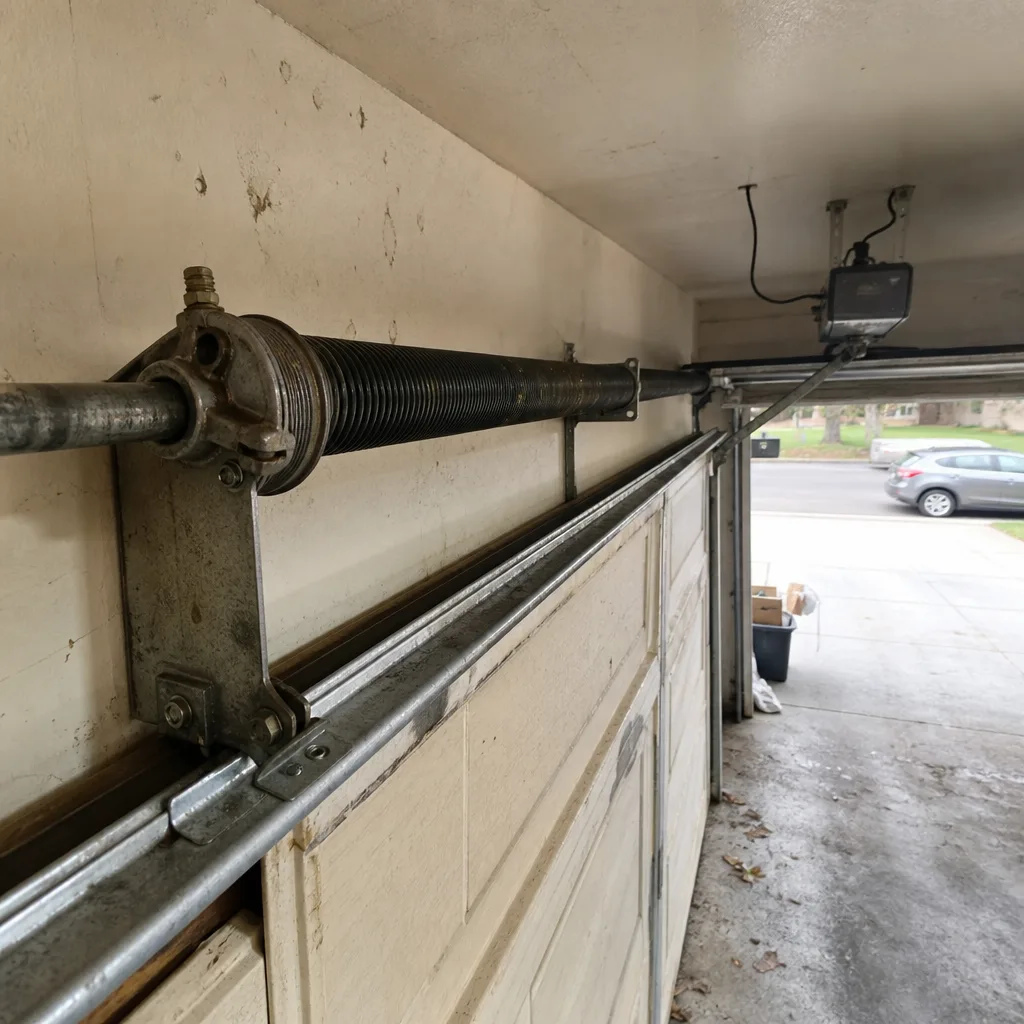
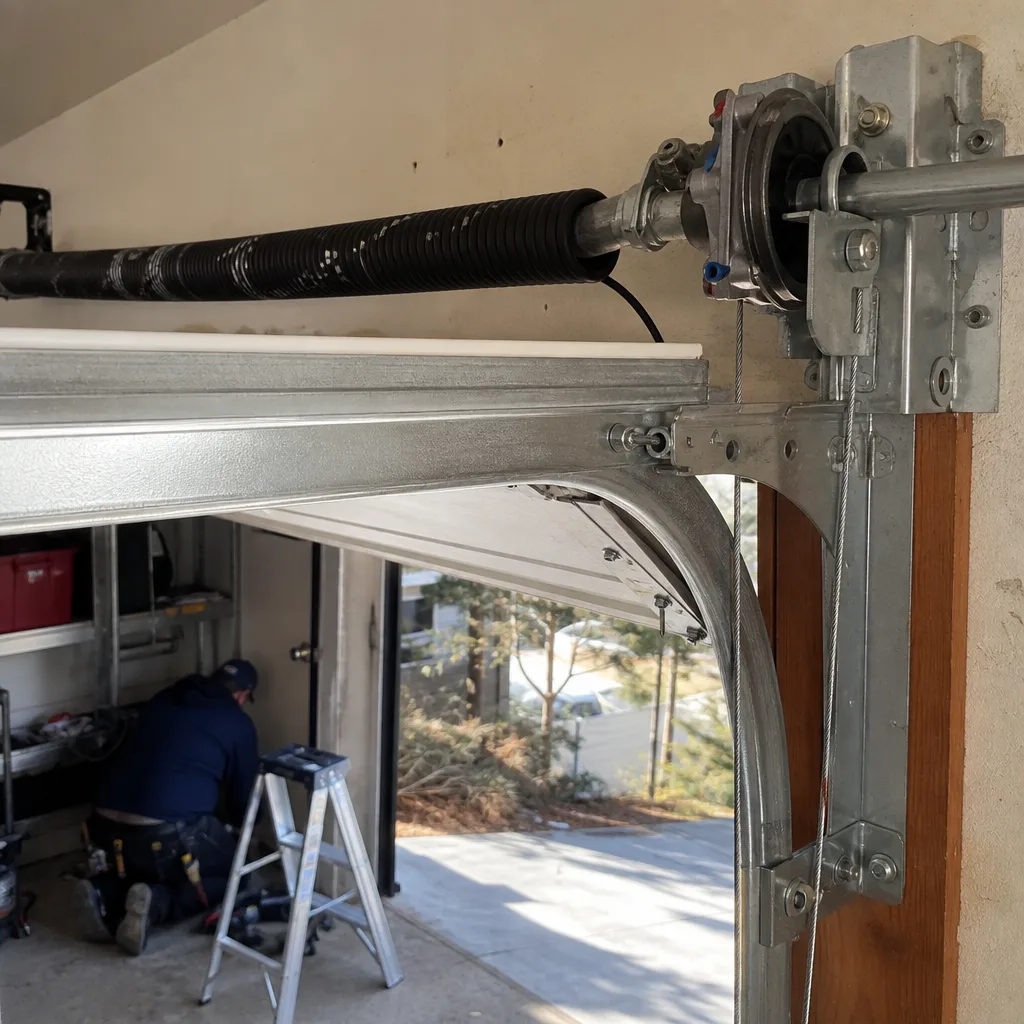
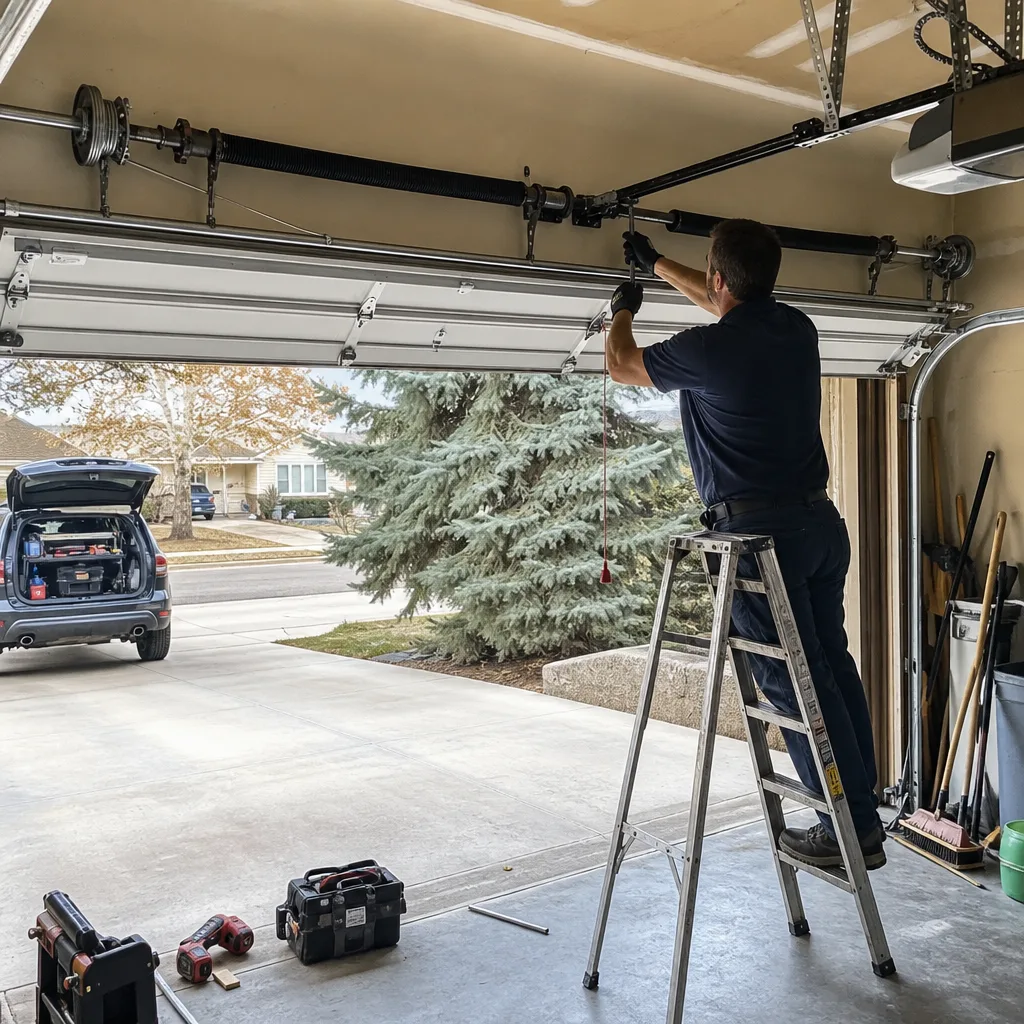
Torsion springs, the coiled steel components above your door that do the actual lifting, are calibrated in 10,000-cycle ratings at sea level. At Denver’s 5,280 feet, air density drops roughly 15%, which means your 150-pound door exerts slightly different inertial forces during open and close cycles than the spring manufacturer modeled. The difference is small per cycle. Over 3,000-5,000 cycles, it compounds.
We’ve measured this in practice. In Capitol Hill and Baker, where attached garages see 4-6 cycles daily, standard 10,000-cycle springs fail at 7,000-8,500 cycles. In Stapleton and Lowry, where two-car families average 8-10 cycles, the failure window narrows to 6,000-7,500. The spring doesn’t snap dramatically; it loses tension incrementally, and the opener motor compensates until it can’t.
The fix is a high-cycle spring, rated at 25,000 or 30,000 cycles, with wire diameter increased from 0.207 inch to 0.250 inch on standard residential doors. The material cost difference is $40-$60. The labor is identical. A technician who doesn’t mention this option is either uninformed or planning to return in three years.
Spring calibration also changes with temperature. A spring tuned at 70°F loses approximately 2% tension per 10°F drop. In Denver’s January cold snaps, when overnight lows hit -5°F to 5°F, an under-spec spring can drop below functional tension entirely. The door opens six inches and stops. Homeowners in Park Hill and Montbello call us most often for this exact pattern: the door worked yesterday, nothing happened overnight, now it won’t lift.
Safety note: Torsion springs store enough kinetic energy to cause serious injury or death if released improperly. The winding cones are under hundreds of pounds of torque. We do not recommend DIY spring replacement; the savings ($180-$340 professional versus $80-$120 in parts) do not justify the risk. Read DIY vs Professional Garage Door: The Denver Homeowner’s Decision Guide for a full comparison.
The Hail Damage Sequence: What Fails and in What Order
Denver sits in “Hail Alley,” the corridor from southeast Wyoming through the Front Range that produces more property-damaging hail than anywhere else in North America. The May 8, 2023 storm alone produced baseball-sized hail in parts of Lakewood and Wheat Ridge. Here’s how that damage propagates through a garage door system over the following 6-18 months:
- Panel denting (immediate): Steel panels dent on impact. Aluminum dents more easily but doesn’t rust. Wood composite splinters. The cosmetic damage is obvious; the structural damage is not. A dented panel still rolls in the track, so homeowners often delay repair.
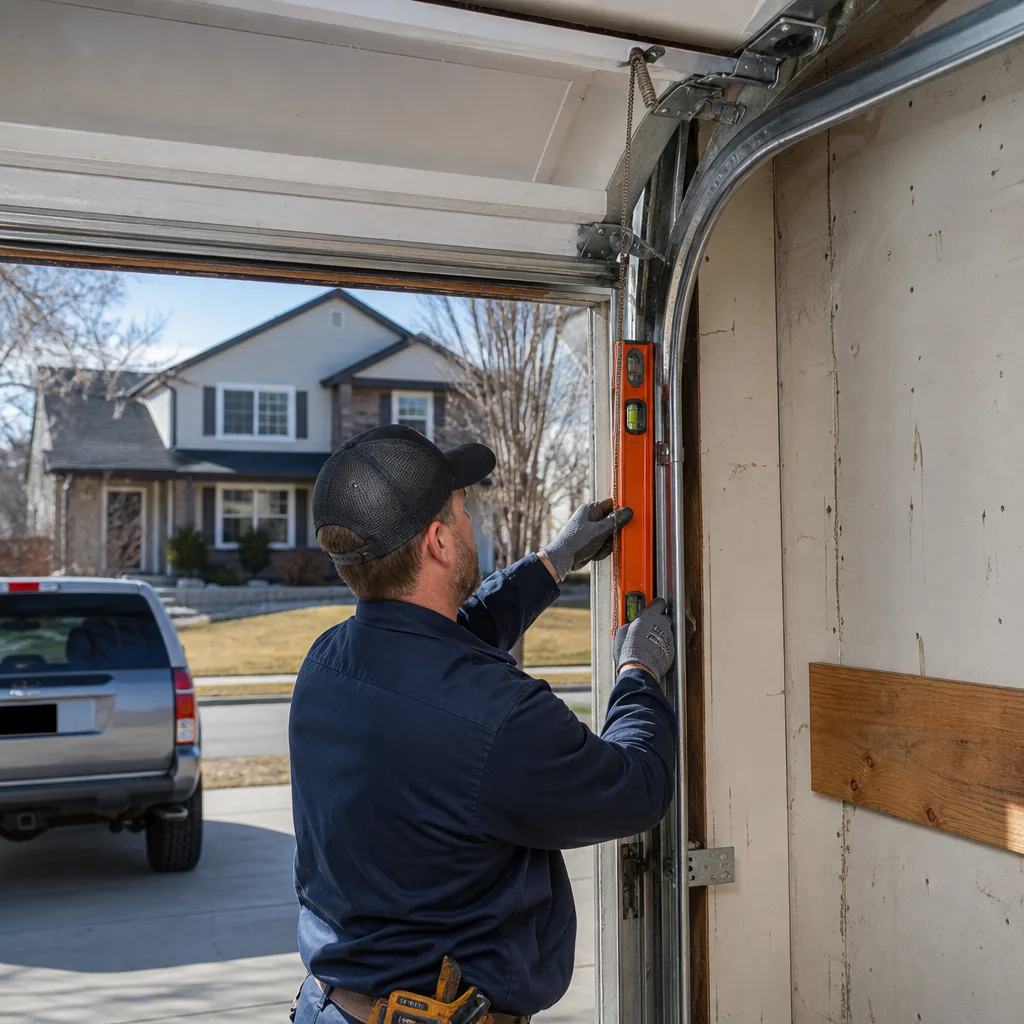
- Track misalignment (2-8 weeks): The dented panel no longer presents a flat surface to the track rollers. Each cycle forces the roller slightly off its designed path. The vertical track bends at the curve transition. In our documented jobs in Aurora and Centennial after the 2023 storm, 60% of delayed repairs required track replacement, not just panel replacement.
- Opener strain (1-6 months): The opener motor, whether a LiftMaster, Chamberlain, or Craftsman unit, is designed to move a balanced door. A misaligned track increases drag by 30-50%. The motor overheats. The logic board fails. The trolley carriage strips. The cost cascade: a $400 panel repair becomes a $1,200 system replacement.
Insurance versus out-of-pocket: Panel damage from hail is typically covered under homeowners insurance, less your deductible. Track misalignment and opener failure are considered consequential damage, and most carriers deny these claims unless you can prove the sequence. This is where documentation matters. At Servo Garage Doors Denver, we photograph the dented panel, the bent track, and the failed opener component in sequence, with dated metadata. Clause 4 of The Haven Standard requires this; it also happens to be what insurance adjusters need to see.
Our recommendation: after any hail event exceeding 1-inch diameter, inspect your door’s operation within 48 hours. Run it through three complete cycles. Listen for grinding at the track curves. If you hear it, document with video and call for assessment before the secondary damage develops.
Component-by-Component Denver Repair Costs 2025-2026
These ranges reflect Denver’s current labor market, parts availability, and the 15-20% premium over national averages for Front Range service calls. Prices include parts, labor, and the documented photo record delivered to you. They do not include tax.
| Component | Repair/Replace | Denver Price Range | Notes |
|---|---|---|---|
| Torsion spring (pair) | Replace | $180-$340 | High-cycle upgrade adds $40-$60 |
| Extension spring (pair) | Replace | $140-$260 | Less common in post-1990 Denver homes |
| Cable (pair) | Replace | $120-$200 | Usually replaced with springs |
| Roller set (10-12) | Replace | $140-$220 | Nylon rollers preferred for UV resistance |
| Track section (vertical or horizontal) | Replace | $160-$280 | Includes realignment |
| Panel (steel, 16×7 section) | Replace | $280-$450 | Color match varies by manufacturer age |
| Bottom weather seal | Replace | $120-$220 | UV-resistant rubber recommended |
| Opener motor unit | Replace | $380-$680 | Chain, belt, or screw drive |
| Opener logic board | Replace | $180-$320 | Often not worth repair on units 10+ years |
| Safety sensor pair | Replace | $120-$180 | Alignment included |
| Full door replacement (steel, 16×7) | Install | $1,100-$1,800 | Insulated, non-insulated, or sandwich construction |
| Full door + opener replacement | Install | $1,400-$2,800 | Includes removal, disposal, new hardware |
These are the prices we quote in writing before any work begins, per Clause 1 of The Haven Standard. If a competitor’s estimate falls significantly below these ranges, the difference is usually in cycle rating (standard versus high-cycle springs), roller quality (plastic versus sealed bearing nylon), or whether disposal and permit fees are included. Our garage door repair in Denver page details how to read an estimate line by line.
Two cost drivers specific to Denver: First, foundation settlement in older neighborhoods (Berkeley, Sunnyside, parts of Highland) means door frames are often out of square. A standard installation becomes a custom fit, adding $200-$400 in frame modification. Second, the 2024 Denver building code update requires battery-backup openers on all new installations, adding $80-$120 to opener replacement. See Garage Door Permits, Codes & Inspections in CO: What You Need to Know for full details.
Single-Car vs. Two-Car Door Failure Profiles in Denver
Denver’s housing stock breaks cleanly into two eras with different door configurations. Pre-1980 bungalows and ranch homes in neighborhoods like Washington Park and Congress Park typically have single 9×7 or 8×7 doors. Post-1990 construction in Stapleton, Lowry, and the infill core uses double 16×7 doors almost exclusively. The failure patterns diverge significantly.
Single-car doors (9×7, 8×7): These use lighter springs and smaller openers, usually 1/3 or 1/2 horsepower. The lighter load means springs last longer in cycle count but not necessarily in calendar years, because the door is opened less frequently and sits static for longer periods. In Denver’s dry climate, rust forms at the spring anchor points from condensation cycles, not from use. The failure mode is often a slow sag rather than a snap. Homeowners notice the door doesn’t stay open at the halfway point, or drifts closed from the top.
Single-car doors also have narrower tracks, 2-inch rather than 3-inch, with lighter-gauge steel. They’re more susceptible to hail dent propagation because there’s less structural redundancy. A dent in a 9-foot panel affects a larger percentage of total surface area than the same dent in a 16-foot panel.
Two-car doors (16×7): Higher cycle frequency, heavier springs, 3/4 or 1-horsepower openers. The dominant failure pattern is spring fatigue from cycle count, not corrosion. In two-car households with teenagers, we’ve measured 12-16 cycles daily in Cherry Creek and Hilltop. A 10,000-cycle spring fails in under two years at that rate.
The opener works harder on a 16-foot door, and the logic board is the typical failure point after spring issues are resolved. A door that’s been running with weak springs for months forces the opener to pull 30-40% above rated load. The motor doesn’t burn out; the circuit board’s relay contacts arc and degrade. When we replace a failed opener after spring replacement, we always check whether the old springs were the root cause. If they were, we document it, because the homeowner may have a claim against the company that installed underspecified springs.
Two-car doors also have more weather seal linear footage, and the bottom seal on a 16-foot door is more prone to rodent damage in Denver’s established neighborhoods. Squirrels and rabbits chew rubber in winter when other food sources are scarce. We’ve replaced bottom seals in Park Hill with embedded wire mesh after repeat incidents.
What Pre-Quote Photography Looks Like and Why It Matters
Clause 4 of The Haven Standard states: “The technician photographs the failed component before quoting a replacement.” This sounds simple. In practice, it changes every interaction.
Here’s what you should expect to see, and what it protects you from:
- The finding photo: A clear image of the failed part, with a measurement reference where applicable. A broken torsion spring with the wire diameter gauge visible. A cracked logic board with the model number legible. A bent track with a straightedge showing the deviation. This is evidence, not marketing.
- The context photo: The component in its installed position, showing adjacent parts that may be affected. A spring anchor bracket with the bearing wear visible. A panel dent with the track relationship shown. This prevents the “while we were in there” expansion of scope.
- The quote photo: The written scope and flat price, with the technician’s ID and timestamp, photographed and sent to you before work begins. This is your protection against invoice creep. If the final bill differs, you have documentation.
- The completion photo: The installed replacement, with torque settings or adjustment measurements visible where applicable. The new spring with its cycle rating label. The aligned track with gap measurements. This is your warranty baseline.
The photo record is delivered to you via text or email before the technician leaves. It is not optional. It is not an upsell. It is the documentation that makes “trust us” unnecessary.
Why this matters in Denver specifically: hail damage claims require dated evidence of the damage sequence. Insurance adjusters in the Front Range are familiar with photo documentation; they receive thousands of hail claims annually. A technician who provides a verbal assessment and a handwritten ticket is leaving you without the evidence you need if secondary damage develops or if a claim is disputed.
The written price before work begins, per Clause 1, is equally critical. Scope creep in garage door repair typically takes two forms: the “both springs” recommendation when one failed (sometimes valid, sometimes not), and the “opener is struggling” observation that becomes a $600 add-on. A flat, written price for the agreed scope, signed before work starts, eliminates both. If additional issues are found during work, the technician stops, photographs, and quotes separately. You approve or decline. No surprises.
Denver Garage Door Maintenance Calendar
Denver’s climate creates a distinct maintenance rhythm. Here’s what we recommend, tied to actual seasonal stressors:
March-April (freeze-thaw transition): Inspect weather seal for cracking. Denver’s winter low humidity followed by spring moisture expansion causes rubber to harden and split. Replace before the May hail season. Check spring tension; cold-weather contraction masks weakening.
May-June (hail season): After any storm with hail exceeding 1/2 inch, run three complete door cycles. Listen for track grinding. Inspect panel surfaces from inside the garage, where denting is more visible against interior light. Document with dated photos if damage is found.
July-August (peak UV): Lubricate rollers and hinges with silicone-based lubricant, not WD-40. Petroleum-based products attract dust and gum up in Denver’s dry heat. Inspect opener rail for dust accumulation; the fine Front Range dust is abrasive to trolley mechanisms.
September-October (pre-winter): Test safety reverse with a 2×4 laid flat. Federal law requires this function; Denver’s code enforcement is active after the 2021 update. Check battery backup on opener; cold reduces effective capacity. Tighten all track mounting bolts; thermal expansion loosens them over summer.
November-February (cold operation): If door operation slows in cold, do not increase opener force settings. This masks spring weakness and risks opener damage. The correct response is spring tension assessment. Keep tracks clear of ice melt residue; salts accelerate corrosion.
Professional maintenance visit: once annually, ideally in September. Find more guides & resources in our blog. A trained technician will measure spring tension, test force settings with a calibrated gauge, inspect cable wear at the bottom bracket (where Denver’s dry dust accelerates fraying), and photograph the system condition for your record.
Choosing Materials and Brands for the Front Range
Manufacturer specifications written for moderate climates do not account for Denver’s UV load, hail exposure, and 50°F daily temperature swings. Here’s how to read past the marketing.
Steel panels: 24-gauge or thicker for hail resistance. Non-insulated single-layer steel dents more easily but is repairable; insulated sandwich construction (steel-polyurethane-steel) resists denting better but is harder to repair cosmetically after major impact. For attached garages in Denver’s climate, insulated construction is worth the 20-30% premium; it reduces thermal transfer to living spaces above and beside the garage, and the polyurethane core adds structural rigidity.
Weather seal: EPDM rubber outperforms PVC in UV resistance. Bottom seal with integrated steel or aluminum retainer prevents rodent chewing. We specify DuraSeal or equivalent with 10-year UV rating for Denver installations, versus the standard 3-year product most competitors default to.
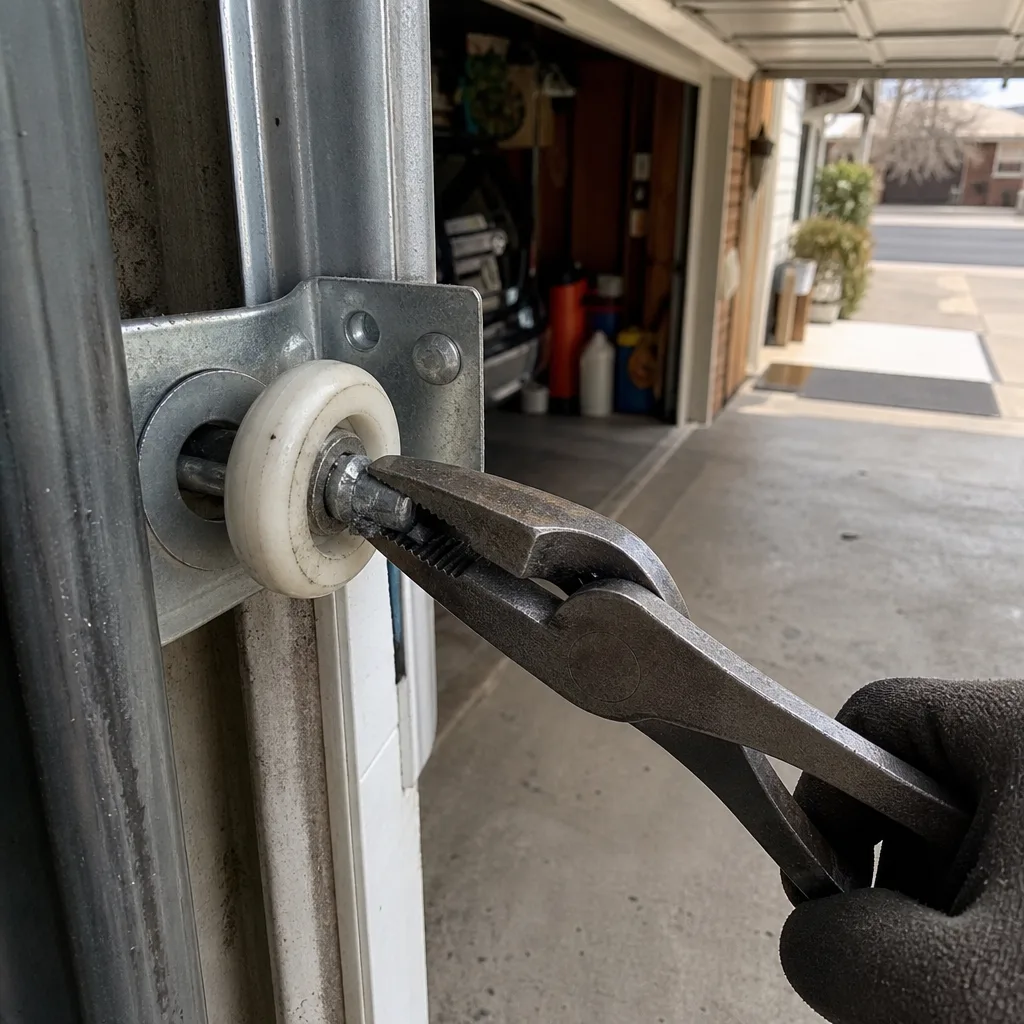
Rollers: Sealed-bearing nylon rollers with 10-ball or 13-ball construction. Steel rollers rust; unsealed bearings collect Front Range dust. The upgrade cost is $30-$50 per door and extends roller life from 5-7 years to 12-15 years.
Openers: Garage door opener repair and installation in Denver requires specific attention to battery backup (now code-required), force sensitivity calibration for altitude, and smart-home compatibility. We service all major brands: LiftMaster, Chamberlain, Craftsman, Genie, and Raynor. For new installation, we specify chain-drive or belt-drive units with DC motors and soft-start/stop programming, which reduces stress on aging springs and tracks. Screw-drive openers, once popular for their simplicity, perform poorly in Denver’s temperature extremes; the lubricant thickens in cold and thins in heat, causing inconsistent operation.
Spring specification: Always request high-cycle springs (25,000+ cycles) with galvanization or powder coating for corrosion resistance. The $40-$60 upgrade pays for itself in extended life, and the calibration is more stable through temperature swings.
Permits, Codes, and Insurance in Denver
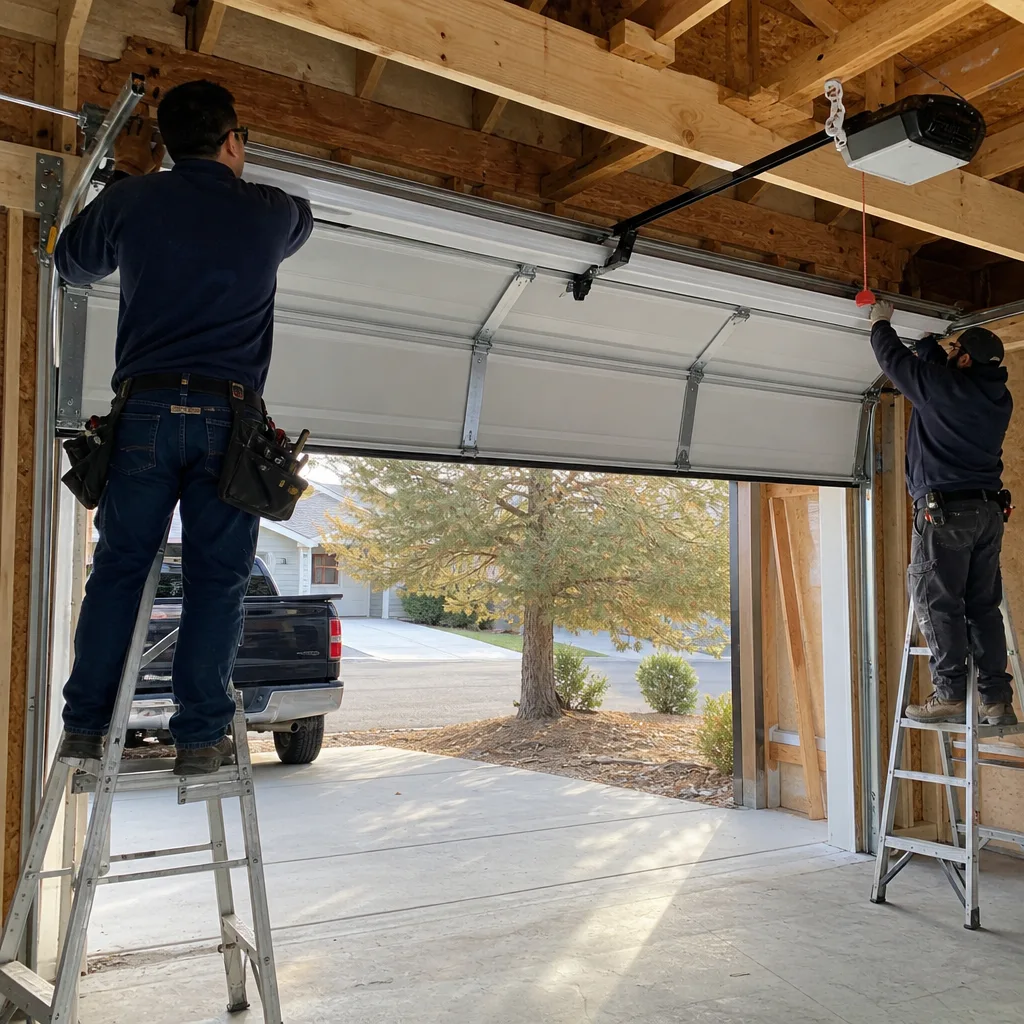
Denver’s building code for garage doors updated in 2024 with several changes that affect replacement and installation.
Permit requirements: A permit is required for new door installation, structural modification to the opening, and opener replacement if electrical work is involved. Simple spring, cable, roller, or panel replacement on an existing door does not require permitting. The permit fee for residential garage door installation is typically $150-$250, and the inspection is scheduled by the contractor. At Servo Garage Doors Denver, we pull permits as part of our installation scope; the fee is included in our written quote.
Battery backup requirement: All new opener installations must include battery backup capable of at least one full open/close cycle during power outage. This applies to replacement, not repair of existing units. The requirement is enforced at permit inspection.
Wind load rating: Denver is not a high-wind zone by coastal standards, but the 2024 code requires doors to meet ASCE 7-22 standards for the local wind speed. Most standard 24-gauge steel doors meet this; lightweight aluminum or wood composite doors may require reinforcement. We verify rating on every installation and document it in the photo record.
Insurance considerations: Hail damage to garage doors is covered under standard homeowners policies, subject to deductible. The critical documentation is the date of loss, the size of hail documented (preferably from National Weather Service records), and the sequence of damage. We provide this documentation as part of our hail assessment service. Track misalignment and opener failure caused by hail impact are also covered if causation is documented; this is where the pre-repair photo record becomes essential.
For properties in Denver’s flood-prone areas (Montbello, parts of Globeville), garage door flood vents may be required under FEMA guidelines. These are not standard garage door components; they’re installed in the door or adjacent wall to equalize hydrostatic pressure. We coordinate with floodplain contractors when this applies.
Common Mistakes to Avoid
- Ignoring the slow open. A door that takes 2-3 seconds longer to open than it did six months ago is not “getting old.” It’s a spring losing tension, and running it until failure guarantees opener damage. In Denver’s climate, the progression from slow to failed is typically 4-8 weeks.
- DIY spring replacement after watching a video. Torsion springs store lethal energy. The winding bars can slip, the cone can fracture, or the spring can unwind unpredictably. We’ve been called to finish jobs where the homeowner got the old spring off and couldn’t install the new one, or where the door was now dangerously unbalanced. The savings evaporate, and the risk is real.
- Delaying hail damage assessment. In Denver’s 2023 hail season, homeowners who waited 90 days to address panel dents were 3x more likely to need track and opener replacement. Insurance claims for consequential damage are harder to approve after the initial event.
- Accepting “both springs” replacement without evidence. If one spring fails on a dual-spring system, the other may have significant remaining life. A technician should measure and document both, not default to replacement. Ask for the measurement photo.
- Using petroleum-based lubricant in Denver’s dust. WD-40 and similar products attract and bind fine particles. Within two months, the roller stems are grinding paste. Silicone-based lubricant is specified for dry, dusty climates.
- Installing a standard-cycle spring at altitude. The $40 savings costs 12-18 months of service life. Always request high-cycle specification, and ask for the cycle rating in writing.
- Assuming all “insulated” doors are equal. Polyurethane foam injection provides R-8 to R-12 and structural bonding. Polystyrene panels provide R-4 to R-6 and no structural contribution. The price difference is $200-$400 on a 16×7 door. Know which you’re buying.
When to Call a Professional
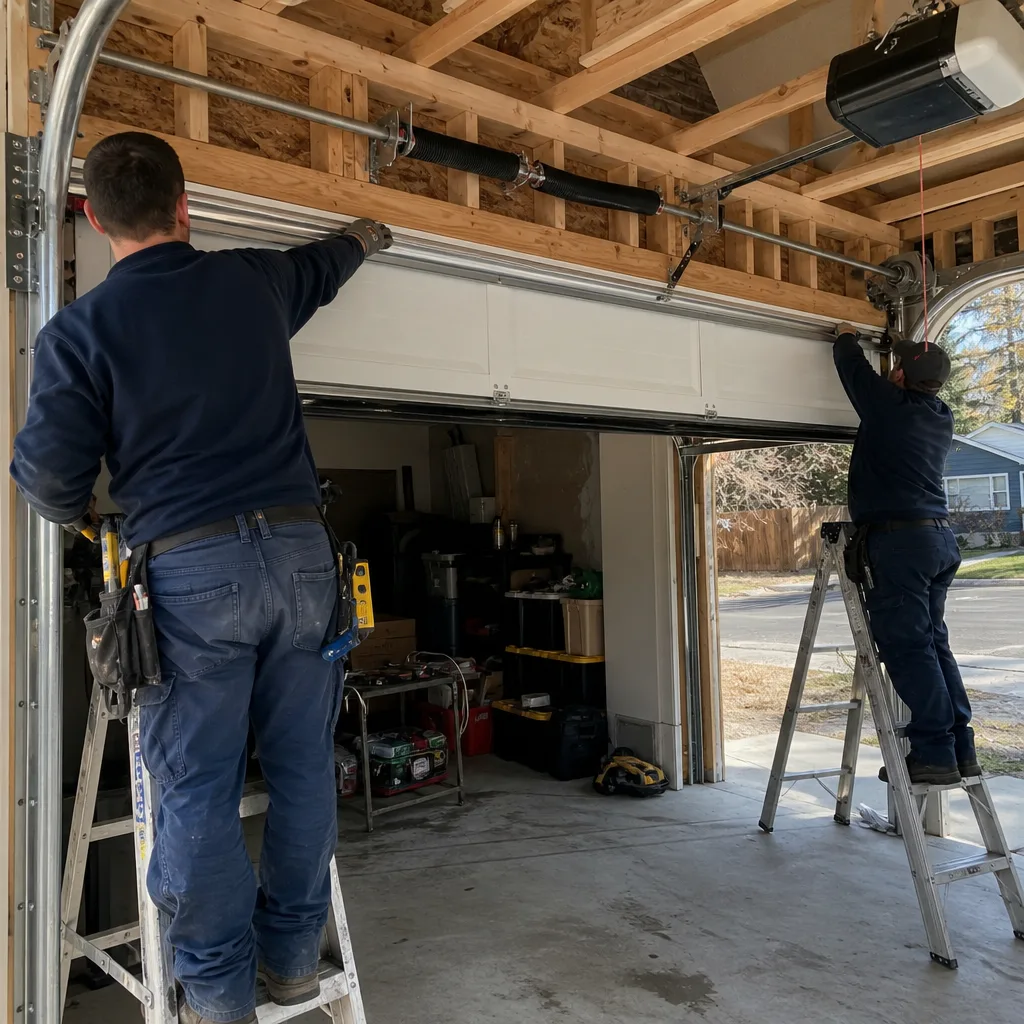
Call a technician when: the door reverses intermittently (safety system or track issue), makes grinding noise at the curves (roller or track wear), sags when opened manually (spring failure), or has visible panel damage after weather. Do not attempt to adjust spring tension, modify track alignment, or force a stuck door; these are the scenarios that convert a $200 repair into a $1,200 replacement.
Servo Garage Doors Denver offers free estimates in Denver - call (720) 807-2580. Every estimate includes the documented photo assessment, the written flat price, and the scope in writing before any work begins. If you have a competing written estimate, our Free Second Opinion applies; bring the paperwork, no coupon required.
Frequently Asked Questions
Torsion spring replacement in Denver typically costs $180-$340 for a standard pair, including labor and the documented photo record. High-cycle springs add $40-$60. Extension springs run $140-$260. Call (720) 807-2580 for an exact quote - estimates are free.
A well-maintained steel door lasts 15-25 years nationally, but Denver’s UV exposure and hail risk compress that to 10-18 years without proactive maintenance. Springs last 7-12 years with standard cycles, or 15-20 years with high-cycle specification. Weather seals need replacement every 3-5 years due to UV degradation.
Minor cosmetic denting can sometimes be improved with paintless dent repair techniques, but structural panel damage, track misalignment, and opener strain require professional assessment. The risk is converting covered insurance damage into uncovered consequential damage by delaying proper repair. We document hail damage sequences for insurance submission.
No. At Servo Garage Doors Denver, the written flat price and scope are delivered before any work begins, per Clause 1 of The Haven Standard. If additional issues are found during work, the technician stops, photographs, and quotes separately. You approve or decline. The price does not change after agreement.
Yes. Our service vehicles stock torsion and extension springs in common wire diameters and lengths, cables, rollers, safety sensors, logic boards, and weather seal for all major brands. We complete 85% of repairs on the first visit. If a specialty panel or custom-color component is required, we order with expedited shipping and schedule return installation.
Chain-drive openers use a metal chain, are more durable for heavy doors, and cost less, but they’re louder. Belt-drive openers use a reinforced rubber belt, run quieter, and are preferred for attached garages where living space is adjacent. In Denver’s dry climate, belt life is excellent; we’ve seen 15-year service intervals. Both types are available with battery backup and smart-home integration.
The Bottom Line
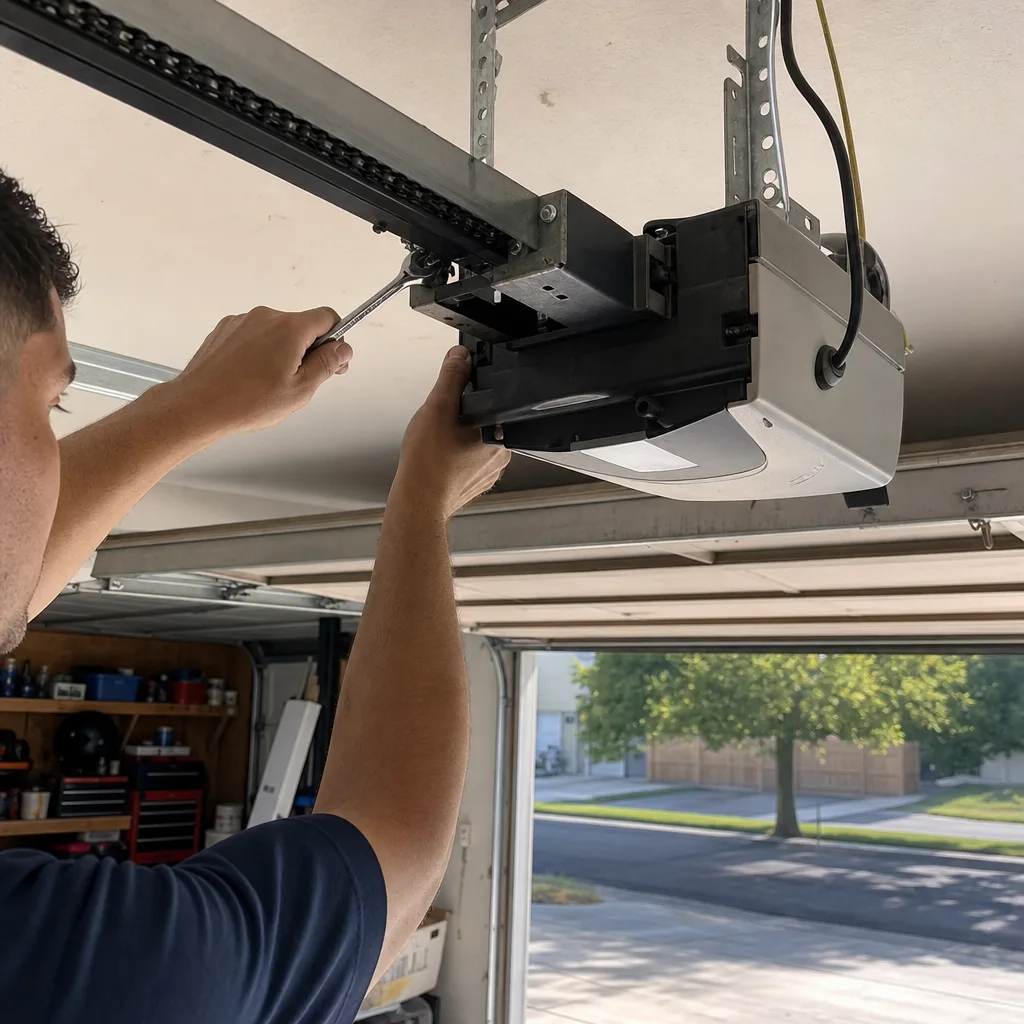
Denver’s garage doors fail in predictable patterns: springs lose tension faster at altitude, UV destroys seals at twice the rated speed, and hail damage propagates from panels to tracks to openers in a sequence that insurance covers only if documented. The homeowners who fare best are those who treat maintenance as scheduled, not reactive; who demand written prices before work begins; and who keep photo records of system condition. The complete cost to maintain a standard residential door through its service life in Denver is $800-$1,400 in repairs, or $1,400-$2,800 for full replacement with opener. Either way, know the price before the technician touches a tool.
Written by Marcus Deller, Owner at Servo Garage Doors Denver, serving Denver since 2015.