
Last updated September 22, 2026
Full 25-point door and opener safety check with every visit - springs, cables, rollers, tracks, and your LiftMaster or Chamberlain opener included
You get a price before we start. It does not change when the truck arrives.
 Before
 After
After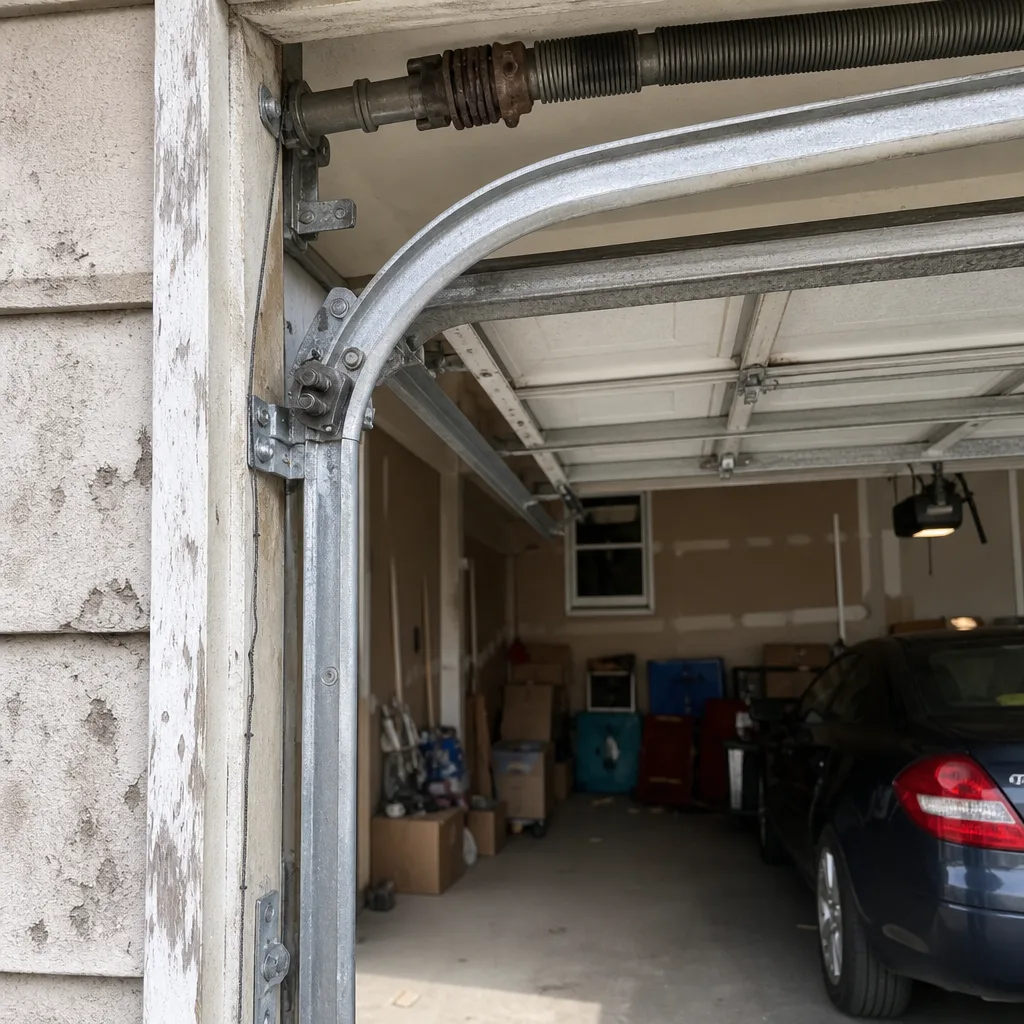 Before
 After
After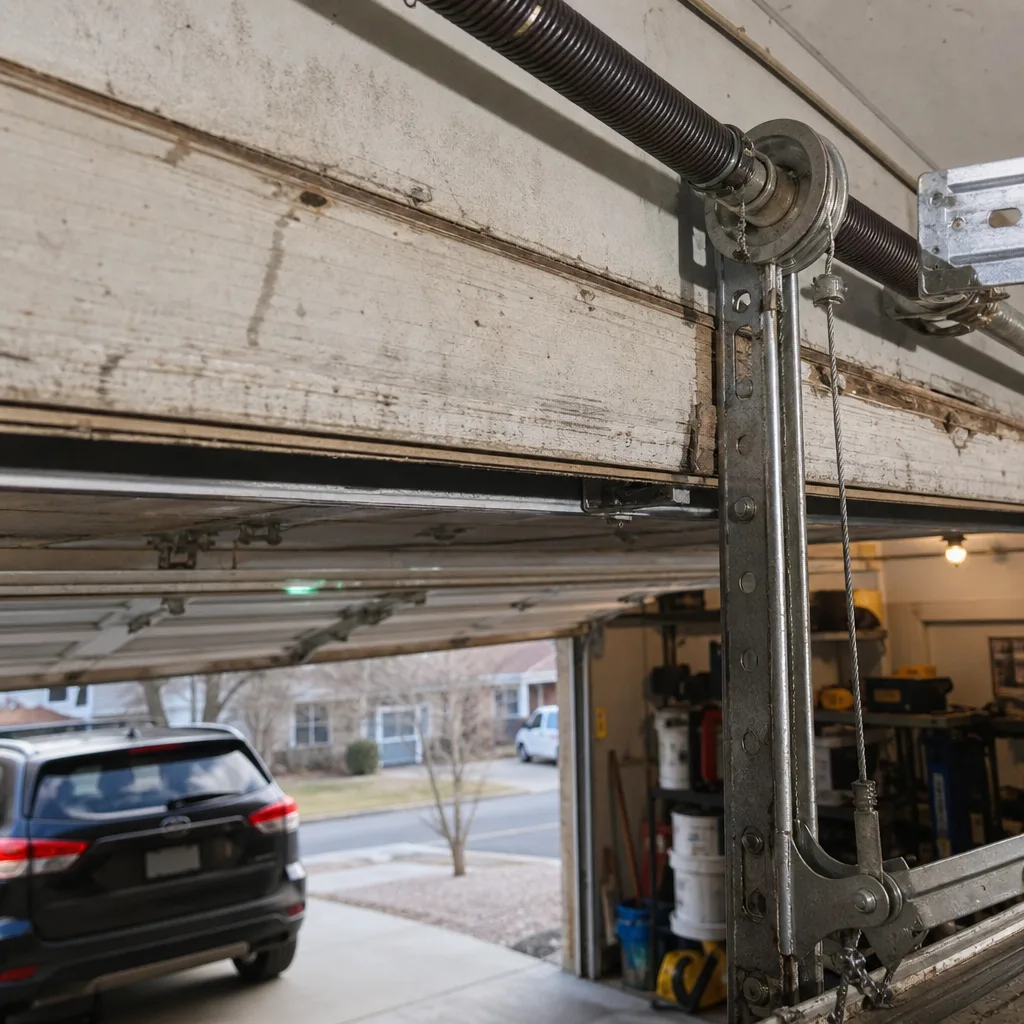 Before
 After
AfterGarage Door Repair Maintenance Checklist for Denver Homeowners
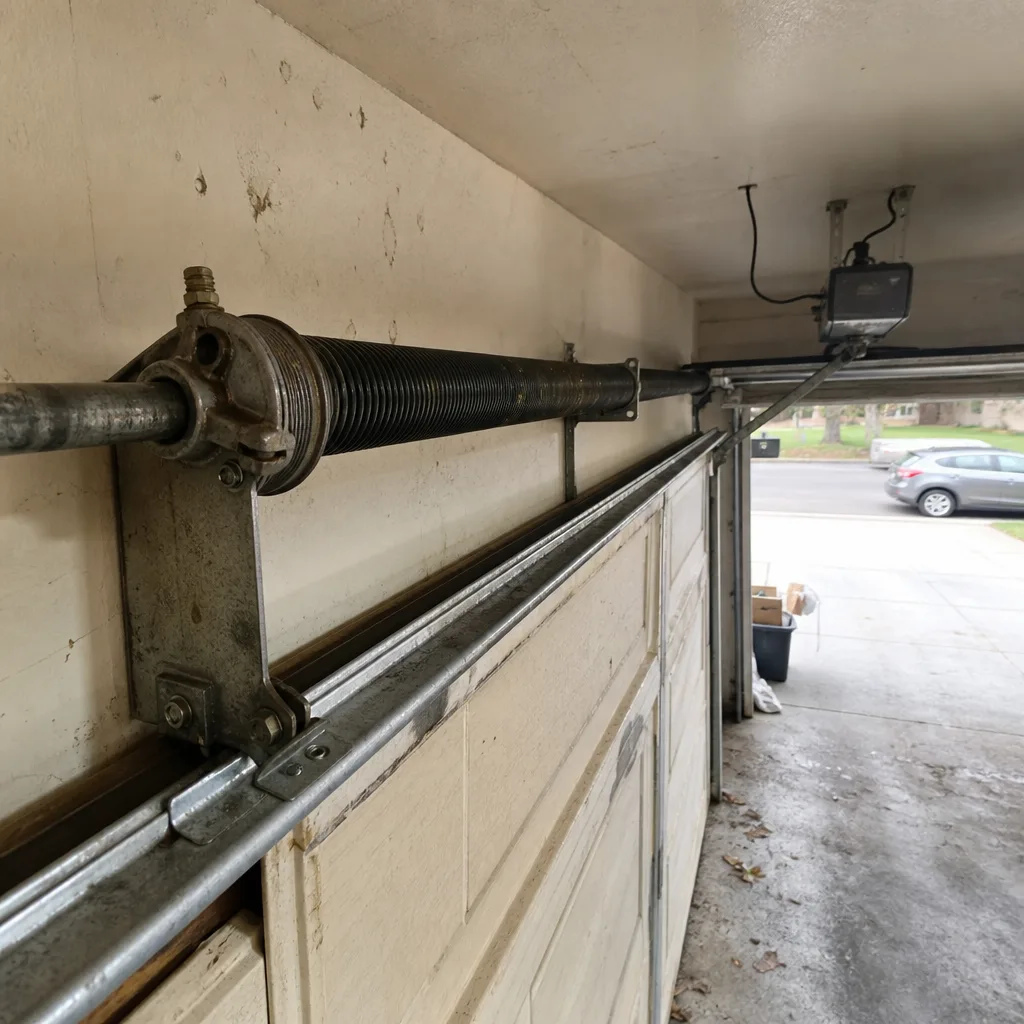
A worn torsion spring showing visible gaps between coils is 30-60 days from failure. Most homeowners in Denver who tell us their spring broke “suddenly” walked past that gap for two months without knowing what it meant. This guide gives you a maintenance checklist built around measurable pass/fail thresholds, not vague advice to “check things periodically.” You’ll learn what to look for, what the failure looks like in dollars, and how Denver’s freeze-thaw cycles, UV exposure at 5,280 feet, and hail season change the timeline. Every item includes a defer-or-act-now risk rating so you can prioritize by evidence, not anxiety.
Quick Answer
Denver homeowners should inspect their garage door system monthly for balance, lubrication, and hardware integrity, with deeper seasonal checks before winter and after hail season. Critical safety items - torsion spring condition, cable fraying, and auto-reverse function - should never be deferred; cosmetic or slow-wear items like weatherstripping or exterior paint can be scheduled. A complete DIY inspection takes 20 minutes and requires no tools beyond a flashlight, a ladder, and a 2×4 board.
Table of Contents
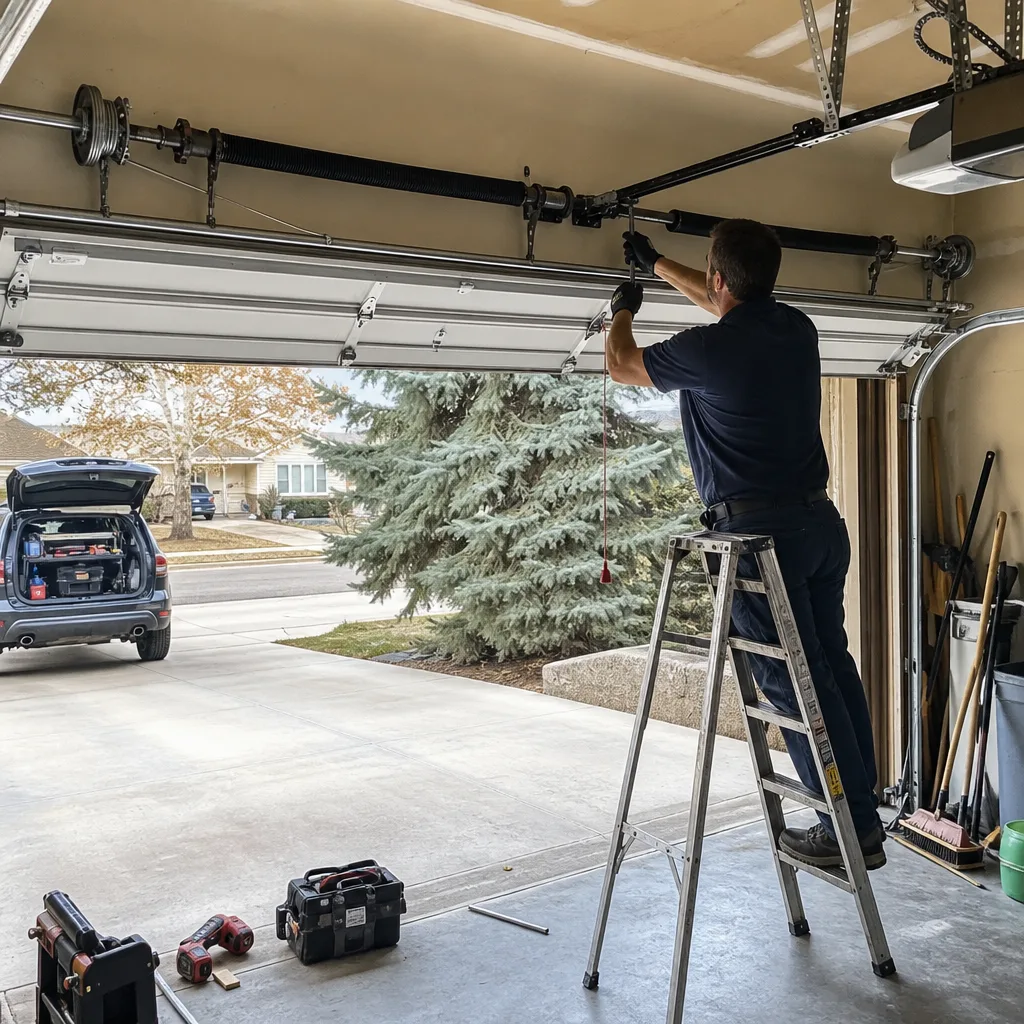
- Monthly Inspection Checklist: The 20-Minute Walkthrough
- Denver’s Seasonal Stress Calendar: When to Do What
- Measurable Pass/Fail Thresholds for Every Component
- Lubricants That Survive Denver’s Climate (and Ones That Don’t)
- Defer vs. Act Now: The Risk Table
- How to Document Your Inspection Like a Technician
- Common Mistakes to Avoid
- When to Call a Professional
- Frequently Asked Questions
 Before
 After
AfterMonthly Inspection Checklist: The 20-Minute Walkthrough
We built this around what our technicians actually check first when they arrive at a Denver home. The order matters: safety mechanisms first, then wear items, then cosmetics.
Step 1: Auto-Reverse Safety Test (2 minutes)
- Close the door fully.
- Place a 2×4 board flat on the floor, centered under the door path.
- Press the wall button to close the door.
- The door must reverse within 2 seconds of contacting the board. If it stops but reverses slowly, or if it doesn’t reverse at all, the opener’s force sensitivity is misadjusted.
- Repeat with the photoelectric sensors: wave a broom handle through the beam while closing. The door must reverse immediately.
Pass/fail: Immediate reversal is pass. Any delay, hesitation, or failure to reverse is fail - do not operate the door until repaired. This is federal safety law (UL 325), not a suggestion.
Step 2: Balance Test (3 minutes)
- Disconnect the opener trolley by pulling the red emergency release cord.
- Manually lift the door to waist height and release.
- A balanced door holds position within 6 inches of where you released it. It should not drift up or down.
Pass/fail: Holds position = pass. Drifts up = springs may be over-tensioned (rare but hard on opener). Drifts down = spring tension is failing; the opener is doing work it wasn’t designed for. In Denver’s dry climate, we’ve seen springs lose tension faster than coastal markets because thermal cycling accelerates metal fatigue.
Step 3: Visual Hardware Scan (5 minutes)
With the door closed, inspect:
- Hinges: Cracks at the knuckle, not just surface rust. Denver’s low humidity means less surface corrosion but more thermal expansion stress at the hinge pin.
- Roller stems: Wobble when you grip and shake. More than 1/8-inch lateral play indicates bearing wear.
- Cables: Fraying counted by visible broken wires. We’ll detail the threshold in the next section.
- Bottom brackets: These connect the cable to the door and are under constant spring tension. Look for elongation of the bolt holes or cracks in the casting.
Step 4: Lubrication Spot-Check (5 minutes)
Run the door up and down once. Listen for squeal at the rollers, grind at the opener rail, or rhythmic thump from a flat-spotted roller. Note the location; you’ll address it in the seasonal deep-lube.
Step 5: Weatherstripping and Seal (5 minutes)
Close the door and look for daylight at the sides, top, and bottom. In Denver, the bottom rubber seal hardens faster than in humid climates because UV at altitude degrades polymers more aggressively. A hardened seal won’t flex to conform to a heaved concrete slab after freeze-thaw.
Denver’s Seasonal Stress Calendar: When to Do What
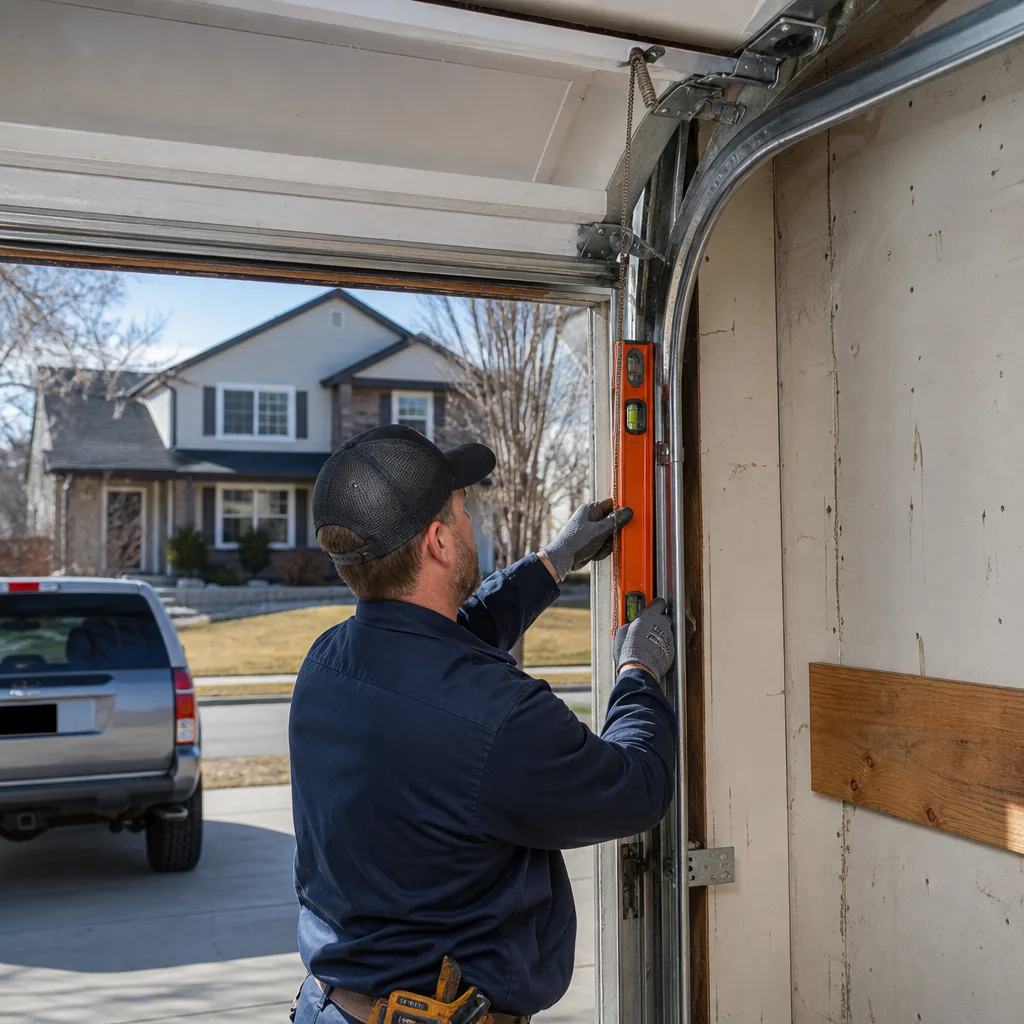
Generic checklists say “spring and fall.” Denver’s climate has four distinct stress windows that don’t align with that.
October: Pre-Winter Lubrication and Tension Check
Temperatures drop below 20°F an average of 15 nights per winter in Denver. Grease that flowed at 50°F becomes viscous at 10°F. We see opener strain failures peak in January because the lubrication was wrong or absent. In October, before the first hard freeze:
- Replace any lithium-based or general-purpose grease with silicone or synthetic garage door lubricant rated to -35°F
- Verify spring tension with the balance test; cold makes a weak spring obvious
- Inspect the garage door opener rail for dried lubricant that will become abrasive grit
March: Post-Hail Panel and Hardware Inspection
Denver’s Front Range hail season runs May through September, but damage often isn’t fully visible until spring light angles change. After the last freeze:
- Inspect steel door panels for dimple fractures that have rusted through the paint
- Check aluminum door sections for crease cracks at the panel seams; these propagate with thermal cycling
- Verify that impact hasn’t knocked roller tracks out of parallel; measure top-opening width versus bottom-opening width
In neighborhoods like Stapleton and Lowry, where newer homes often have wider 18-foot doors for two SUVs, the panel span makes hail damage more structurally significant than on older 16-foot doors in Berkeley or Sunnyside.
May: UV Seal and Exterior Finish Check
Denver receives 25% more UV radiation than sea level. By May, after winter snow glare and before summer intensity:
- Flex-test the bottom rubber seal; if it cracks when bent 90 degrees, replace it
- Inspect wood doors for finish failure at the south and west exposures
- Check fiberglass and vinyl doors for chalking or fiber bloom
August: Deep Hardware and Opener Electronics Inspection
Before hail season’s final round and before the temperature swing back to cold:
- Tighten all track bolts and lag screws; thermal expansion loosens them over a Denver summer
- Test the opener’s logic board for heat-related erratic behavior (random reversal, phantom operation)
- Inspect the trolley carriage for wear; the nylon gear inside strips more easily when hot and under load
Measurable Pass/Fail Thresholds for Every Component
This is where most checklists fail. They tell you to “check the springs” without saying what failure looks like. Here’s what we measure on every garage door repair in Denver call, translated to homeowner inspection.
Torsion Springs
| Inspection Item | Pass Threshold | Fail Threshold | Cost of Deferral |
|---|---|---|---|
| Visible gap between coils when door is closed | No gap; coils touch | Any visible daylight between coils | $280-$420 spring replacement; $180-$260 if caught before break damages cable/hinge |
| Coil surface condition | Uniform dark oxide, no rust scale | Flaking rust, pitting, or bright metal wear spots | Spring failure within 30-90 days; potential door drop if break is uncontrolled |
| End cone integrity | No cracks in the cast fitting | Hairline cracks radiating from center hole | Catastrophic uncontrolled release; this is why we don’t recommend DIY spring work |
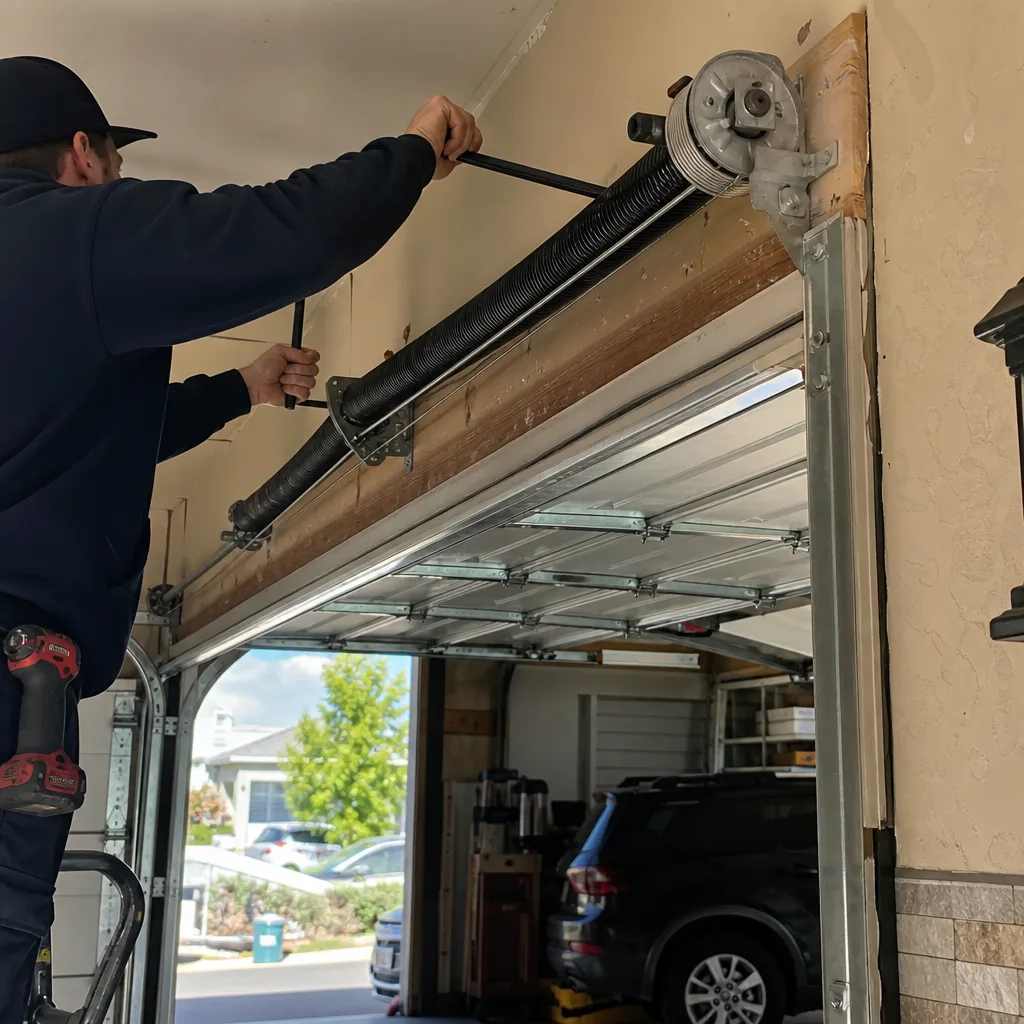
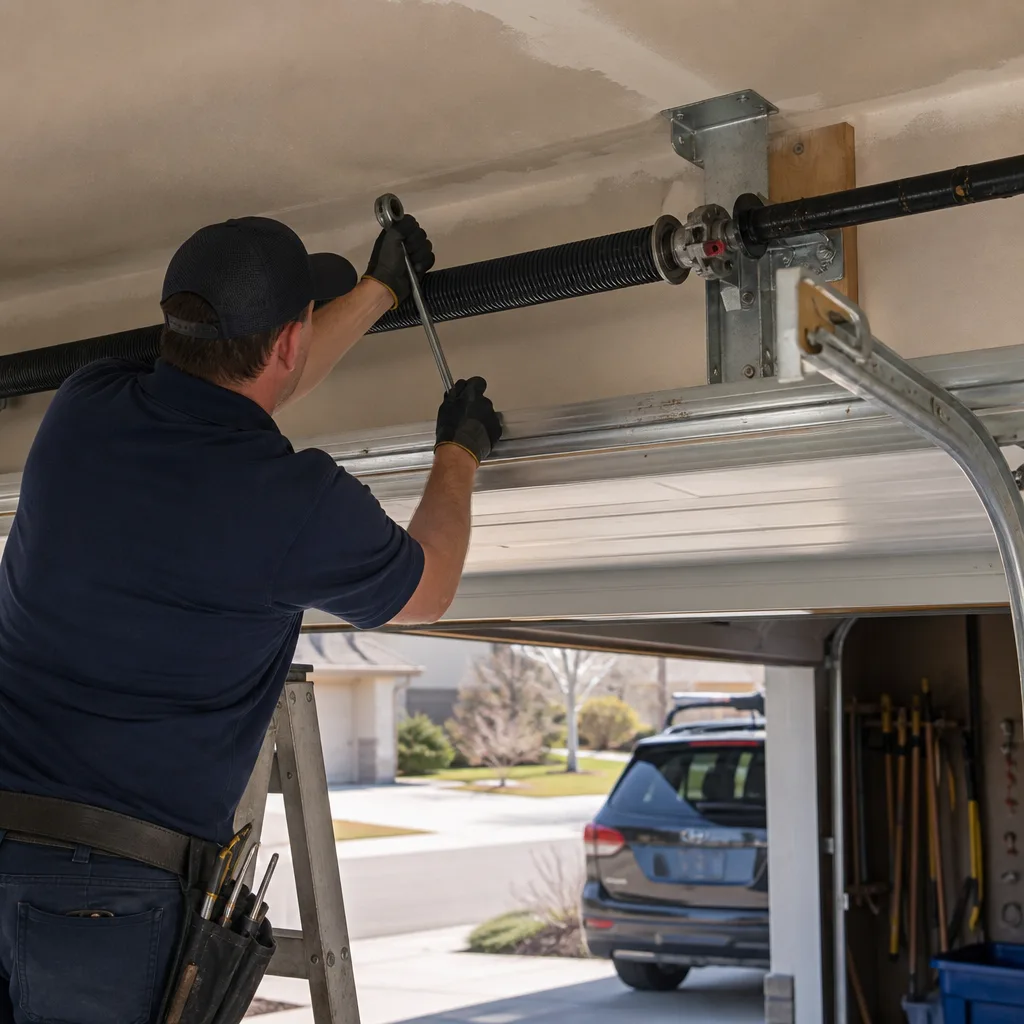
Safety note: Torsion springs store enough energy to cause serious injury or death. The winding cone is under several hundred pounds of torque. We document the gap with a photo before quoting replacement, per Clause 4 of The Haven Standard. Do not attempt to adjust or replace torsion springs yourself.
Cables
| Inspection Item | Pass Threshold | Fail Threshold | Cost of Deferral |
|---|---|---|---|
| Visible broken wires in cable braid | Zero broken wires | 3+ broken wires in any 1-inch section | $140-$220 cable replacement; if cable snaps, door drops and damages panel ($400-$1,200) |
| Cable diameter reduction | Within 5% of original (typically 1/8-inch or 3/16-inch) | Measurable diameter loss from abrasion | Progressive weakening; sudden failure without warning signs |
| Fraying at bottom bracket attachment | Tight, uniform wrap | Unwinding or “bird-caging” at termination | $140-$220 plus bracket replacement; door imbalance damages rollers |
Rollers
| Inspection Item | Pass Threshold | Fail Threshold | Cost of Deferral |
|---|---|---|---|
| Lateral wobble (stem play) | Less than 1/8-inch side-to-side | More than 1/8-inch or visible stem wear | $12-$18 per roller; deferred wear destroys track ($280-$450) |
| Roller wheel condition (nylon) | Round profile, no flat spots | Flat spot, chip, or crack | Thumping operation; opener rail damage from impact loading |
| Roller wheel condition (steel) | Smooth bearing rotation | Grind, catch, or visible bearing race wear | Same as above; steel rollers also score the track if bearing fails |
Opener Safety Systems
| Inspection Item | Pass Threshold | Fail Threshold | Cost of Deferral |
|---|---|---|---|
| Auto-reverse force (2×4 test) | Reversal within 2 seconds | No reversal, delayed reversal, or door stops and hums | Safety liability; opener replacement if force adjustment fails ($380-$620) |
| Photoelectric alignment | Both LEDs solid (not blinking) | One or both LEDs blinking or dark | Door won’t close from remote; misalignment often from track shift ($0-$140) |
| Wall button lockout | Vacation lock functions | Lock does not engage or disengage | Security risk; logic board issue ($180-$340) |
Lubricants That Survive Denver’s Climate (and Ones That Don’t)
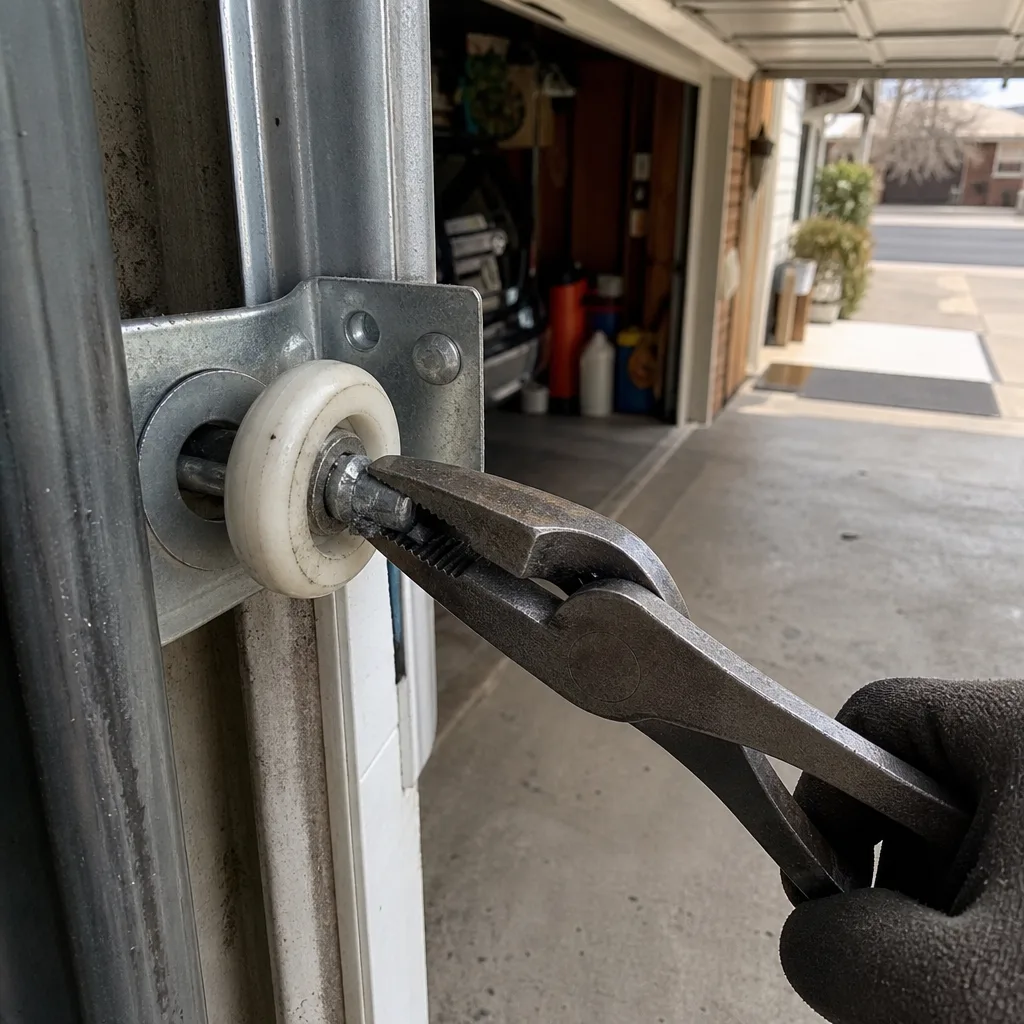
We’ve cleaned gummed-up tracks in January that were “lubricated” in September with products that work fine in Atlanta. Denver’s combination of low humidity, temperature swings of 40°F in a day, and sub-20°F nights requires specific chemistry.
Use These
- Synthetic garage door spray lubricant (PTFE or silicone base, rated -35°F): Stays fluid at cold, doesn’t attract dust. Apply to hinges, roller bearings (not the wheel tread), and torsion spring coils. We use this on every maintenance call.
- White lithium grease (opener rail only, specific formulations): The rail trolley interface needs grease, not spray. Use only products labeled for low-temperature garage door openers. Clopay and Amarr both specify this in their maintenance literature for Denver-area installations.
- Silicone spray with dielectric properties (weatherstripping): Keeps rubber flexible without petroleum swelling. Apply to bottom seal and side seals annually.
Do Not Use
- WD-40 as a lubricant: It’s a solvent and water displacer, not a lubricant. It evaporates in 72 hours and leaves a sticky residue that collects Front Range dust. We’ve replaced opener gears that failed because WD-40 attracted abrasive grit.
- General-purpose lithium grease below 20°F: Thickens to the consistency of clay. The opener motor draws 30-40% more amps trying to push a trolley through congealed grease.
- Motor oil or 3-in-1 oil: Drips onto the door finish, attracts dust, and provides no low-temperature protection.
- Graphite on nylon rollers: Graphite is for metal-on-metal. It stains the door and provides no benefit to nylon bearings.
Application Notes for Denver
Apply lubricant when the door and hardware are at ambient temperature, not immediately after operation when metal is warm. In Denver’s climate, morning application in October (before heating season) gives the best penetration before cold sets in. Wipe excess; dust in the Denver metro is finer than coastal markets and will adhere to any visible film.
Defer vs. Act Now: The Risk Table
Not every finding demands immediate action. This table separates watchful waiting from genuine urgency, based on 18,000+ service records since 2015.
| Finding | Defer Safely | Act Within 2 Weeks | Act Before Next Use |
|---|---|---|---|
| Weatherstripping hardened, minor daylight visible | Schedule with seasonal maintenance | – | – |
| Single roller with slight wobble, others good | Monitor monthly; replace at next service | – | – |
| Surface rust on spring, no gap, no pitting | Apply rust-inhibiting spray; recheck in 30 days | – | – |
| 3-5 broken cable wires in localized section | – | Schedule cable replacement | – |
| Auto-reverse delayed but functional | – | Schedule opener service | – |
| Visible gap in torsion spring coils | – | – | Do not operate; call for replacement |
| Cable unwinding at bottom bracket | – | – | Do not operate; door may drop |
| Opener runs, door doesn’t move (trolley failure) | – | – | Disconnect opener; manual operation only until repair |
| Track visibly bent or bracket pulled from wall | – | – | Do not operate; structural failure risk |
The pattern: anything that can cause uncontrolled door drop or prevents the safety systems from functioning is “act before next use.” Cosmetic wear and single-component degradation with redundant backup (multiple rollers, dual springs on wider doors) can be scheduled.
How to Document Your Inspection Like a Technician
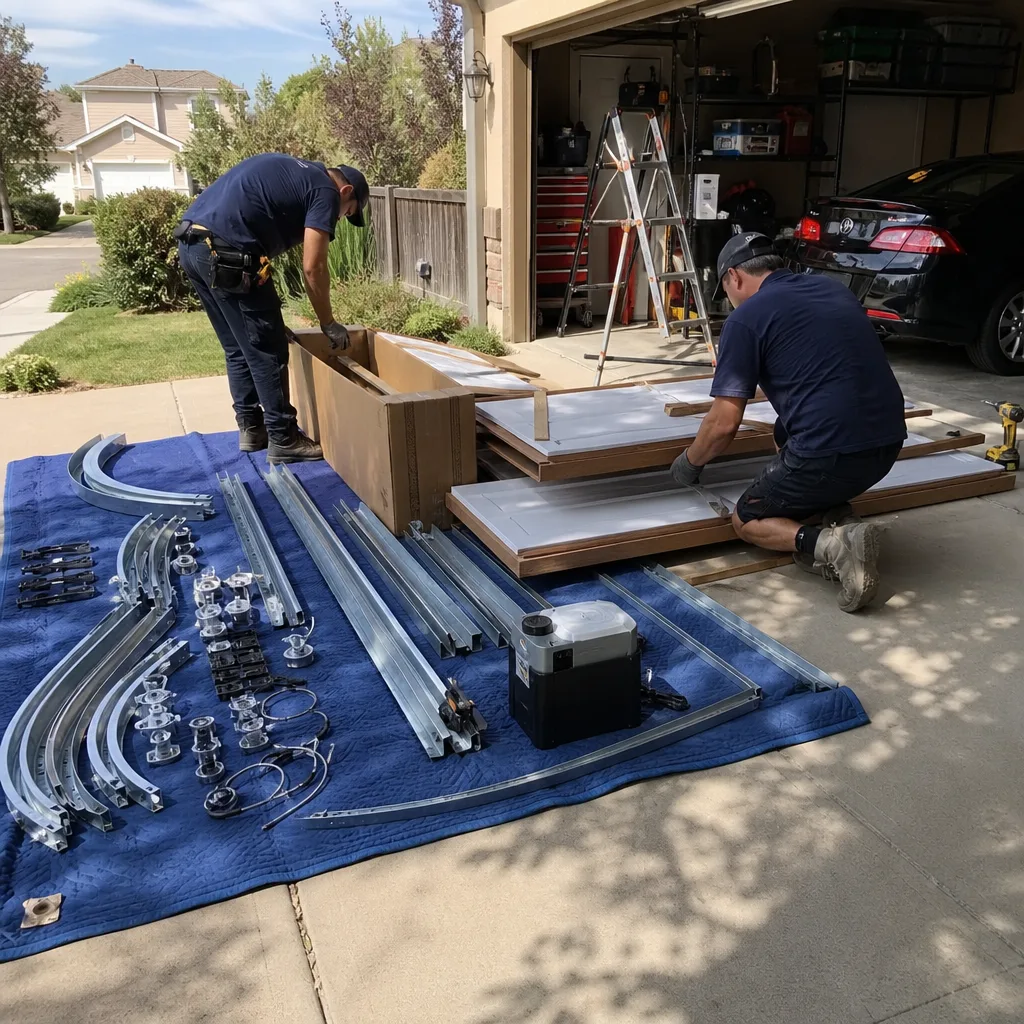
Clause 4 of The Haven Standard exists because documentation eliminates dispute. You can apply the same principle to your own maintenance records. When you call for garage door repair in Denver, a photo record from your inspection lets you compare the technician’s findings against what you observed.
The Photo Set (5 shots, 2 minutes)
- Full door, closed, exterior: Establishes baseline condition, paint/finish state, obvious panel damage.
- Torsion spring assembly, door closed: Capture coil spacing, end cone condition, and any rust. Use flash; shadows hide gaps.
- Cable run, from drum to bottom bracket: Zoom to show braid condition. Take a second shot if you find fraying.
- Track and roller at the curved transition: This is where wear concentrates. Shows roller condition and track alignment.
- Opener rail and trolley, door open: Documents lubrication state and any visible wear on the nylon gear housing.
The Written Log
Date each inspection. Note:
- Balance test result (held position / drifted up / drifted down, and by how many inches)
- Auto-reverse result (passed / delayed by X seconds / failed)
- Any noise: location, description, when it occurs (opening, closing, or both)
- Lubrication applied: product name, date, locations
When you call Servo Garage Doors Denver for Garage Door Repair services with this record, we can give you a tighter phone estimate because you’ve already done the first half of the diagnostic. The technician arrives knowing what you’ve observed, and the documented photo record from our visit extends your log with professional findings.
Common Mistakes to Avoid
- Using the emergency release cord as a regular operating method. The red cord disconnects the trolley for power-outlet or service use. Operating manually daily accelerates cable and spring wear because the system’s damping is designed for motorized control.
- Lubricating the tread of nylon rollers. The wheel needs to roll, not slide. Lubricant on the tread attracts dust and causes slipping in the track. Lubricate the bearing inside the wheel, never the outer surface.
- Ignoring the door after an opener upgrade. A new opener on a failing door system masks problems. We’ve replaced logic boards burned out by a door with a broken spring because the new opener was straining against a load it couldn’t sense was abnormal.
- Assuming a quiet door is a healthy door. In Denver’s dry air, components can fail silently. A spring with a clean fatigue break sometimes makes no noise; the door just stops opening. The balance test catches what ears miss.
- Pressure-washing the door and seals. The force drives water past seals into track interiors and between steel panel laminations. In Denver’s freeze-thaw, that trapped water separates laminations and freezes hardware. Use a hose with a gentle spray, directed downward.
- Storing chemicals near the torsion spring assembly. Fertilizers, pool chemicals, and de-icing salts release corrosive vapors. In Denver’s low humidity, the concentration is higher than in humid climates. We’ve replaced springs in Cherry Creek and Hilltop garages that failed prematurely from vapor corrosion in otherwise clean environments.
- Waiting for “both springs” to fail on a dual-spring door. Dual-spring setups (common on 18-foot and solid-wood doors) are designed for balanced load sharing. When one spring fails, the other carries double load and fails catastrophically within days. Replace in pairs.
When to Call a Professional
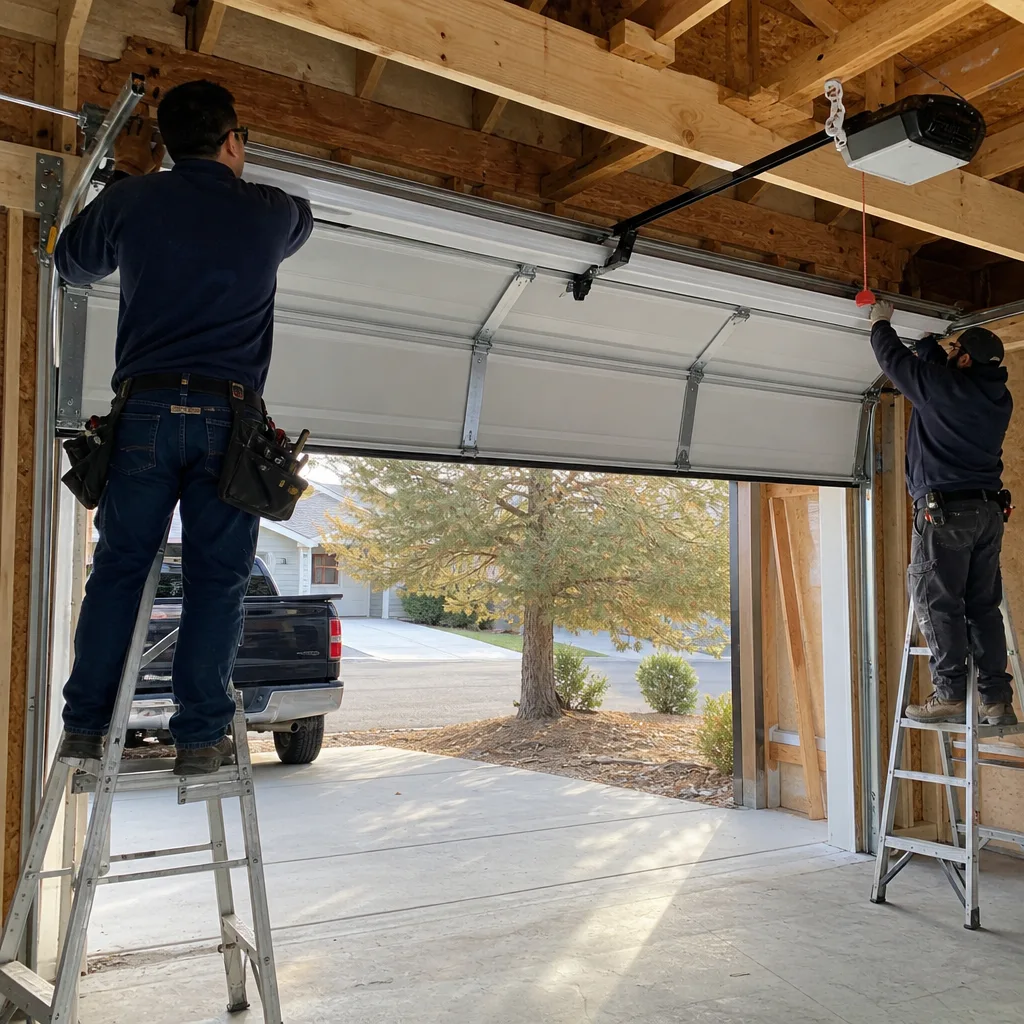
Call for service before operating the door if you find: any gap in a torsion spring, unwinding cable at the bottom bracket, track separation from the wall or floor, or auto-reverse failure. These are not maintenance items; they are safety stops.
For scheduled maintenance or when your inspection reveals wear approaching the fail thresholds above, Servo Garage Doors Denver offers free estimates in Denver. We’ll apply the same documented inspection process: written price and scope before any work starts, per Clause 1 of The Haven Standard, and a photo record of findings delivered when the technician leaves. Call (720) 807-2580 to schedule.
Frequently Asked Questions
A professional maintenance visit typically runs $120-$180 and includes lubrication, balance adjustment, safety system testing, and a documented photo record of all components. If we find wear items during maintenance, we quote replacement separately with the same written-price-first process. Call (720) 807-2580 for an exact quote on your door configuration.
Monthly for the five-item safety and function checklist, with deeper seasonal inspections in October (pre-winter), March (post-hail), May (UV seal check), and August (hardware and electronics). Denver’s 300+ sunny days and 40°F daily temperature swings in shoulder seasons accelerate wear compared to milder climates.
Monthly inspection, lubrication, and safety testing are within most homeowners’ capability (see our more guides & resources for deeper how-tos). Torsion spring work, cable replacement, and track realignment are not; these components are under lethal tension and require specialized tools and training. Our technicians carry torque bars calibrated to the specific spring wire diameter on your door, and we photograph the failed component before quoting replacement, per Clause 4 of The Haven Standard.
Torsion spring fatigue from thermal cycling leads our call volume November through February. Hail damage to panels and track misalignment peaks May through September. Opener logic board failures from heat and voltage fluctuation concentrate in July and August. The common thread: deferred maintenance that allows minor wear to become catastrophic failure under seasonal stress.
No. Servo Garage Doors Denver provides a flat, written price and written scope before any work begins, per Clause 1 of The Haven Standard. If our technician finds additional issues during the work already agreed to, those are quoted separately and require your approval. The price on the signed scope is the price on the invoice.
A steel door with standard torsion springs lasts 15-20 years with proper maintenance; springs typically need replacement at 10,000 cycles (roughly 7-10 years for average use). In Denver, UV exposure at altitude degrades weatherstripping in 3-5 years versus 5-7 in coastal climates, and thermal cycling accelerates metal fatigue by an estimated 15-20%. Wood doors in south- and west-facing exposures may need refinishing every 2-3 years to prevent moisture intrusion during spring snowmelt.
The Bottom Line
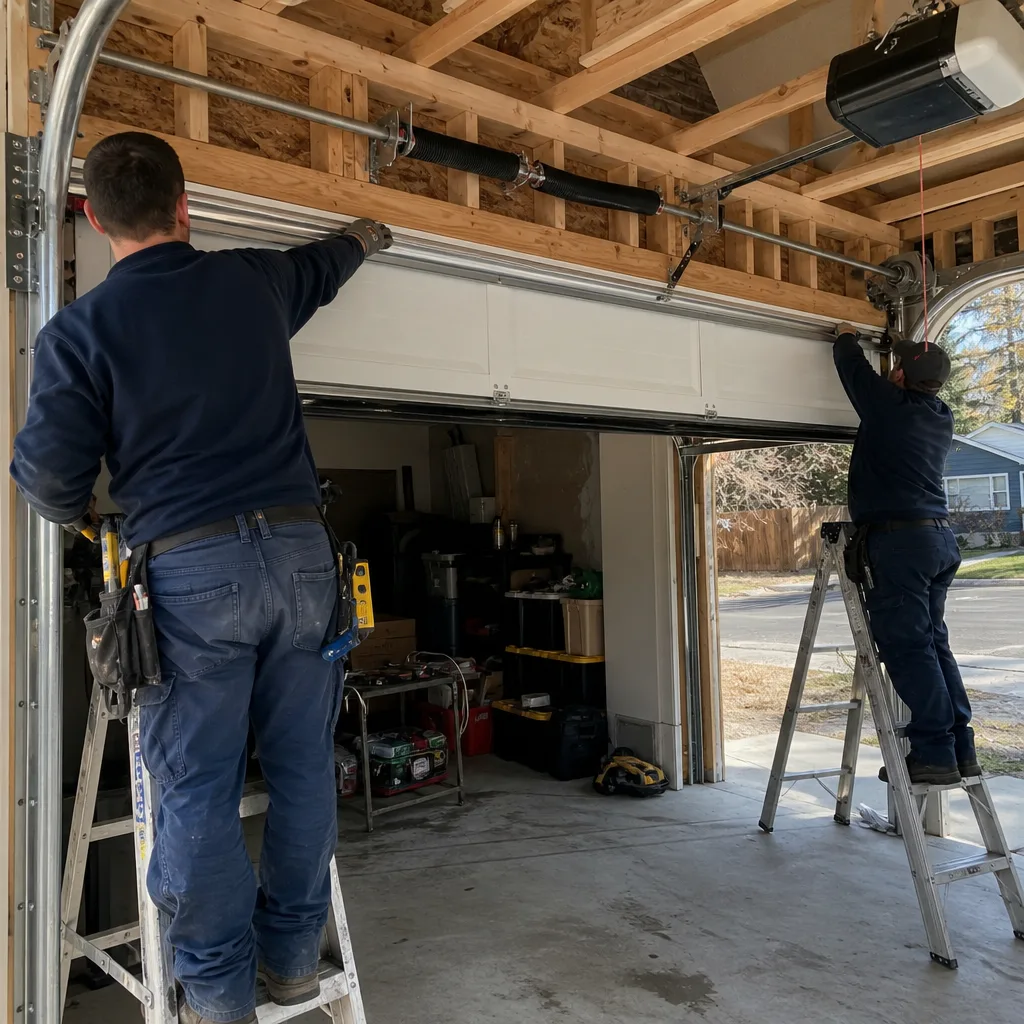
Garage door maintenance in Denver is not about preventing all failure; it’s about converting catastrophic, expensive, dangerous failures into scheduled, predictable, documented repairs. The 20-minute monthly inspection, the seasonal calendar keyed to Front Range weather, and the measurable thresholds in this checklist give you the information to prioritize by risk. Document what you find. When you need professional service, demand the same documentation in return: written price first, photo evidence of findings, and a clear scope before work starts. For help choosing the right provider, see How to Hire a Garage Door Contractor in Denver: A Step-by-Step Guide. That’s how maintenance becomes an investment instead of a gamble.
Written by Marcus Deller, Owner at Servo Garage Doors Denver, serving Denver since 2015.