
Last updated September 22, 2026
Full 25-point door and opener safety check with every visit - springs, cables, rollers, tracks, and your LiftMaster or Chamberlain opener included
You get a price before we start. It does not change when the truck arrives.
 Before
 After
After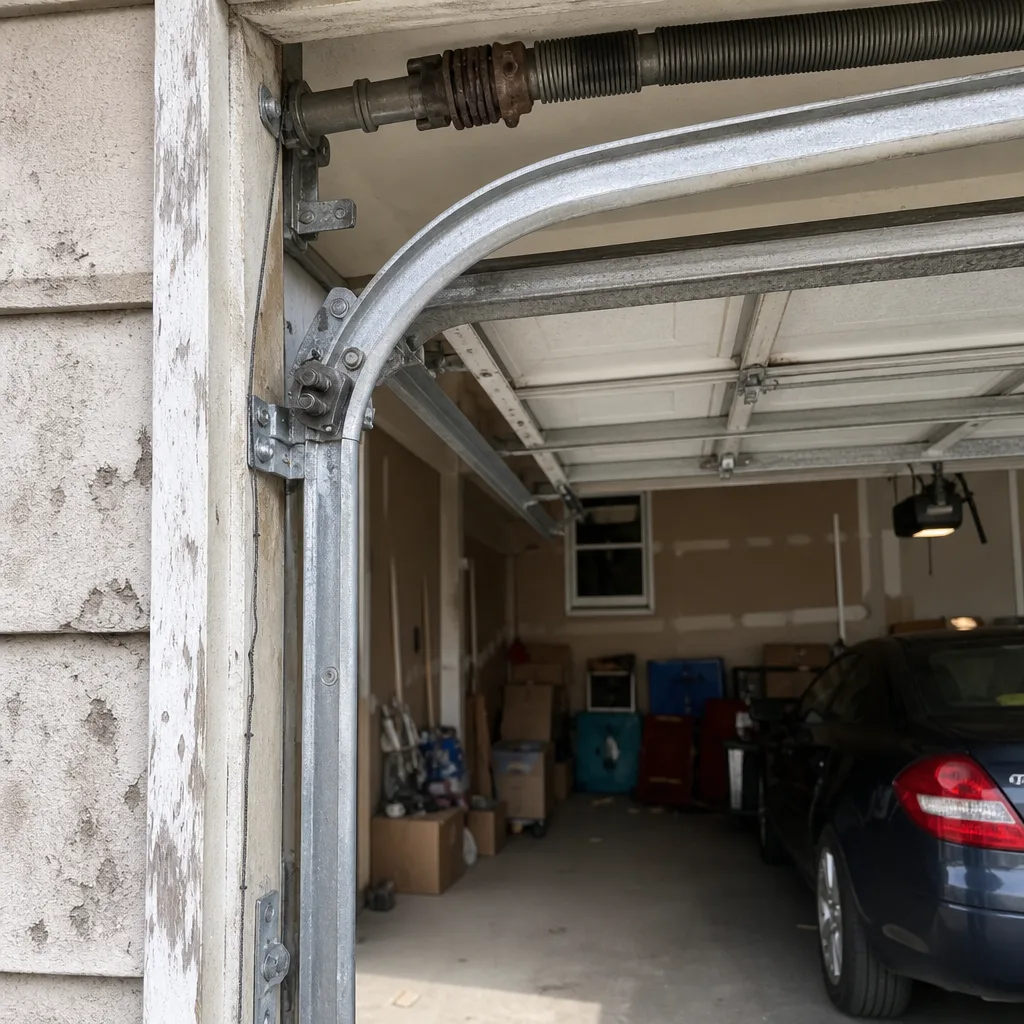 Before
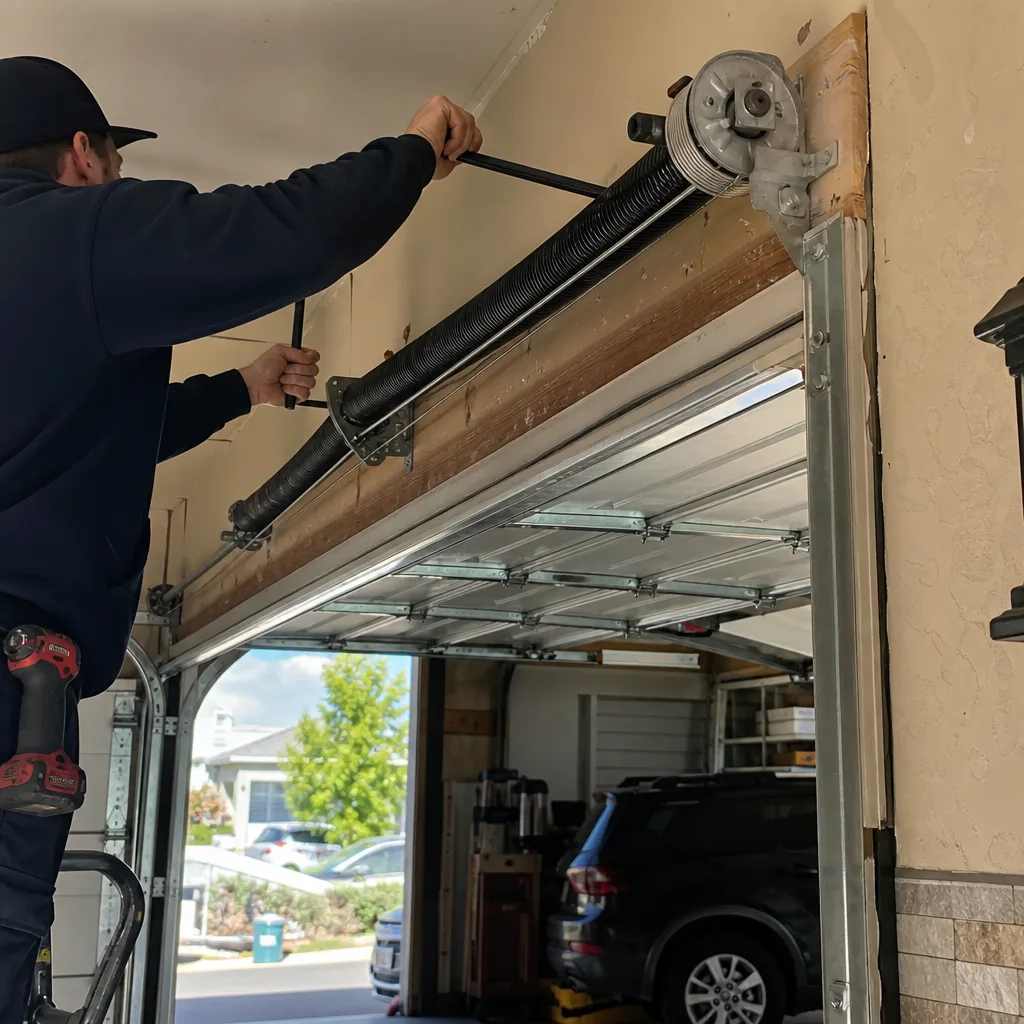 After
After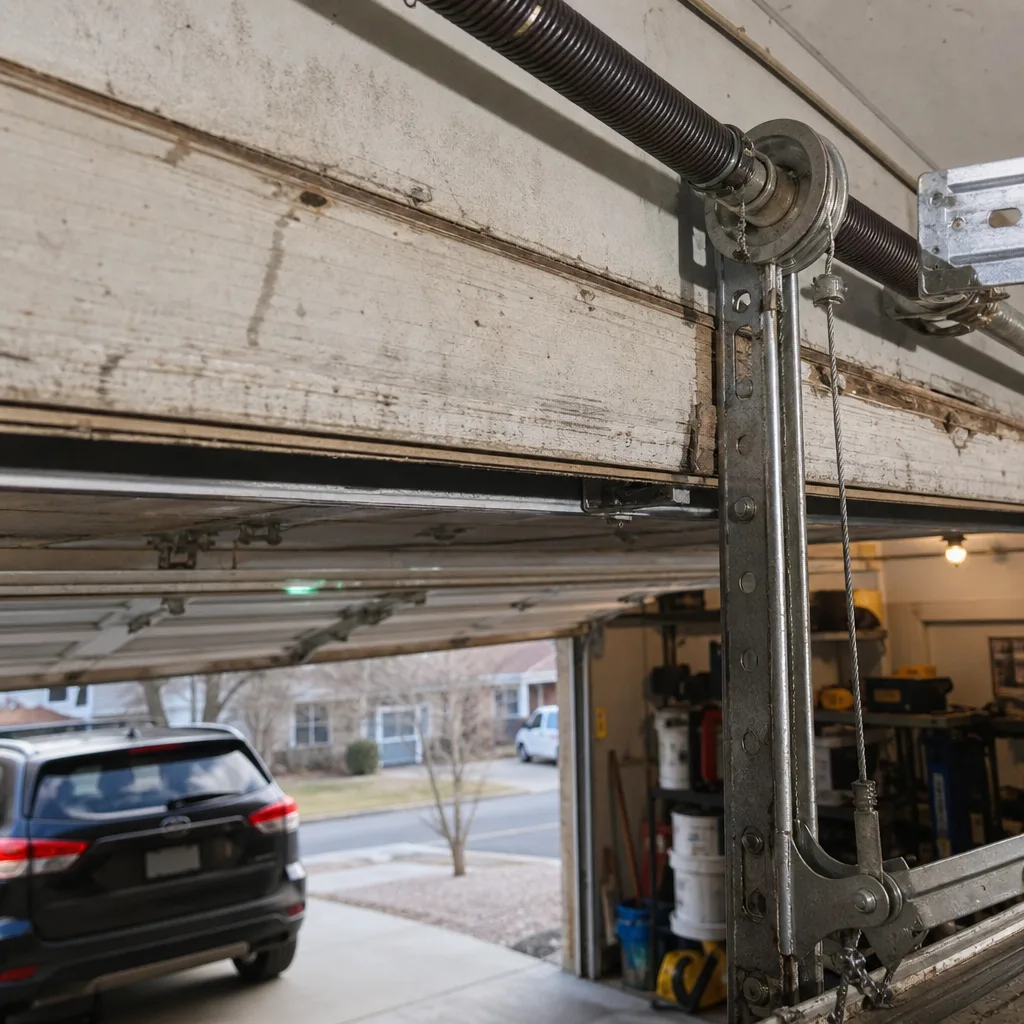 Before
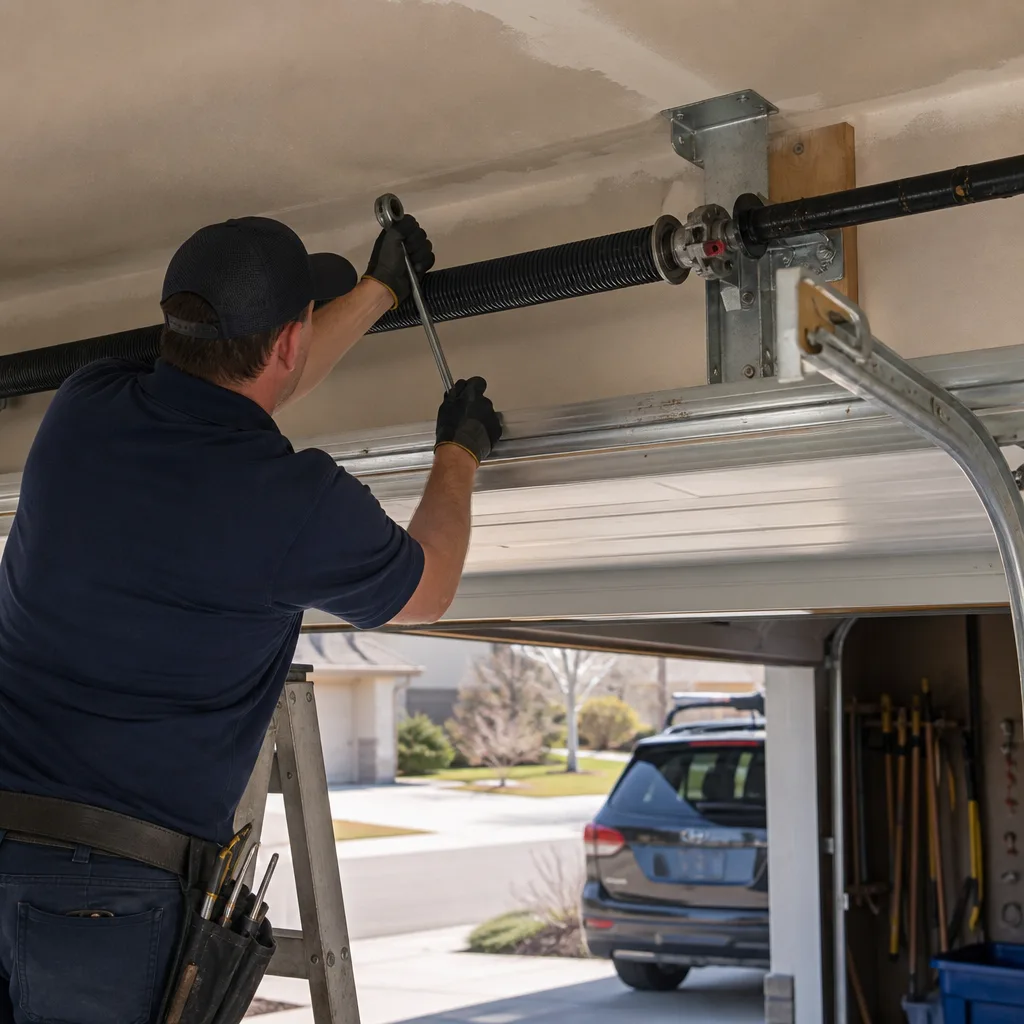 After
AfterGarage Door Warning Signs: A Denver Homeowner’s Reference Guide
A garage door that hesitates on reversal is not a quirk. It is the safety reversal system failing its load test, and in Denver’s dusty, temperature-variable environment, the sensor eyes and the close-force setting drift together. Most homeowners in Capitol Hill and Wash Park learn this the hard way, after the door clips a bumper or worse. This guide gives you a triage system: which warning signs mean stop using the door now, which ones mean schedule service this month, and how to document what you see so your quote is anchored to evidence you control. For more guides & resources, see our blog.
Quick Answer
The three garage door warning signs that demand immediate stop-use are a broken torsion spring, a frayed cable with exposed wire strands, and a door that has come off its track. For Denver homeowners, additional watch items include rust patterns on springs in attached garages, slow opener response in cold weather, and intermittent reversal failures that worsen after windy days. Document what you observe with photos and video before calling any contractor.
Table of Contents
- Stop Use Immediately: Three Signs That Pose Real Danger
- Monitor and Schedule: Five Signs That Warrant Service Soon
- Denver-Specific Warning Signs: Climate and Construction Factors
- How to Diagnose Without Touching Hardware Under Tension
- What to Document Before Calling a Contractor
- The Cost Differential: Early Repair vs. Late Repair
- Common Mistakes to Avoid
- When to Call a Professional
- Frequently Asked Questions
- The Bottom Line
 Before
 After
AfterStop Use Immediately: Three Signs That Pose Real Danger
These three conditions create injury risk beyond inconvenience. Do not operate the door. Do not attempt repair. Disengage the opener if you can do so without reaching near any hardware under tension.
Broken Torsion Spring
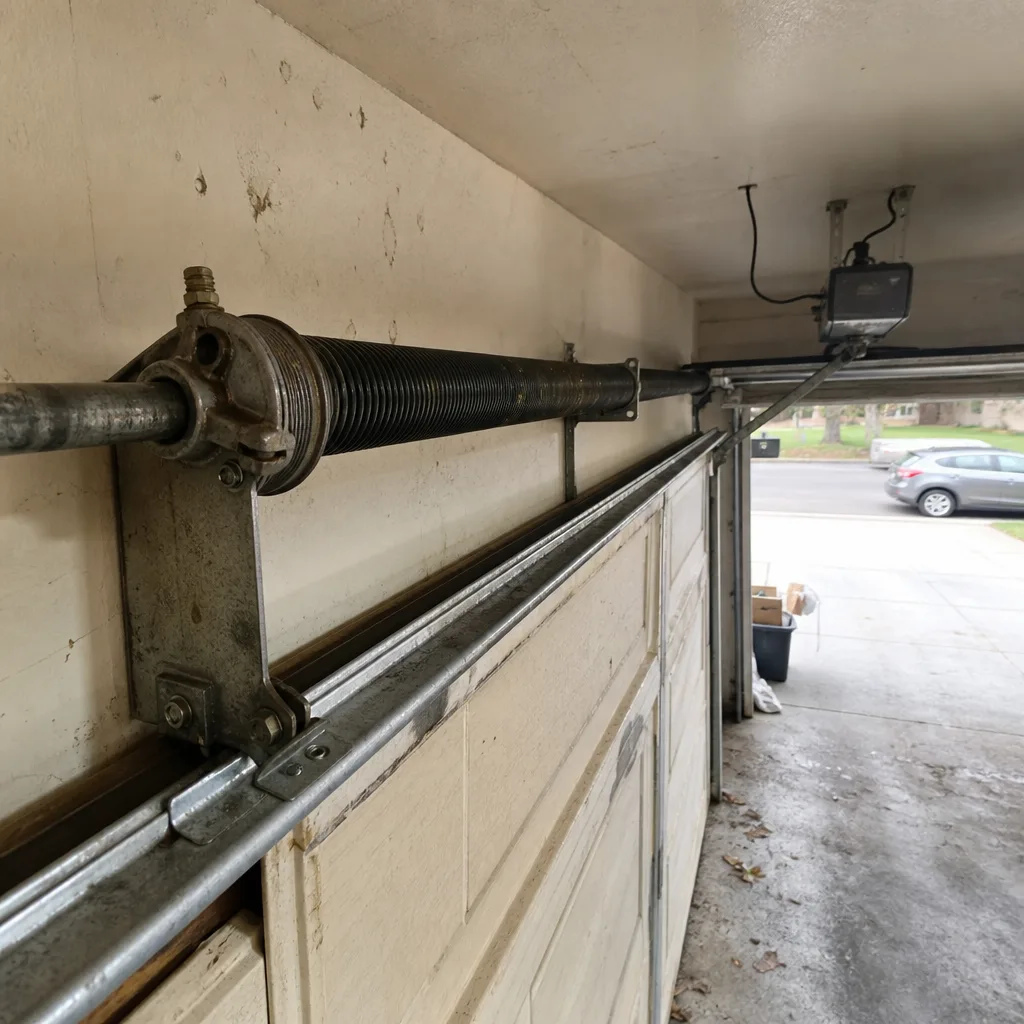
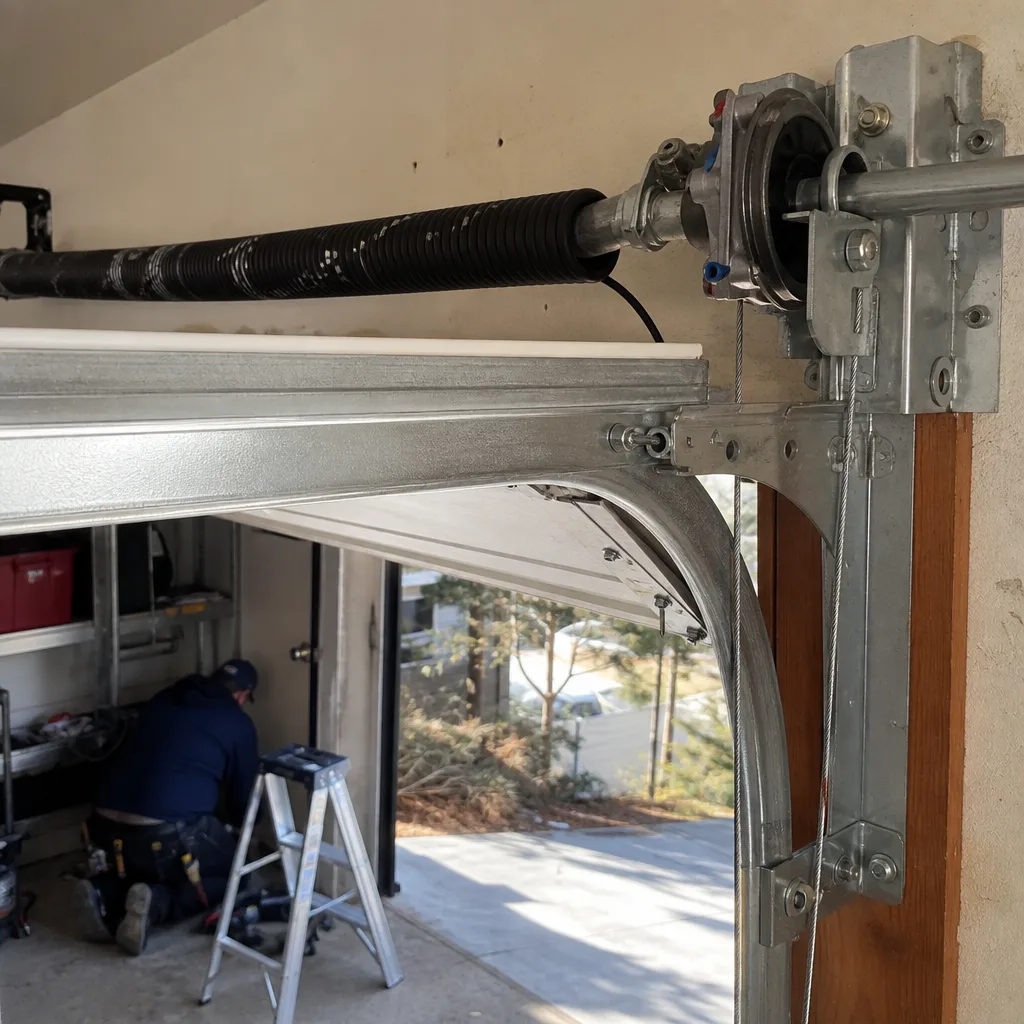
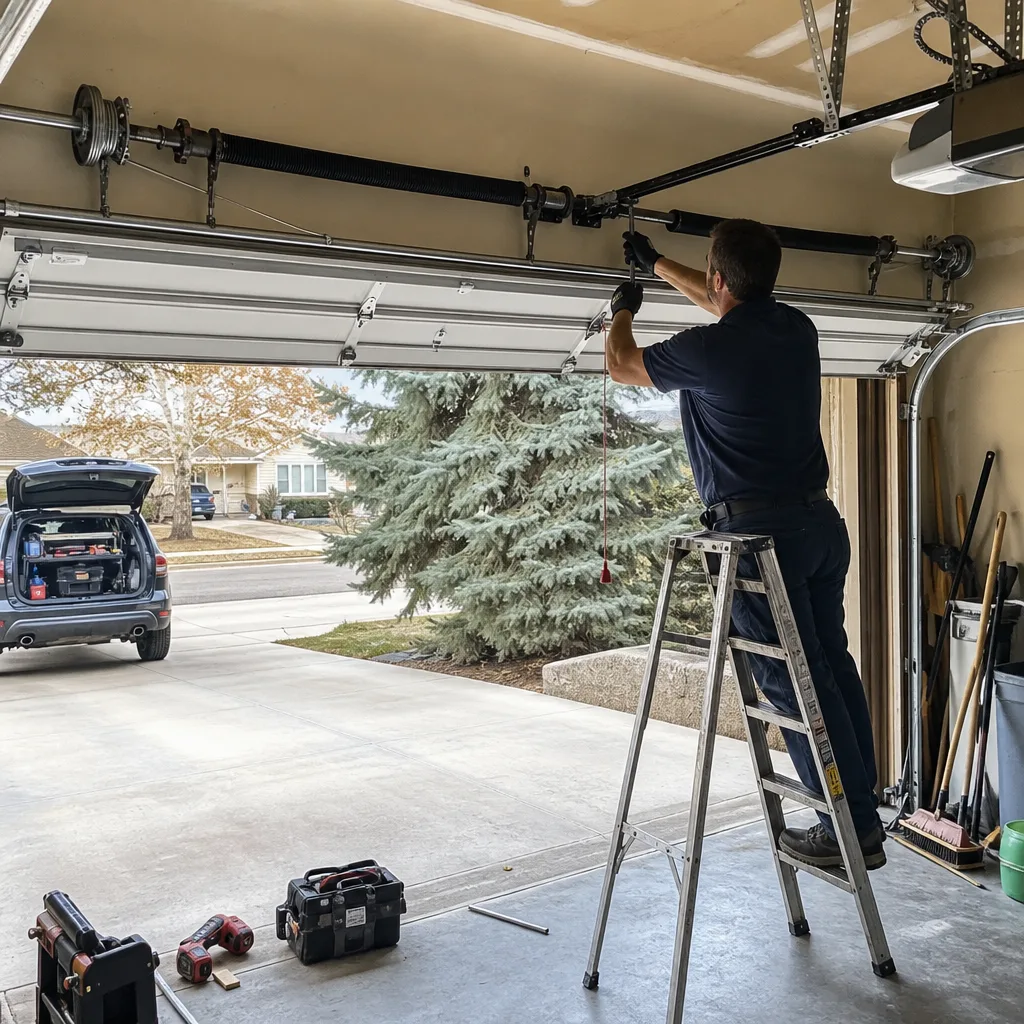
The torsion spring sits horizontally above the door, wound tight to counterbalance the door’s weight. When it breaks, you will hear a loud bang from the garage, often mistaken for a car backfire or a transformer popping. The door will feel suddenly heavy, may not open more than a few inches, or will slam shut uncontrolled if manually released.
Why this is dangerous: A torsion spring stores roughly 100 pounds of torque in a typical residential door. The broken ends are under no tension, but if the second spring in a dual-spring system is still wound, or if you mistake a broken spring for an opener problem and start troubleshooting the motor, you are working near a component that can cause serious laceration or amputation. In Denver, we see spring failures spike in March and October when temperature swings of 40 degrees in 48 hours stress the metal.
What to check: Look above the door for a gap in the coil, typically two to four inches where the spring has separated. Do not touch. The technician will measure wire diameter, inner diameter, and length to specify the replacement.
Frayed Cable with Exposed Wire Strands
The lift cables run vertically from the bottom corners of the door to the cable drums at the spring shaft. They are aircraft-grade steel, but they wear against the drum grooves and the bottom bracket pulleys over thousands of cycles.
What to look for: Fraying appears as bristling wire strands protruding from the cable jacket, like a frayed rope. A single broken strand is monitor-and-schedule. Multiple exposed strands, or any visible rust bleeding through the cable, is stop-use. In Denver’s low humidity, rust on a cable usually indicates water intrusion from a foundation leak or snowmelt tracking, common in older Park Hill and Baker basements.
Why this is dangerous: A cable under load that snaps can whip with lethal force. The stored energy in a 150-pound door translates to significant kinetic release. We have documented cable failures where the whip radius damaged a vehicle windshield 15 feet away.
Door Off Track
The rollers ride inside vertical and horizontal tracks that guide the door’s path. When a roller pops out, the door hangs crooked, binds, or jams partially open.
Why this is dangerous: The door is no longer constrained by its designed load path. Attempting to force it closed or open can cause the entire door to fall, or can bend the track into a condition requiring full replacement rather than a roller reset. In Denver’s older neighborhoods like Berkeley and Sunnyside, settled foundations and non-square openings make off-track events more common.
Immediate action: If the door is stuck open, secure the opening manually if safe to do so without approaching the track area, and call for service. Do not operate the opener.
Monitor and Schedule: Five Signs That Warrant Service Soon
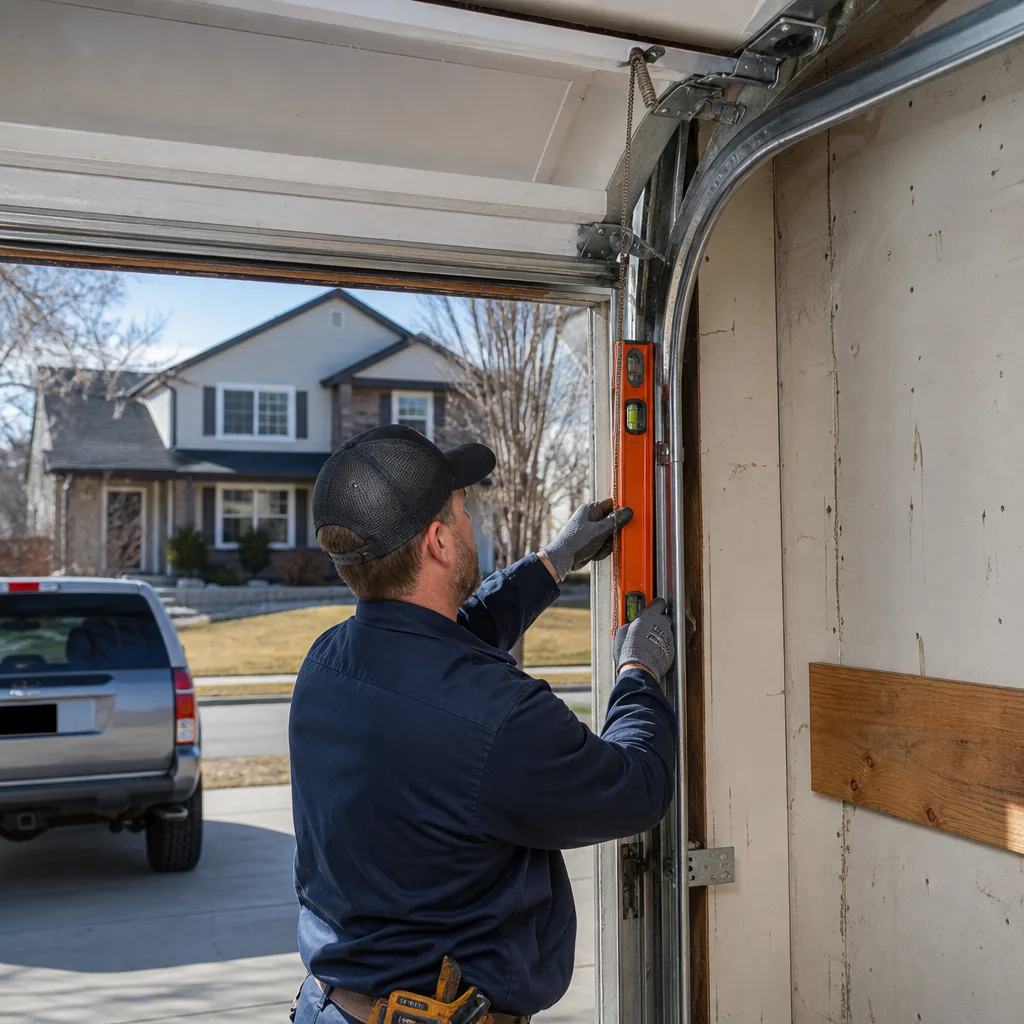
These conditions do not require emergency stop-use, but they indicate progressive wear with predictable failure timelines. Addressing them early typically costs one-third to one-half of waiting for catastrophic failure.
1. Slow Opener Response
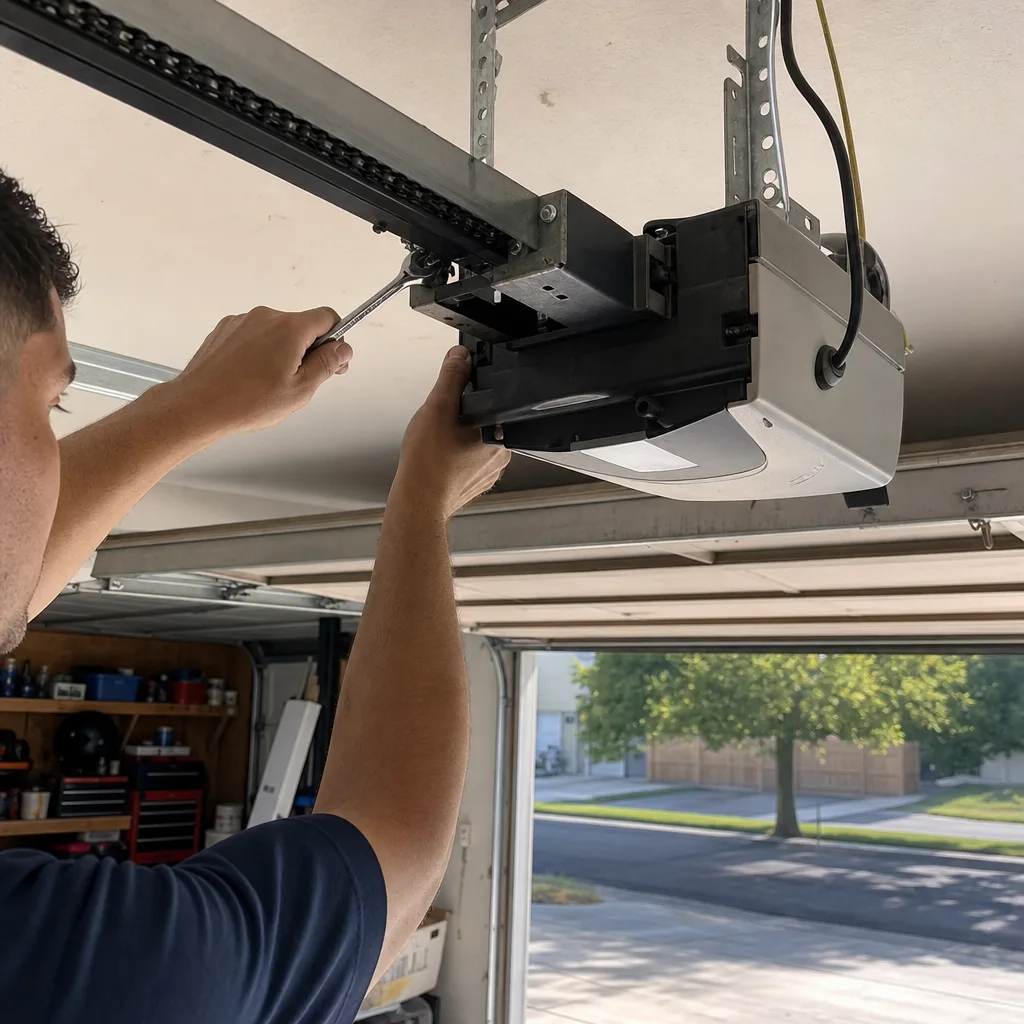
A garage door opener should complete a full cycle in 12-15 seconds for a standard 7-foot door. If your LiftMaster, Chamberlain, or Genie unit has gradually lengthened to 20+ seconds, or pauses mid-travel, the motor is laboring against degraded mechanical components.
Common causes in Denver: Worn nylon gears in the opener’s gear housing, binding rollers in cold weather, or a trolley carriage that has developed slop in its travel path. The motor overheats, shortening its lifespan. Early repair: gear and sprocket kit, $180-$260. Late repair: full opener replacement, $450-$650.
2. Intermittent Reversal Failure
The safety reversal system must reverse the door within 2 seconds of contacting a 2×4 test block placed on the floor, per federal law. If the door sometimes reverses and sometimes does not, or reverses before touching the block, the close-force setting and the photo-eye alignment have drifted.
Denver factor: Dust from the High Plains, pollen in spring, and temperature swings that expand and contract the door frame all affect sensor alignment. In Stapleton and Lowry, where new construction has tighter building envelopes, attached garage temperature swings are more extreme and sensor drift is faster.
Timeline: This condition degrades from intermittent to consistent failure over 2-6 months. The cost stays flat at $120-$180 for adjustment and sensor realignment until the opener’s logic board fails from repeated overload, at which point replacement becomes necessary.
3. Grinding or Squealing Rollers
Steel rollers without bearings grind against their shafts. Nylon rollers with sealed bearings squeal when the bearings dry out. Either sound indicates the roller is no longer rolling; it is sliding, creating flat spots and accelerated track wear.
Early repair: roller replacement, $15-$25 each, typically 10-12 rollers per door. Late repair: track replacement due to wallowed roller channels, $400-$600. The sound is your early warning. Record a 10-second video when you first notice it.
4. Sagging or Bowed Top Section
Steel garage door sections should present a flat plane. A visible bow in the top section, especially when the door is in the horizontal position, indicates the strut has failed or was never installed. Struts are the horizontal reinforcement bars that prevent the door from folding under its own weight.
Denver context: Wind loads on the eastern plains transfer to Denver’s garage doors, particularly wide double-car units in newer developments like Central Park and Green Valley Ranch. A 16-foot door without adequate strutting will bow visibly within 5-7 years.
5. Remote Intermittency That Follows Temperature
If your remote works reliably at 60 degrees but fails at 20 degrees, the issue is likely the logic board’s solder joints contracting in cold, or the remote’s battery voltage dropping. This predicts total opener failure within 1-2 winters.
Cost differential: Logic board replacement, $280-$380. Full opener replacement with modern safety features, $450-$650. The gap narrows enough that we often recommend replacement once the board shows cold-sensitivity.
Denver-Specific Warning Signs: Climate and Construction Factors
Denver’s elevation, temperature range, and soil conditions create warning signs that homeowners at sea level do not see, which our Seasonal Garage Door Care for Denver: Year-Round Homeowner’s Guide covers in depth.
Rust Patterns on Springs in Attached Garages
Denver’s average relative humidity is low, but attached garages in newer construction trap moisture from snowmelt, laundry vents, and vehicle exhaust. Torsion springs in these environments develop localized rust pits that appear faster than the spring’s overall age would predict. The pits become stress concentrators.
What to look for: Orange-brown discoloration in patches rather than uniform surface oxidation, typically on the lower quadrant of the spring where condensation collects. In Cherry Creek and Hilltop, where attached three-car garages are common, we replace springs at 7-9 years rather than the 10-12 year typical lifespan due to this pattern.
Panel Denting That Telegraphs Track Misalignment
Denver’s expansive clay soils cause foundation movement that transfers to garage door openings. The first visible sign is often minor denting or paint cracking at the hinge lines between door sections, caused by the door binding slightly in a frame that is no longer square.
This precedes the door sticking by 6-18 months. Early detection: a flashlight examination of the hinge gaps with the door closed. Uneven gaps indicate frame shift. Track realignment and hinge service: $180-$280. Waiting until the door sticks risks panel replacement at $200-$400 per section.
Opener Strain After Cold Fronts
A door that operated normally in October but labors in January has likely developed seal drag or roller binding that temperature contraction exacerbates. The opener’s amp draw increases; the motor housing runs warm to the touch. This is the mechanical equivalent of high blood pressure, silent until the heart attack.
Photo-Eye Fogging in South-Facing Garages
Intense UV at 5,280 feet degrades the photo-eye lenses over time, causing a milky surface haze that mimics misalignment. In south-facing garages in Belcaro and Cory-Merrill, we see this at 4-5 years rather than the 8-10 year typical lifespan. The eyes test aligned but the beam scatter causes intermittent failure.
How to Diagnose Without Touching Hardware Under Tension
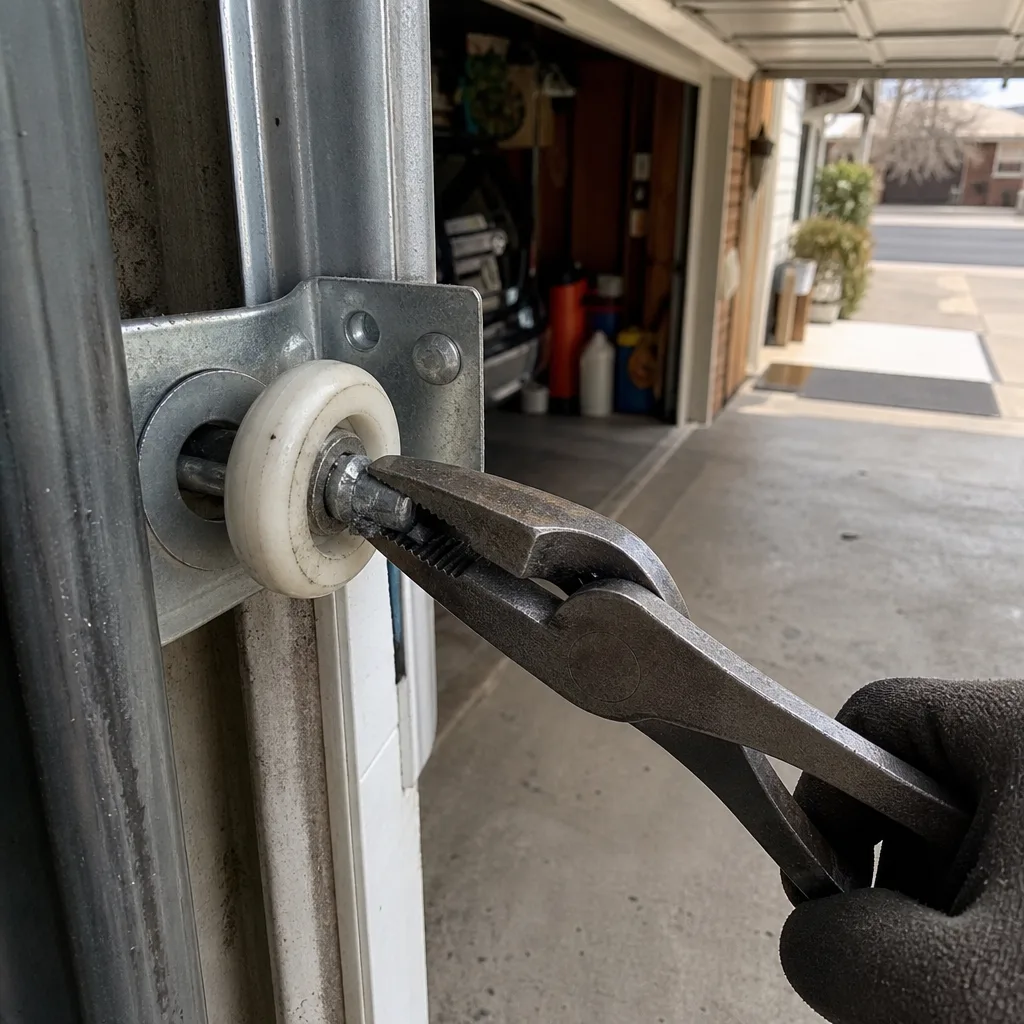
You can narrow the problem category, spring versus cable versus opener, without approaching any component that stores energy. This helps you describe the issue accurately and protects you from injury.
The Manual-Release Balance Test
- Close the door fully.
- Pull the red manual-release cord, typically hanging from the opener trolley. This disengages the opener from the door.
- Attempt to lift the door manually from the bottom section handle, using both hands.
What the result tells you:
- Door lifts smoothly with one hand, stays at any height: The spring system is intact. The problem is likely the opener: motor, gear train, or logic board. Garage Door Opener Repair & Installation in Denver addresses this category.
- Door feels very heavy, will not stay open, or slams closed: Spring failure. The torsion spring or extension spring has broken or lost tension. Do not attempt further operation. This is the Garage Door Repair in Denver category.
- Door lifts unevenly, one side rises faster, or binds in the track: Cable or track issue. One cable may be frayed, off the drum, or a roller may be failing. Stop use.
- Door lifts normally but opener still malfunctions when re-engaged: Opener-specific problem: force settings, travel limits, or safety system. Serviceable without spring work.
Safety note: If the door is stuck partially open, do not attempt the balance test. The partially open position is where spring tension is most complex. Call for service.
The Visual Inspection Protocol
Stand inside the garage with the door closed. Use a flashlight. Examine each of these from a safe distance:
- Torsion spring: Look for a visible gap in the coil, rust patches, or coil separation. Do not touch.
- Lift cables: Trace from bottom bracket to drum. Look for fraying, kinking, or rust bleed.
- Rollers: Check for wobble in the roller stem, flat spots on the wheel, or missing rollers entirely.
- Track mounting: Verify lag bolts are seated in the wall framing, not pulled loose.
- Opener rail: Look for trolley slop, chain sag (if chain-drive), or belt fraying (if belt-drive).
What to Document Before Calling a Contractor
The quote you receive should be anchored to evidence you control, not to a technician’s verbal description after arrival. Documentation also protects you from scope creep and enables meaningful second opinions.
Photo Record
- Wide shot of the full door and opener system
- Close-up of any visible damage: spring gap, cable fray, track separation, panel dent
- Photo of the opener nameplate showing model number and manufacture date
- Photo of any stickers from previous service companies (helps identify warranty status)
Video Record
- 10-15 seconds of the door operating, capturing sound and motion
- Separate video if the sound changes at a specific point in the travel
- Video of any intermittent behavior, since it may not reproduce for the technician
Written Log
- Date first noticed
- Frequency: every cycle, intermittent, or only under specific conditions (cold, morning, etc.)
- Any recent events: power outage, vehicle contact, landscaping work near the garage
- Previous service history: dates, companies, what was done, what was charged
This is the documentation standard we apply to our own work. Servo Garage Doors Denver home was founded on the principle that the customer sees the failed part before anyone quotes a replacement. Clause 4 of The Haven Standard codifies this: the technician photographs the failed component and reviews it with you before presenting a written scope and price. Your pre-visit documentation lets you verify that conversation against what you already observed.
The Cost Differential: Early Repair vs. Late Repair
Warning signs exist to create a decision window. These are the typical cost ranges in the Denver market for addressing conditions at the monitor-and-schedule stage versus the stop-use stage. For a fuller overview, see The Complete Guide to Garage Door in Denver.
| Condition | Early Repair (Monitor Stage) | Late Repair (After Failure) | Differential |
|---|---|---|---|
| Worn rollers | $150-$300 (roller replacement) | $400-$600 (track + roller) | 2-3x |
| Opener gear wear | $180-$260 (gear kit) | $450-$650 (opener replacement) | 2.5x |
| Spring fatigue (visible gap forming) | $280-$380 (spring replacement) | $400-$600 (spring + cable + hardware) | 1.5x |
| Track misalignment | $180-$280 (realignment + hardware) | $600-$900 (track + panel + hardware) | 3-4x |
| Photo-eye degradation | $120-$180 (alignment or replacement) | $280-$380 (logic board from overload) | 2x |
These ranges reflect Denver market rates for licensed, insured service with written warranty. Lower quotes often indicate excluded scope: no haul-away, no lubrication service, no written documentation. Clause 1 of The Haven Standard requires a flat, written price and written scope before any work starts, so the price you agree to is the price you pay.
The Free Second Opinion offer applies to any written estimate from another company. Bring the paperwork. We will review their scope against what we find, with no coupon or code required.
Common Mistakes to Avoid
- Ignoring intermittent reversal failures as “the door just being sensitive.” The safety system is not a preference setting. Federal law mandates its function, and a door that reverses unpredictably is a door that may fail to reverse when a child or pet is beneath it.
- Applying WD-40 to rollers or tracks. WD-40 is a solvent and water displacer, not a lubricant. It strips existing grease and attracts dust, creating a grinding paste. In Denver’s dusty environment, this accelerates wear. Use lithium-based garage door lubricant only, or have a technician apply it during service.
- Assuming a loud spring snap means the opener is broken. The opener is often undamaged. Replacing a functional opener because the spring failed is a common upsell. The balance test confirms spring status before any opener work is quoted.
- Waiting for “both springs” to break on a dual-spring door. Dual springs share load; when one breaks, the other is overloaded and will fail within days or weeks. Replace both. In Denver, we see back-to-back failures most often in January and July, when temperature stress peaks.
- Accepting a verbal quote with “we’ll see when we get there” pricing. This contradicts the entire purpose of documentation. A technician who cannot specify scope and price from your evidence is a technician who benefits from ambiguity. Clause 1 exists because this was industry standard before 2015 and remains common.
- Neglecting to check if previous service included a warranty transfer. Some Clopay and Amarr doors carry manufacturer warranties that transfer to subsequent owners if registered. Denver’s active resale market means many homeowners are second or third owners with unclaimed coverage.
- Attempting DIY cable or spring work after watching online tutorials. The tutorials rarely show the injuries. The torsion spring winding bars must be the correct diameter and inserted fully; partial insertion allows the bar to eject. The cost of professional repair is trivial against the cost of emergency room care.
When to Call a Professional
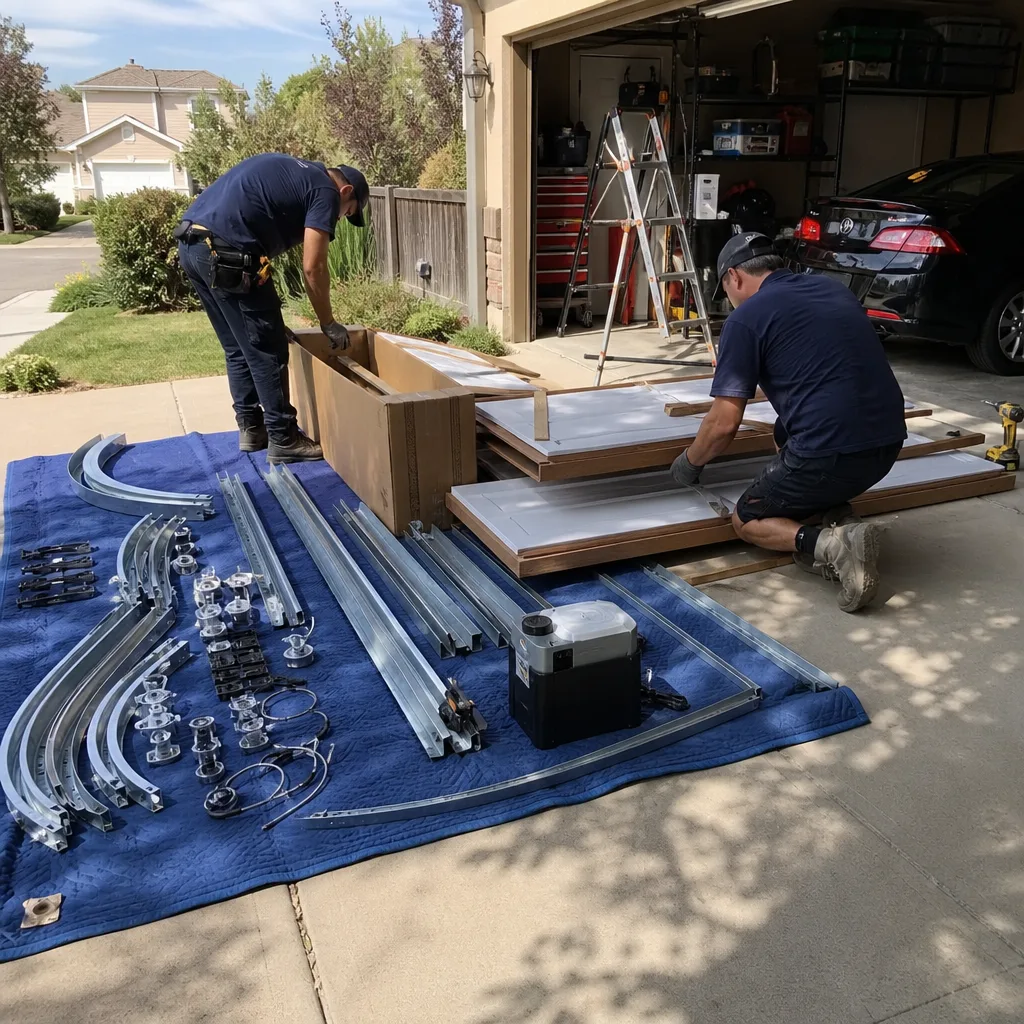
Call for same-day service when any stop-use condition is present: broken spring, frayed cable with exposed strands, or door off track. These conditions do not improve and create injury risk with every attempted operation.
Schedule within one to two weeks for monitor-and-schedule conditions: slow opener, intermittent reversal, grinding rollers, sagging top section, or temperature-dependent remote failure. The cost differential table above shows what waiting costs.
Servo Garage Doors Denver offers free estimates in Denver. Call (720) 807-2580. A live person answers, including overnight and holidays. You will receive a named technician and an on-the-way text, not a callback window. Every visit includes a documented photo record of findings and completed work, delivered to you, tracing back to the founding rule that the customer sees the failed part before anyone quotes a replacement.
Frequently Asked Questions
Torsion spring replacement in Denver typically ranges from $280 to $380 for a standard single spring, and $380 to $520 for a dual-spring system, including new springs, cables, and hardware. The price varies with spring size, door weight, and whether the door uses standard or high-cycle springs. We quote a flat, written price before any work starts, per Clause 1 of The Haven Standard. Call (720) 807-2580 for an exact quote - estimates are free.
No. A door with one broken spring in a dual-spring system is unbalanced and overloaded on the remaining spring. Operating it risks spring ejection, cable snap, or opener damage. The manual-release balance test will confirm: the door will feel heavy and will not stay open. Stop use and schedule service.
Metal components contract in cold, increasing friction in rollers, hinges, and the opener’s gear train. Grease thickens. Weather seals harden and drag. In Denver, where overnight lows in January regularly hit single digits, a door that marginally passed in October often fails in January. The condition is progressive; the door does not “get used to” the cold. Schedule service before the opener fails from overload.
It should not. A written price based on your documentation and description should specify the scope. If the technician arrives and identifies additional failed components, they should photograph them, explain the finding, and present a revised written scope and price before any additional work. This is Clause 1: written price, written scope, customer approval before work starts. Any contractor who begins work and then presents a higher bill has violated the agreement.
Yes. Our technicians stock torsion springs in wire sizes from 0.207 to 0.283 inch, standard and high-cycle, along with cables, rollers, hinges, and logic boards for LiftMaster, Chamberlain, and Genie openers. For Clopay and Amarr panel replacement, we measure and order, with typical turnaround of 3-5 business days. For the 18,000+ doors we have serviced since 2015, same-day completion rate for spring, cable, and opener repairs exceeds 95%.
Repair is appropriate when the motor runs but mechanical components have failed: gear stripping, chain break, or trolley carriage wear. Replacement is appropriate when the motor itself fails, the logic board shows cold-sensitivity or intermittent failure, or the unit lacks modern safety features like rolling-code security and battery backup. A unit manufactured before 1993 lacks the mandatory safety reversal system entirely and should be replaced regardless of function. We evaluate based on age, failure mode, and repair cost versus replacement cost, documented in writing.
Capitol Hill, Baker, and Park Hill have the highest concentration of pre-1980 doors with original single-spring systems and no modern safety hardware. Stapleton, Lowry, and Central Park see more opener strain from wide, insulated doors and attached garage temperature swings. Belcaro and Hilltop have the most foundation-shift-related track misalignment from expansive soils. Each pattern produces distinct warning signs that we have documented across 18,000+ service records.
The Bottom Line
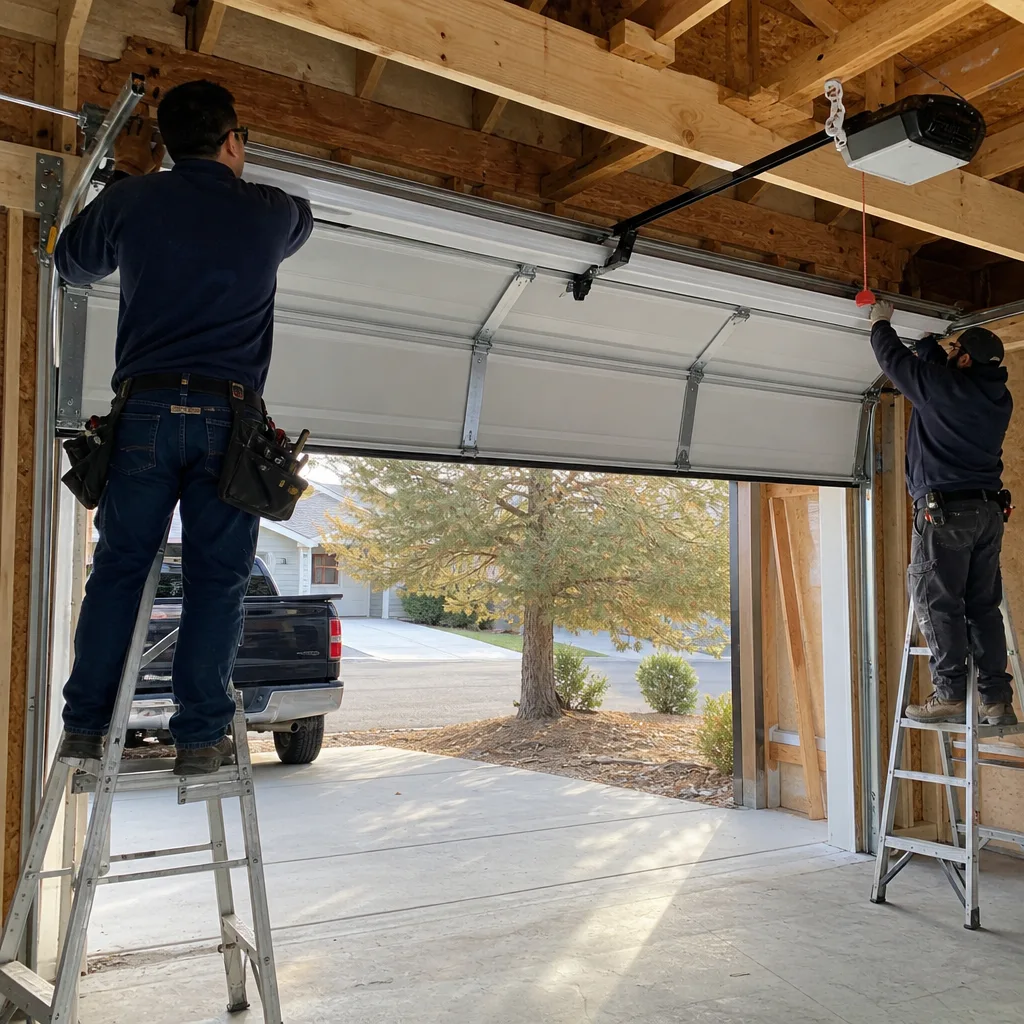
Garage door warning signs sort into two categories: stop-use now, and schedule soon. The difference is injury risk, not convenience. A broken spring, frayed cable, or off-track door can cause serious harm; slow operation, intermittent reversal, and grinding sounds cost progressively more the longer they are ignored. Denver’s climate and soil conditions create local patterns, rust in attached garages and foundation-shift binding, that accelerate wear beyond national averages. Document what you observe with photos, video, and dated notes before calling any contractor. The quote you receive should reference your evidence, not replace it. Garage Door Installation in Denver follows the same standard: written scope, written price, documented completion.
Written by Marcus Deller, Owner at Servo Garage Doors Denver, serving Denver since 2015.